
Outdoor furniture materials: your guide for Australian homes

Which outdoor furniture materials hold up best in Australia?
For Australian conditions, the four materials that consistently outperform everything else are recycled plastic (HDPE), teak, powder-coated aluminium, and UV-stable synthetic resin wicker. Each handles heat, UV exposure, and coastal humidity differently, so the right choice depends on where you live and how much upkeep you want to do.
Here is a quick snapshot of what each material brings to the table:
- Recycled plastic (HDPE): 20–50+ year lifespan, zero rot or rust, wipe-clean maintenance, fully recyclable
- Teak: Naturally dense and oil-rich, excellent moisture and UV resistance, suits covered outdoor areas
- Powder-coated aluminium: Rust-proof, lightweight, ideal for coastal homes with salt air exposure
- Synthetic resin wicker: Resort-style aesthetic, UV and moisture resistant, far more durable than natural rattan outdoors
| Material | Durability | Maintenance | Weather resistance | Aesthetic appeal | Cost |
|---|---|---|---|---|---|
| Recycled plastic (HDPE) | Excellent (20–50+ yrs) | Very low | Outstanding | Casual/modern | Mid–high |
| Teak | Very good (15–25 yrs) | Moderate | Good (covered areas) | Classic/warm | High |
| Powder-coated aluminium | Good (10–15 yrs) | Low–moderate | Very good | Sleek/contemporary | Mid |
| Synthetic resin wicker | Good (10–15 yrs) | Low | Very good | Resort/relaxed | Mid |
| Untreated timber | Fair (5–10 yrs) | High | Poor–moderate | Natural | Low–mid |
Ketergroup’s outdoor furniture range is built from recycled and recyclable resin, which sits at the top of this list for low maintenance and long-term performance in the Australian climate.
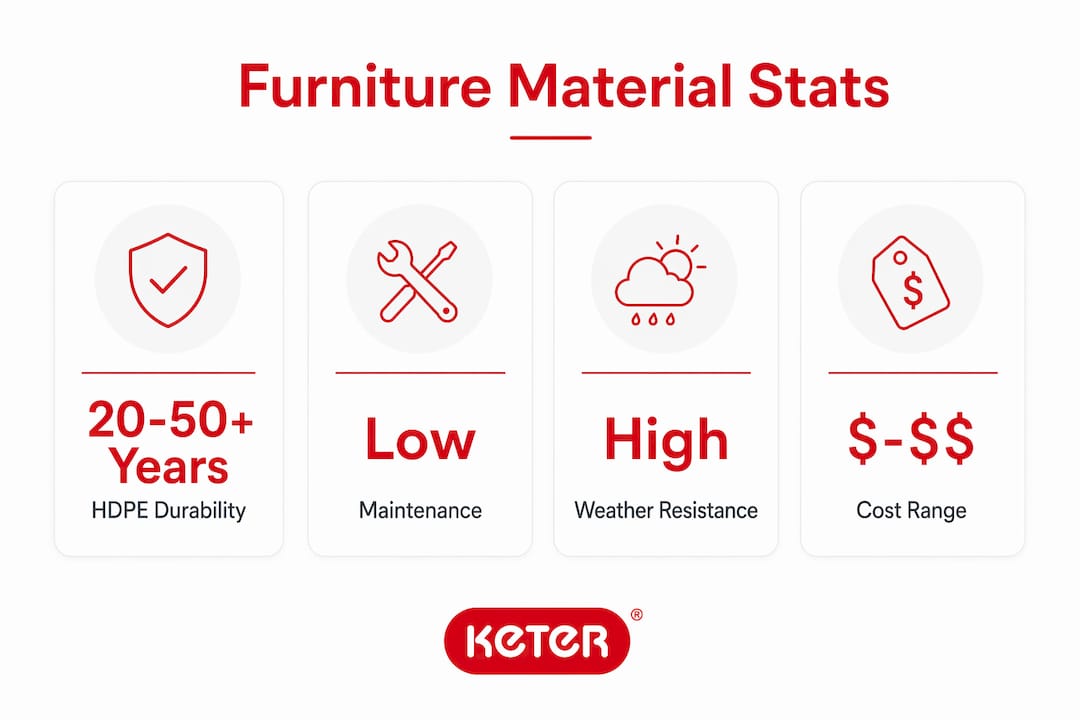
Table of Contents
- How do the main outdoor furniture materials really compare?
- How to choose the right material for your Australian home
- Cleaning and care tips for every outdoor furniture material
- Why recycled plastic (HDPE) lasts so long outdoors
- Ketergroup makes weather-resistant outdoor living easy
- Key takeaways
- FAQ
How do the main outdoor furniture materials really compare?
Timber: teak and eucalyptus
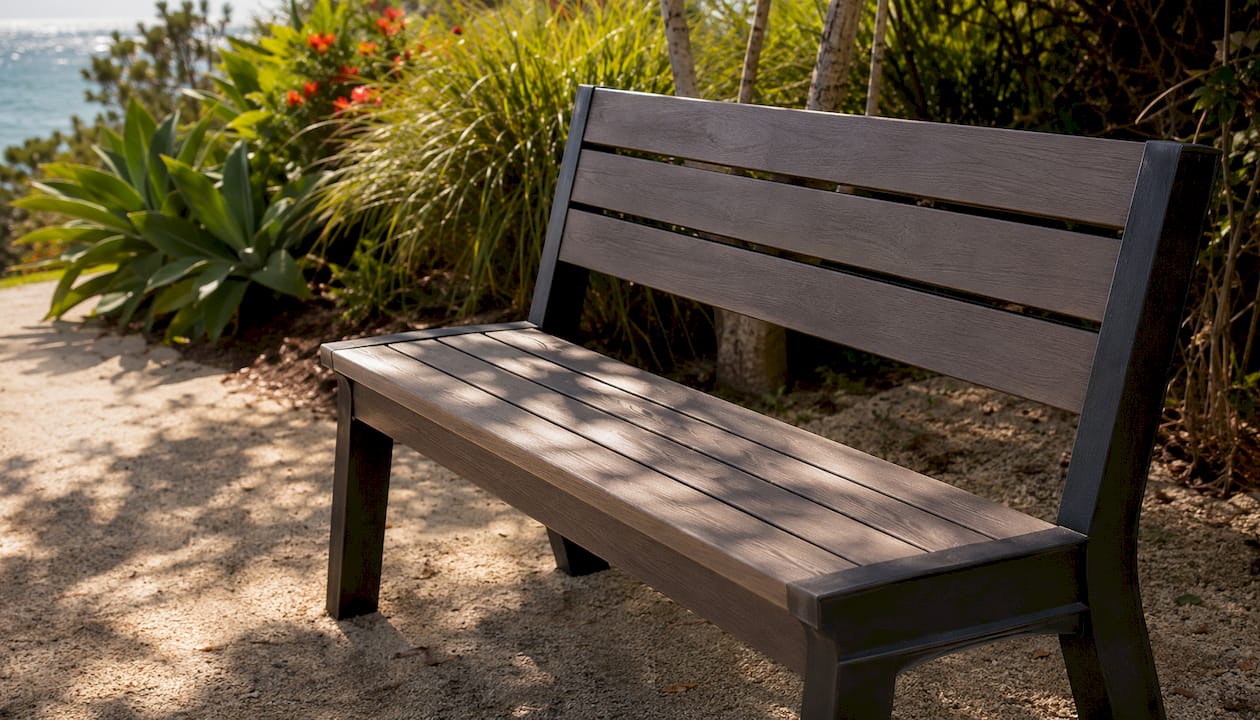
Teak is the gold standard for outdoor timber. Its natural oils, particularly a compound called tectoiquin, act as a self-sealing barrier against rot, fungal decay, and sun damage. Eucalyptus is a strong local alternative with similar density and natural oil content, and it tends to cost less. Both timbers suit covered patios and pergolas better than fully exposed settings.
The catch is maintenance. Without regular oiling or sealing, timber cracks, warps, and greys off quickly under Australian sun. That is not a flaw so much as a commitment: if you enjoy the ritual of seasonal care and love the warm, natural look, timber rewards that effort beautifully.
Powder-coated aluminium
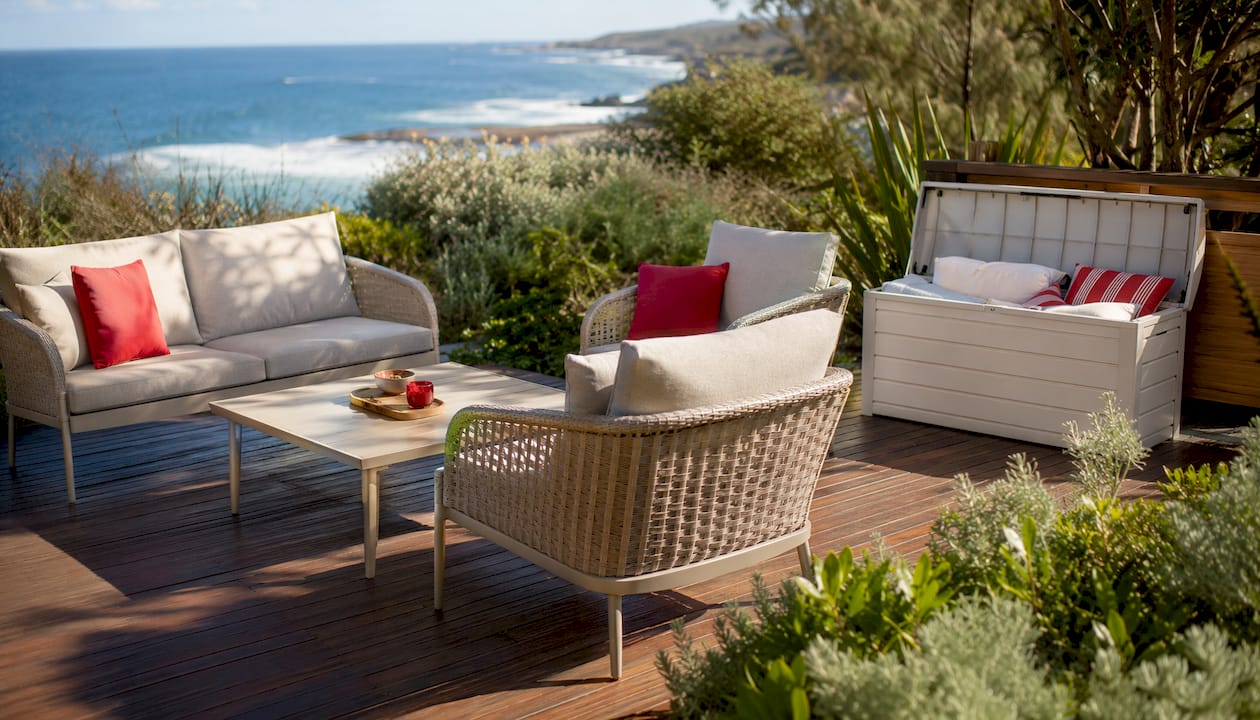
Powder-coated aluminium is the go-to for coastal homes. The coating bonds directly to the metal surface, creating a barrier that resists salt air, humidity, and UV without the weight of steel or the rust risk of iron. You can move a full dining setting around your deck without straining your back, which makes it genuinely practical for households that rearrange their outdoor space seasonally.
It does have limits. The powder coating can chip over time, and once bare metal is exposed in a salty environment, corrosion can start. Periodic touch-ups keep it performing well for well over a decade.
Synthetic resin wicker
Synthetic wicker over an aluminium frame gives you the relaxed, resort feel without the fragility of natural rattan. Natural rattan frays, fades, and grows mould when left outside in humid Australian summers. Synthetic resin wicker is designed specifically for outdoor conditions, resisting UV degradation and moisture without losing its texture or colour. It suits alfresco dining areas and lounge settings particularly well.
Recycled plastic (HDPE)
HDPE furniture is made from high-density polyethylene, often sourced from recycled milk bottles and packaging. The colour pigment is mixed throughout the entire panel rather than applied as a surface coat, so there is nothing to peel or fade even after years of harsh Australian sun. It resists rot, rust, insects, salt, and moisture without any sealing or repainting. From a sustainability standpoint, each piece diverts significant plastic waste from landfill and is fully recyclable at end of life.
Environmental impact at a glance:
- HDPE: diverts landfill waste, reduces demand for virgin timber, fully recyclable
- Teak: renewable if sourced from certified plantations (look for FSC certification), but slow-growing
- Aluminium: highly recyclable, though energy-intensive to produce initially
- Synthetic wicker: durable but not easily recyclable; aluminium frames are recyclable
How to choose the right material for your Australian home
The best material for your outdoor furniture depends on three things: where you live, how much time you want to spend on upkeep, and what the furniture will actually be used for.
Climate zone first
Australia’s climate zones demand different thinking. Coastal homeowners in Queensland, New South Wales, or Western Australia deal with salt air, high humidity, and intense UV. Powder-coated aluminium and HDPE both handle this well. Inland areas with extreme temperature swings, like much of South Australia and the Northern Territory, put thermal stress on materials. HDPE and aluminium flex without cracking; timber can split if left unsealed through a dry summer.
Humid tropical climates in the far north accelerate mould growth on natural fibres and untreated timber. Synthetic wicker and HDPE are the practical choices here.
Furniture type matters too
Not every material suits every furniture type. Consider these pairings:
- Dining tables and chairs: Powder-coated aluminium or HDPE for durability and easy cleaning; teak for a premium covered-patio look
- Loungers and sun chairs: HDPE or synthetic wicker over aluminium frames; UV-stable cushion fabrics like solution-dyed acrylics add comfort without sacrificing weather resistance
- Outdoor sofas: Synthetic wicker or HDPE frames with quick-dry cushions; avoid untreated timber for fully exposed settings
- Storage benches and boxes: HDPE or resin; these materials handle standing water and direct sun without warping
Decision factors table
| Factor | Best material choice |
|---|---|
| Coastal/salt air exposure | Powder-coated aluminium, HDPE |
| Humid tropical climate | HDPE, synthetic resin wicker |
| Inland/extreme temperature swings | HDPE, powder-coated aluminium |
| Covered patio, premium look | Teak, eucalyptus |
| Minimal maintenance | HDPE, powder-coated aluminium |
| Eco-friendly priority | HDPE (recycled), FSC-certified timber |
| Budget-conscious | Powder-coated aluminium, HDPE |
| Resort/relaxed aesthetic | Synthetic resin wicker |
If you want to learn more about choosing furniture that lasts through seasonal extremes, there are some solid practical frameworks worth reading before you buy.
Cleaning and care tips for every outdoor furniture material
Good maintenance is less about effort and more about doing the right thing at the right time. Here is a practical guide by material.
-
Recycled plastic (HDPE): Wipe down with mild detergent and warm water. A soft brush handles any surface grime in textured areas. No sealing, oiling, or repainting needed. Rinse with a hose after beach visits to remove salt residue. Annual cleaning is usually enough for most Australian backyards.
-
Teak and eucalyptus: Apply a quality teak oil or timber sealant once or twice a year, more often in fully exposed settings. Sand lightly before reapplying if the surface has greyed or roughened. Store cushions indoors during extended wet seasons to prevent mould on timber joints.
-
Powder-coated aluminium: Wipe with a damp cloth and mild detergent every few months. Inspect the coating annually for chips or scratches, especially near the coast. Touch up any bare spots with a matching powder-coat spray to prevent corrosion from taking hold underneath.
-
Synthetic resin wicker: Hose down or wipe with soapy water. Use a soft brush to clear debris from the weave. Avoid pressure washers at close range, as they can loosen the weave over time. Check the aluminium frame underneath for any coating damage at joints.
-
Cushions and outdoor fabrics: Choose solution-dyed acrylic fabrics, which retain colour and resist mould far better than standard polyester. Bring cushions inside or store them in a weather-resistant storage box during extended rain or when the furniture is not in use for several weeks.
Pro Tip: Store cushions and outdoor accessories in a resin storage box between uses. Ketergroup’s weather-resistant storage boxes keep cushions dry and protected without taking up garage space, and they sit neatly alongside your outdoor furniture setting.
Why recycled plastic (HDPE) lasts so long outdoors
HDPE furniture outperforms timber and metal in almost every durability category relevant to Australian conditions. Timber typically lasts 5–10 years outdoors without consistent maintenance; metal furniture averages 10–15 years. HDPE furniture, by contrast, has a documented lifespan of 20–50+ years in coastal, inland, humid, and dry Australian environments.
The reason comes down to what the material simply does not do. It does not rot. It does not rust. Insects cannot damage it. Salt air, standing water, and UV radiation do not degrade its structure. The colour pigment is mixed throughout the full thickness of each panel, not applied as a surface coating, so there is no layer to peel or fade away. After a decade in the sun, an HDPE chair looks much the same as it did when it arrived.
From a sustainability angle, the story is equally strong. HDPE furniture is manufactured from recycled plastic waste, diverting material that would otherwise end up in landfill. At end of life, the furniture itself is fully recyclable, completing a genuine circular loop. For homeowners who want to reduce their environmental footprint without sacrificing durability, it is a clear choice.
| Durability factor | HDPE recycled plastic | Teak timber | Powder-coated aluminium |
|---|---|---|---|
| Lifespan (years) | 20–50+ | 15–25 | 10–15 |
| Rot resistance | Excellent | Good (with oils) | N/A |
| Rust resistance | Excellent | N/A | Very good |
| UV/fade resistance | Excellent | Moderate | Good |
| Salt air resistance | Excellent | Moderate | Very good |
| Maintenance required | Very low | Moderate–high | Low–moderate |
| Recyclability | Fully recyclable | Limited | Highly recyclable |
The lifespan advantage is real: HDPE outdoor furniture lasts 20–50+ years in Australian conditions, compared to 5–10 years for untreated timber and 10–15 years for metal alternatives. That gap translates directly into fewer replacements and lower long-term cost.
Ketergroup’s outdoor furniture and storage range is built on this exact principle: recycled and recyclable resin that handles whatever the Australian climate throws at it, year after year. You can see how this plays out in practice with their outdoor furniture and storage range, designed specifically for Australian conditions.
Ketergroup makes weather-resistant outdoor living easy
When you have spent time researching outdoor furniture materials, it becomes clear that the best choice for most Australian homes is one that handles the climate without demanding constant attention. That is exactly where Ketergroup’s range sits.
Ketergroup designs and manufactures outdoor furniture and storage solutions from recycled and recyclable resin, the same HDPE-based material that tops every durability comparison in this guide. The Rosalie 2 Seater Sofa and Keter Salta 2 Seater Sofa are built to handle Australian sun, rain, and salt air without needing seasonal sealing or repainting. The Emma 2 Seater Sofa brings the same low-maintenance durability in a style that suits both modern and relaxed outdoor settings.
Pair your seating with a Curver Style Storage Box Set to keep cushions and accessories dry and tidy between uses, or step up to the KIS Scuba Box XLarge for larger storage needs. If you need a full outdoor storage solution, the Store It Out Prime Shed 880L and the Keter Signature Horizontal Shed 2020L give you serious capacity in a weather-resistant resin shell that looks great alongside your outdoor furniture.
Browse the full Ketergroup range at ketergroup.com.au and find the pieces that suit your space, climate, and lifestyle.
Key takeaways
Recycled plastic (HDPE) is the most durable, lowest-maintenance outdoor furniture material for Australian conditions, lasting 20–50+ years while resisting rot, rust, UV, and salt air without any sealing or repainting.
| Point | Details |
|---|---|
| HDPE leads on lifespan | Recycled plastic furniture lasts 20–50+ years, far outlasting timber (5–10 years) and metal (10–15 years). |
| Climate zone shapes your choice | Coastal homes suit HDPE and powder-coated aluminium; covered patios can use teak or eucalyptus. |
| Maintenance effort varies widely | HDPE needs only occasional washing; timber requires annual oiling or sealing to prevent cracking. |
| Sustainability matters | HDPE diverts plastic waste from landfill and is fully recyclable, making it the strongest eco-friendly choice. |
| Ketergroup for Australian conditions | Ketergroup’s recycled resin furniture and storage range is built for Australian weather with minimal upkeep required. |
FAQ
What is the best material for outdoor furniture in Australia?
Recycled plastic (HDPE) is the top performer for most Australian homes, offering a 20–50+ year lifespan with no rot, rust, or UV degradation. Powder-coated aluminium is the best choice for coastal areas with heavy salt exposure.
What outdoor furniture material lasts the longest in Australia?
HDPE recycled plastic lasts 20–50+ years in Australian conditions, outperforming teak (15–25 years), powder-coated aluminium (10–15 years), and untreated timber (5–10 years). Its resistance to rot, insects, moisture, and UV makes it the most durable option across all Australian climate zones.
What Australian timber is used for outdoor furniture?
Eucalyptus is the most common native Australian hardwood used for outdoor furniture, valued for its natural density and oil content. Teak, while not native, is widely used in Australia for premium outdoor settings due to its natural rot resistance and longevity in covered outdoor areas.
Is wicker or resin better for outdoor furniture in Australia?
Synthetic resin wicker over an aluminium frame is far better suited to Australian conditions than natural wicker or rattan. Natural fibres fray, fade, and develop mould in humid or coastal climates, while synthetic resin wicker resists UV, moisture, and salt air without losing its appearance.
How do I keep outdoor furniture looking good year-round?
Match your care routine to the material: wipe HDPE with mild detergent and water annually, oil or seal timber once or twice a year, and inspect powder-coated aluminium for coating chips each season. Storing cushions in a weather-resistant storage box between uses extends their life considerably.
Recommended
- Transform Your Garden with Adirondack Chairs & Storage Tables – Keter Australia’s Outdoor Solutions
- Adirondack Chairs & Outdoor Furniture: Creating a Relaxing Patio Retreat | Keter Australia
- Summer Sorted: Outdoor Storage Box Ideas to Tame Backyard Clutter – Keter Australia
- The Secret to Effortless Outdoor Style: Discover Keter’s Signature Wood-Look Storage Sheds – Keter Australia


