
Garden tool storage ideas: your practical Australian guide

What are the best garden tool storage ideas for Australian homes?
The most effective garden tool storage ideas combine vertical wall systems, weather resistant cabinets, and dedicated tool zones to keep your gear protected, accessible, and tidy year-round. For Australian conditions, where humidity, UV exposure, and dust are constant factors, the right storage system does more than reduce clutter. It actively extends the life of your tools.
Here are the core storage types worth knowing:
- Wall-mounted hooks and pegboards for hand tools, trowels, and pruning shears
- Vertical racks and towers for long-handled tools like rakes, shovels, and hoes
- Weather resistant storage boxes and cabinets for protecting tools from rain and theft
- Multi-use furniture with built-in storage to save space on smaller patios and in sheds
- Modular systems that expand as your tool collection grows
Each option suits different spaces and budgets, and many work best in combination.
How should you prepare garden tools before storing them?
Preparation is the step most gardeners skip, and it’s the one that causes the most damage. Storing a dirty, damp tool is a fast track to rust, rot, and a shorter lifespan.
A solid preparation routine covers four things:
- Clean thoroughly. Rinse soil off metal heads and wooden handles, then scrub with a stiff brush. Remove any rust with a wire brush or sandpaper before it spreads.
- Dry completely. Moisture makes wooden handles swell and crack over time. Let tools air dry fully before putting them away, especially if they’ll live in an uninsulated shed.
- Inspect for damage. Check for loose heads, splintered handles, or bent tines. A damaged tool stored away is a hazard waiting to be rediscovered.
- Sort by type and season. Group long-handled tools together, separate hand tools, and set aside anything you won’t need until next season.
Pro Tip: Winter is the ideal time for a full tool audit. Use the quieter months to clean, oil, and sort everything before the growing season begins.
One often-overlooked step: oil both the metal heads and wooden handles with linseed oil after drying. The oil soaks in properly only when the wood is completely dry, so patience here pays off.
What types of garden tool storage work best?
Choosing the right storage type depends on your space, your tool collection, and how often you reach for each piece. Here’s a breakdown of the main categories and what they’re each good for.
Wall-mounted hooks and pegboards
Pegboards and hook systems are the go-to for small hand tools. They keep everything visible, within arm’s reach, and off the floor. Mounting directly into wall studs gives the most reliable support, especially for heavier items. For walls where studs aren’t accessible, mount tools onto a plywood panel first, then fix the panel to the wall.
Racks and towers for long-handled tools
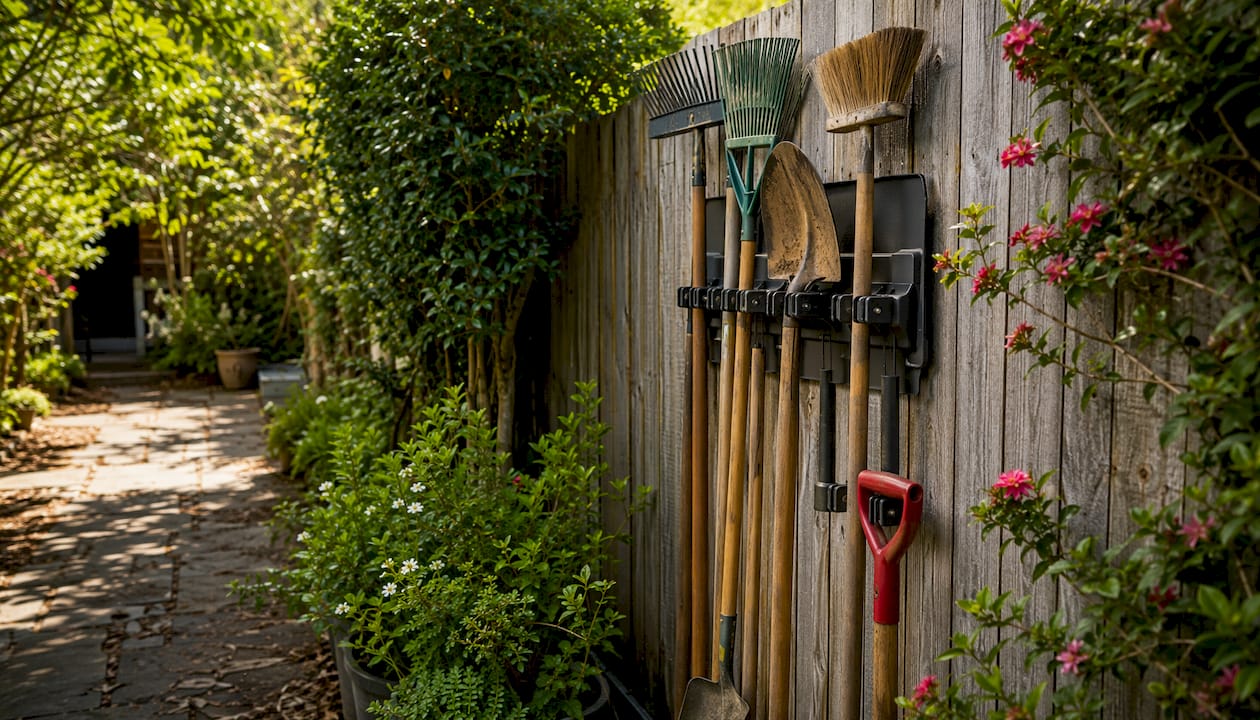
Vertical towers and horizontal racks handle rakes, shovels, brooms, and hoes without tangling. Maximising vertical space with tall racks frees up floor area, which matters in smaller sheds and garages. Steel racks with rust-resistant coatings hold up well outdoors.
Storage boxes and cabinets
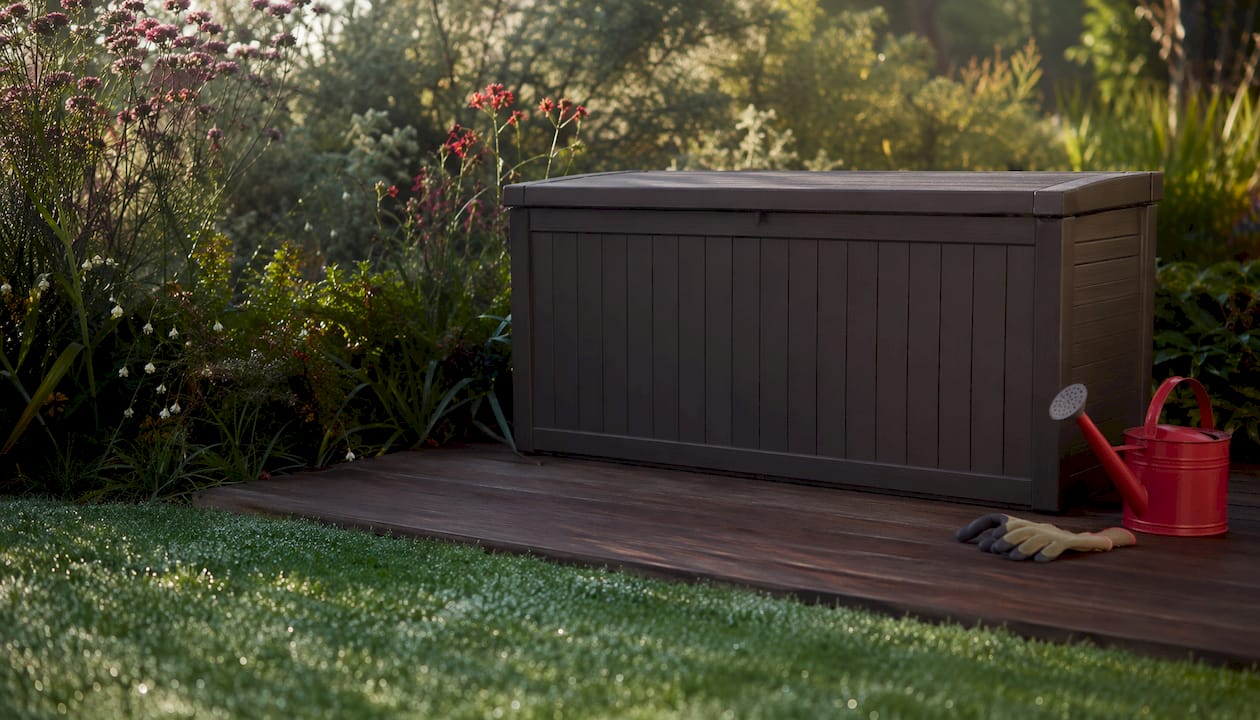
Lockable cabinets and weather resistant storage boxes protect tools from rain, UV damage, and opportunistic theft. Resin and high-density polyethylene (HDPE) options resist corrosion without the maintenance that timber or steel demands in Australian conditions. These work particularly well for storing battery-powered tools, which must be kept in dry, ventilated spaces to prevent moisture damage to components.
DIY garden tool storage ideas you can build yourself
A simple DIY rack built from two lengths of 2x4 timber can hold many tools and costs very little in materials. The build takes about 10 minutes of active assembly time once you have your materials cut to length.
Here’s a straightforward approach for a wall-mounted tool rack:
- Measure your wall space and decide on the rack’s length. A 1.8-metre span suits most sheds.
- Cut your timber to length. You need one long horizontal board and several short blocks (around 15 cm each) for the tool slots.
- Attach the short blocks to the top and bottom edges of the long board, leaving a gap between each pair to slide tool handles through.
- Locate your wall studs and fix the rack securely using at least two screws per stud.
- Hang tools with long handles at the top and D-ring handled tools below.
Other budget-friendly DIY options include:
- PVC pipe sections screwed to a timber backing board for rakes and brooms
- A 5-litre bucket for carrying and storing small hand tools in the garden
- Repurposed plumbing hooks for hanging coiled hoses and extension leads
- Open shelving with dividers for gloves, seed packets, and small accessories
Using recycled timber or leftover materials keeps costs down and reduces waste, which fits well with the sustainability-minded approach many Australian gardeners are taking.
Ready-made garden tool storage solutions available in Australia
Several trusted Australian suppliers offer storage solutions worth knowing about.
Ketergroup produces weather resistant outdoor storage boxes, garden sheds, and modular tool storage systems made from recyclable resin. Their products are designed for DIY assembly and built to handle Australian outdoor conditions without rusting or fading. The Keter Connect Storage Organizer is a practical modular option for keeping tools sorted and mobile. Ketergroup’s storage boxes also double as outdoor seating, which is a genuine space-saver for smaller gardens. You can explore their full range of outdoor storage solutions to find what suits your setup.
Tools In A Box is an Australian wholesaler specialising in aluminium toolboxes and canopies, a solid choice if you need heavy-duty storage for a ute or workshop.
Quality Garden Supplies stocks quality Japanese gardening tools and accessories, with same-day dispatch and free shipping on orders over $149.
Garden Tools Australia manufactures 100% Australian-made ergonomic tools from marine grade aluminium alloy, with free shipping on orders over $99.
Forestry Tools supplies professional horticultural and forestry equipment at warehouse prices, covering everything from axes to pruning shears.
How do you maximise storage space and keep tools organised?
The single most effective strategy is thinking vertically. Creating defined tool zones by frequency and type speeds up your gardening routine and cuts down on frustration. Tools you reach for every week belong at eye level; seasonal items can go higher or in a box.
A few practical habits make a real difference:
- Label everything. Bins, hooks, and shelves with clear labels mean anyone helping in the garden can put things back correctly.
- Store hazardous tools securely. Sharp tools like pruning shears and axes should go in a locked cabinet or on a high hook, away from children and pets.
- Protect against moisture. Good ventilation inside a shed or cabinet prevents condensation. Weather resistant materials reduce the maintenance burden considerably.
- Group soft goods separately. Gloves, kneeling pads, and canvas bags attract pests if left in open sheds. Store them in a sealed tub or bring them inside.
Pro Tip: Review your storage layout at the start of each season. What worked in winter may not suit a busy summer garden, and a quick reorganise takes less than an hour.
For anyone working with ready-to-assemble cabinet storage, the same modular principles apply outdoors. Adjustable shelving and interchangeable components let you adapt the layout as your tool collection changes.
Key takeaways
Combining wall-mounted systems, weather resistant cabinets, and defined tool zones gives you the most organised, accessible, and protected garden tool storage setup for Australian conditions.
| Point | Details |
|---|---|
| Prepare tools first | Clean, dry, and inspect every tool before storing to prevent rust and extend tool life. |
| Think vertically | Wall-mounted racks and pegboards free up floor space and keep tools visible and accessible. |
| Choose weather resistant materials | Resin and HDPE storage boxes handle Australian humidity and UV without rusting or fading. |
| Create tool zones | Grouping tools by frequency and type saves time and reduces frustration during garden work. |
| Support local suppliers | Australian businesses like Ketergroup, Garden Tools Australia, and Forestry Tools offer durable, locally suited options. |
FAQ
What is the best way to store long-handled garden tools?
Vertical wall racks or tower-style organisers mounted into wall studs are the most effective option. They keep rakes, shovels, and hoes upright, visible, and off the floor.
How do I stop garden tools from rusting in storage?
Clean and dry tools thoroughly before storing, oil metal heads and wooden handles with linseed oil, and keep them in a ventilated, weather resistant cabinet or shed.
Can I store battery-powered garden tools in an outdoor shed?
Battery-powered tools should be stored indoors or in a dry, ventilated space. Moisture and temperature fluctuations can damage battery components and shorten their lifespan.
How often should I reorganise my garden tool storage?
A seasonal review works well for most gardeners. Reorganise at the start of each season, or whenever you notice clutter building up or tools becoming hard to find.
What is the cheapest DIY garden tool storage idea?
A wall-mounted rack built from two lengths of 2x4 timber costs very little in materials and can hold many tools. A 5-litre bucket also works well as portable storage for small hand tools.
Recommended
- How to Organise Your Backyard: Outdoor Furniture, Sheds & Storage Solu – Keter Australia
- Summer Sorted: Outdoor Storage Box Ideas to Tame Backyard Clutter – Keter Australia
- Transform Your Garden with Adirondack Chairs & Storage Tables – Keter Australia’s Outdoor Solutions
- From Box to Backyard: Keter Assembly Guide for Australia – Keter Australia


