
What is resin wicker, and why it suits outdoor furniture so well

Resin wicker is a synthetic, all-weather woven material, usually high-density polyethylene (HDPE), built specifically for outdoor furniture that needs to shrug off rain, sun, and pool splashback. Three things matter most here:
- It resists moisture and UV far better than plant-based wicker, so it stays outside year-round.
- Woven over a quality aluminium frame, it can last well over a decade with barely any upkeep.
- Recycled resin is increasingly common, which matters if sustainability factors into your buying decision.
Brands like Keter Group have built entire furniture ranges around this material because it solves a genuine problem: garden furniture that used to need covering, storing, or replacing every couple of seasons.
Key Takeaways
Resin wicker furniture built from UV-stabilised HDPE over an aluminium frame delivers the strongest combination of weather resistance and low maintenance for outdoor use.
| Point | Details |
|---|---|
| Material matters more than weave | Check for HDPE with UV stabilisers rather than judging furniture by weave pattern alone. |
| Frame choice decides longevity | Powder-coated aluminium avoids the hidden rust risk that comes with steel frames. |
| Expect 8 to 15-plus years | Quality resin wicker over aluminium can last well over a decade with basic care. |
| Cleaning is simple | Soap, water, and a soft brush handle most grime; always let pieces air-dry fully. |
| Keter offers ready options | The Iowa Garden Chair, Rosalie 2 Seater Sofa, and Corfu 2 Seater Sofa all use weather-resistant resin construction. |
Table of Contents
- What is resin wicker, exactly?
- Materials and construction: what’s actually holding your furniture together
- Resin wicker vs rattan: which one suits your space?
- The real benefits of resin wicker outdoors
- Where resin wicker can fall short
- How to choose resin wicker furniture that actually lasts
- Cleaning and looking after resin wicker
- How long does resin wicker actually last?
- What sustainability research says about resin furniture
- The verdict on resin wicker
- Sources
- FAQ
What is resin wicker, exactly?
“Wicker” is not a material at all. It is a weaving technique, the same over under pattern used for centuries on cane, rattan, and willow. Resin wicker takes that technique and applies it to synthetic strands instead of plant fibre, which is why you will also see it called all-weather wicker, synthetic wicker, or PE rattan (short for polyethylene rattan). Some sellers use “polyrattan” as another name for the same thing.
This naming confusion trips up a lot of shoppers. As one industry guide on choosing wicker patio furniture points out, the weave name tells you nothing about how the furniture will hold up outside. The material underneath does all the work.
- Wicker: the weaving method, not a material.
- Resin wicker: synthetic strands (mostly HDPE) woven using that method.
- Natural wicker: the same technique applied to rattan, cane, or willow.
Furniture makers started swapping in synthetic resins decades ago, once it became clear that exposed plant fibres simply could not survive constant sun and rain without cracking or rotting.
Materials and construction: what’s actually holding your furniture together
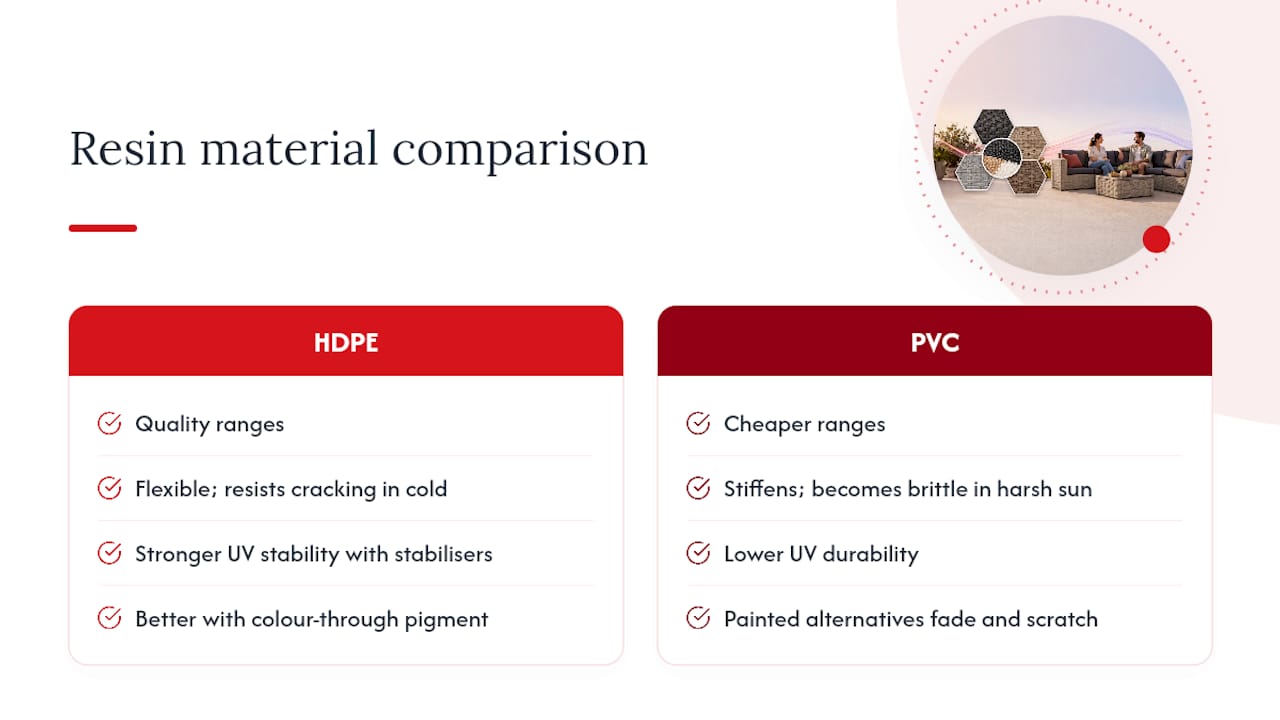
Two resins dominate the market. HDPE is the most common choice for quality resin wicker, prized for its flexibility and resistance to cracking in the cold. PVC shows up in cheaper ranges but tends to stiffen and become brittle faster under harsh sun. Manufacturers typically extrude the resin into strands, blending in antioxidants, colourants, and UV stabilisers before weaving, according to Honeywell Rattan’s material breakdown. Colour-through strands, where the pigment runs all the way through rather than sitting as a surface coating, resist scratches and fading far better than painted alternatives.
The frame underneath matters just as much as the weave on top. Powder-coated aluminium is the standard for durable resin wicker because it will not rust, ever, regardless of how humid or salty the air gets. Cheaper sets sometimes use steel frames instead, which can corrode quietly beneath the weave once the coating chips.
Weave quality is the third variable. A tight, consistent weave with reasonably thick strands looks more like genuine rattan and holds its shape longer than a loose, thin weave that sags under cushion weight.
Pro Tip: Run your hand across the weave before buying. If you can feel gaps or the strands flex loosely under light pressure, that furniture will likely loosen further within a year or two of outdoor use.
Resin wicker vs rattan: which one suits your space?
The rattan versus resin wicker debate usually comes down to where the furniture will actually live. Natural rattan looks beautiful and ages with a warm patina, but it needs shelter from rain and direct, relentless sun. Resin wicker was engineered for the opposite scenario.
| Factor | Natural rattan | Resin wicker |
|---|---|---|
| Water resistance | Poor once exposed repeatedly | Strong, built for it |
| UV tolerance | Fades and dries out | High with proper stabilisers |
| Maintenance | Regular oiling, covering | Occasional wipe-down |
| Outdoor lifespan | Short outdoors, longer indoors | Years longer with the right frame |
If you have a covered veranda that never sees rain, natural rattan can work beautifully. For open patios, poolside decks, or anywhere that cops full weather, resin wicker is the more sensible pick, a conclusion backed by comparisons of wicker furniture performance across both material types.
The real benefits of resin wicker outdoors
The appeal of resin wicker comes down to a handful of practical wins that matter once the furniture is actually sitting outside through an Australian summer.
- Weather resistance: it handles rain, humidity, and harsh sun without warping or rotting, which is exactly why it holds up around pools and exposed courtyards.
- Low maintenance: a hose-down and mild soap is usually enough. No annual oiling, no repainting.
- Long life with the right frame: pair quality HDPE resin with powder-coated aluminium and you are looking at furniture that outlasts most natural alternatives outdoors.
- Realistic woven appearance: modern colour-through strands mimic rattan closely enough that most people cannot tell the difference from a few metres away.
Picture a set of resin wicker chairs left permanently beside a backyard pool. They cop chlorine splashes, full sun for six months of the year, and the odd storm, yet a quick rinse keeps them looking presentable season after season, something natural fibre furniture in that same spot would struggle to manage.
Where resin wicker can fall short
Nothing outdoors is entirely maintenance-free, and resin wicker has its own set of weak points worth knowing before you buy.
- Lower-grade resin without proper UV stabilisation will fade or turn brittle faster. Mitigation: check for UV-rated resin specifically, not just “weather resistant” on the label.
- Steel frames can rust invisibly beneath the weave once coatings chip. Mitigation: choose aluminium frames wherever possible.
- Lightweight sets can shift in strong wind. Mitigation: look for anchoring points or add weighted bases in exposed positions.
- Resin wicker will not develop the rich patina natural rattan does over time. Mitigation: accept this trade-off if colour consistency matters more to you than character.
Quality varies enormously between cheap import sets and properly engineered ranges, which is really the crux of most complaints about wicker furniture durability online.
How to choose resin wicker furniture that actually lasts
Shopping for resin wicker gets a lot easier once you know exactly what to inspect. Work through this before handing over any money:
- Check the resin type. Ask whether it’s HDPE and whether it carries a UV stabiliser rating, not just a general “weather resistant” claim.
- Test the weave. Press on it. Tight, dense weaving with decent strand thickness will outlast loose, thin weaving every time.
- Inspect the frame. Confirm it’s powder-coated aluminium rather than untreated steel, especially if you live anywhere near the coast.
- Ask about colour-through construction. Surface-painted strands scratch and fade faster than resin coloured all the way through.
- Review warranty terms. A manufacturer confident in their product will usually back it with a reasonable warranty period.
- Consider cushions and storage. Removable, weather-resistant cushion covers save a lot of hassle in wet seasons.
If your furniture sits somewhere fully exposed, like an open deck or poolside, prioritise durability and frame quality over price. If it lives under a pergola or covered patio, appearance and comfort can weigh more heavily in the decision, since weather exposure is less of a threat either way. For a broader rundown, our guide to outdoor furniture materials covers how resin stacks up against timber and metal options too.
Cleaning and looking after resin wicker
Keeping resin wicker looking sharp takes minutes, not hours, if you stick to a simple routine.
- Rinse the furniture down with a garden hose to remove loose dust and debris.
- Wash with mild soap and warm water, using a soft brush to work into tighter weave sections where grime collects.
- Rinse thoroughly again to clear any soap residue, which can attract more dirt if left behind.
- Let the furniture air-dry fully before adding cushions back, to avoid trapping moisture underneath.
Come the change of seasons, store cushions somewhere dry, or invest in weather-resistant covers, and check the frame for any chipped coating that could let moisture in. In windy regions, secure lighter pieces or bring them indoors during storms.
Pro Tip: Rust almost always starts on the frame hidden underneath the weave, not on visible surfaces. Once a year, tip furniture over and check the joints and frame base where coating damage goes unnoticed longest.
How long does resin wicker actually last?
Quality resin wicker woven over a powder-coated aluminium frame typically lasts many years outdoors, though this varies with climate and care.
That range depends heavily on a handful of variables. UV stabilisation in the resin makes the single biggest difference, since unstabilised polyethylene loses most of its toughness after concentrated sun exposure, while properly treated resin holds up for years longer. Frame quality, local climate extremes, salt air near the coast, and how consistently you clean and store the furniture all shift that number up or down.
What sustainability research says about resin furniture
Recycled resin content is becoming more common across the outdoor furniture industry, and it genuinely reduces demand for virgin plastic in manufacturing. That said, full circularity, where every component gets recycled back into new furniture at end of life, remains limited across most product lines industry-wide.
Practical steps if sustainability factors into your decision:
- Ask manufacturers directly whether recycled resin content is used in the strands, not just the packaging.
- Check whether frames and cushions can be repaired rather than replaced outright.
- Consider whether the brand has a clear end-of-life or recycling pathway for its materials.
Keter Group’s approach to eco-friendly outdoor furniture reflects this shift toward recycled content without pretending the industry has solved circularity entirely.
The verdict on resin wicker
Resin wicker earns its place on exposed patios, poolside decks, and anywhere weather is a constant factor. Choose UV-stabilised resin over a powder-coated aluminium frame, and you are buying furniture built to last, not just look good on delivery day.
A note from Keter Australia
Keter Group builds outdoor furniture around exactly this principle: weather-resistant resin, sensible frame construction, and designs meant for real outdoor living, not just showroom photos. It’s a philosophy that shows up across our Adirondack chair and storage ranges too.
Resin wicker seating options worth a look
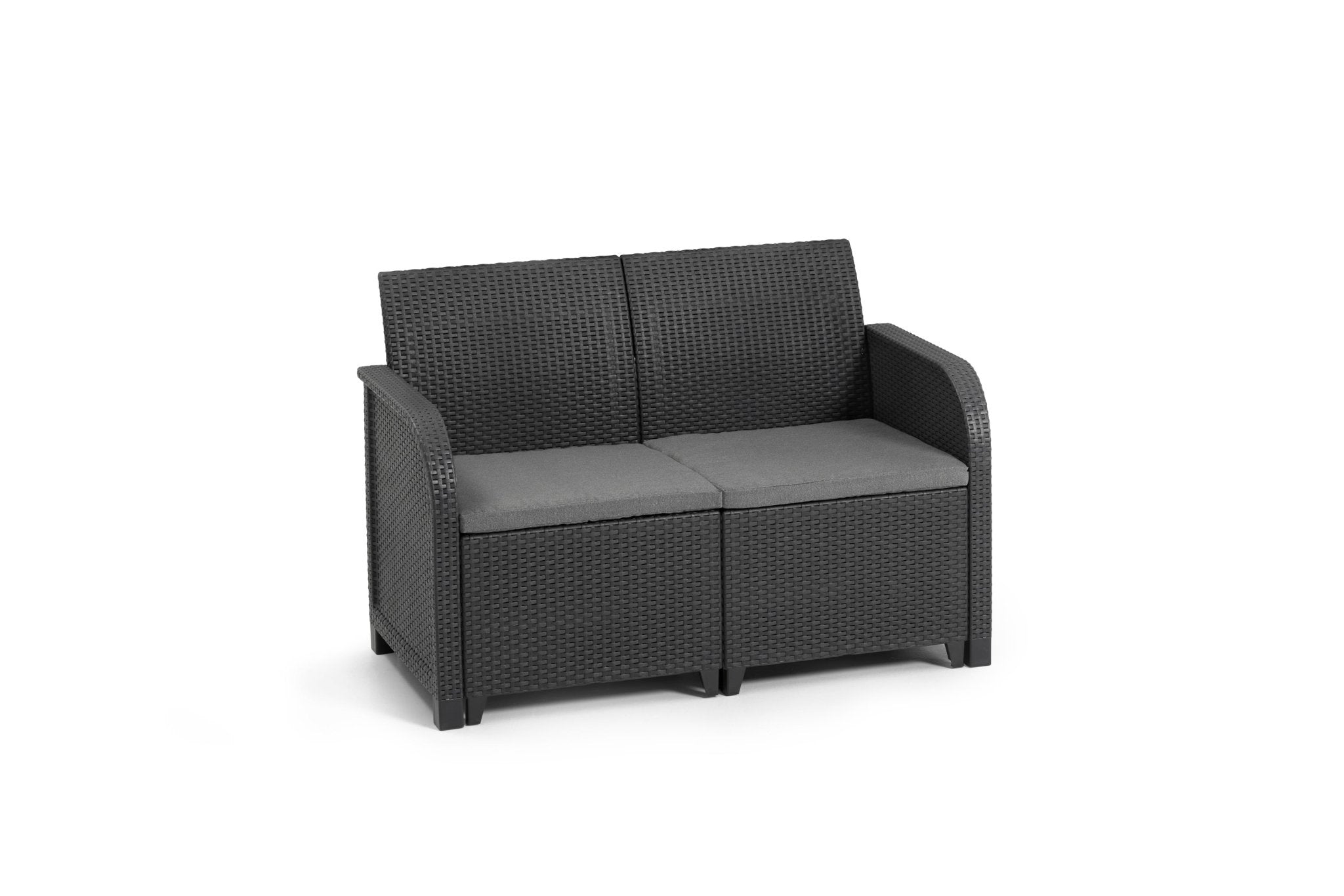
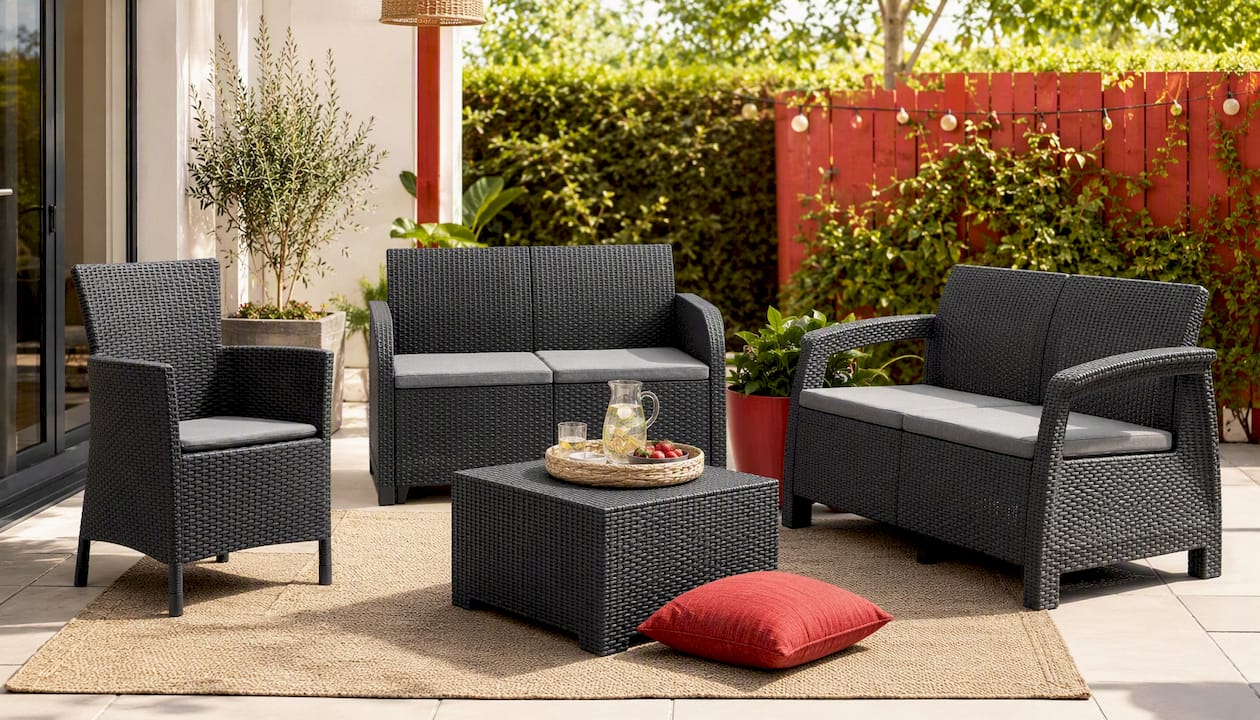
If you’re weighing up resin wicker for your own backyard, a few Keter pieces show the material’s range well. The Keter Iowa Garden Chair brings resin durability to everyday garden seating without the upkeep timber demands, ideal if you want something you can leave outside through every season without a second thought. For entertaining space, the Rosalie 2 Seater Sofa offers a two-seat resin option suited to patios or covered outdoor lounges, while the Keter Corfu 2 Seater Sofa works well for smaller balconies or courtyards where a compact footprint matters. Have a browse through the Keter Iowa Garden Chair, check availability on the Rosalie 2 Seater Sofa, or take a closer look at the Keter Corfu 2 Seater Sofa to see which fits your outdoor space best.
Sources
- Wicker patio furniture: how to choose the right one
- What is Resin Wicker - Honeywell Rattan
- Advantages and disadvantages of wicker outdoor furniture — The Backyard Gnome
FAQ
What is the difference between wicker and resin wicker?
Wicker is a weaving technique, while resin wicker is synthetic material, usually HDPE, woven using that same technique to create weather-resistant outdoor furniture.
How long does resin wicker last?
Quality resin wicker over a powder-coated aluminium frame typically lasts around 8 to 15-plus years outdoors, depending on UV stabilisation, climate, and maintenance.
Is resin wicker good for outdoor furniture?
Yes, resin wicker resists moisture and UV far better than natural wicker, making it well suited to poolside seating, open patios, and year-round outdoor use.
Can resin wicker furniture be left outside?
Yes, that’s exactly what it’s designed for, provided it uses UV-stabilised resin and a rust-resistant frame like powder-coated aluminium.
Is resin wicker or rattan better for my patio?
For fully exposed patios and poolside areas, resin wicker is the more practical choice; natural rattan suits covered, sheltered spaces better.


