
Shed roof styles for Australian homeowners: a practical guide

For most Australian backyards, the right shed roof comes down to three styles: gable, skillion (also called pent or mono-pitch), and flat. Gable suits workshops and storage where headroom and ventilation matter. Skillion works well for compact urban blocks, coastal sites, and anyone wanting to mount solar panels. Flat or lean-to roofs suit boundary sheds with strict height limits. Keter’s Australian range covers all three profiles, and materials like Colorbond steel and weather resistant resin handle the demands of Australian sun, rain, and coastal salt.
Quick shortlist by situation:
- Small yard or tight boundary: skillion or flat, low profile, easier council approval
- Workshop or general storage: gable, for headroom, loft space, and cross-ventilation
- Potting or compact garden use: flat or skillion, minimal footprint
- Coastal or high-wind site: skillion with a lower pitch, stainless fixings, and corrosion-rated cladding
Key takeaways
Gable, skillion, and flat roofs cover the needs of most Australian backyards; matching your choice to council height limits, wind exposure, and intended use is what separates a good decision from an expensive one.
| Point | Details |
|---|---|
| Match style to use | Gable for headroom and ventilation; skillion for compact sites and solar; flat for tight height limits. |
| Pitch drives drainage | Gable sheds suit 15°–30°; skillion 5°–15°; flat roofs need a minimum 1°–2° fall to prevent ponding. |
| Check council limits first | Many Australian councils set an exempt-development ridge height; a skillion often stays under it where a gable would not. |
| Choose materials for your climate | Colorbond suits most Australian sites; coastal locations need higher corrosion-rated cladding and stainless fixings. |
| Ketergroup covers all three profiles | The Oakland (gable), Signature Pent (skillion), and Potting 6x8 (compact flat/pent) map directly to the styles in this guide. |
Table of Contents
- How the main shed roof designs compare at a glance
- 1. Gable roof
- 2. Skillion (pent or mono-pitch) roof
- 3. Flat or near-flat roof
- 4. Lean-to (attached) roof
- 5. Heritage and ornamental roof forms
- How to choose the right roof style for your shed
- Which materials and pitches work best for each roof style?
- Which Keter shed suits your chosen roof style?
- What most homeowners get wrong about shed roofs
- Keter sheds make the roof decision easier
- Sources
- FAQ
How the main shed roof designs compare at a glance
The three dominant shed roof styles each have a clear sweet spot. Here is how they stack up on the decisions that actually matter.
| Factor | Gable | Skillion (pent) | Flat / lean-to |
|---|---|---|---|
| Best for | Workshop, general storage | Compact yards, solar, modern look | Boundary sheds, low-height sites |
| Headroom and storage | High ridge, loft possible | Tapers from high to low wall | Uniform but limited height |
| Rainwater shedding | Sheds to both sides | Single-direction run-off | Requires careful drainage design |
| DIY ease and cost | Moderate, two roof planes | Simplest build, one plane | Simple structure, membrane adds cost |
| Council and height suitability | Can exceed height caps on small lots | Lower profile often avoids permit triggers | Lowest overall height |
| Aesthetic fit | Traditional, suits most house styles | Contemporary, suits modern homes | Utilitarian, suits urban infill |
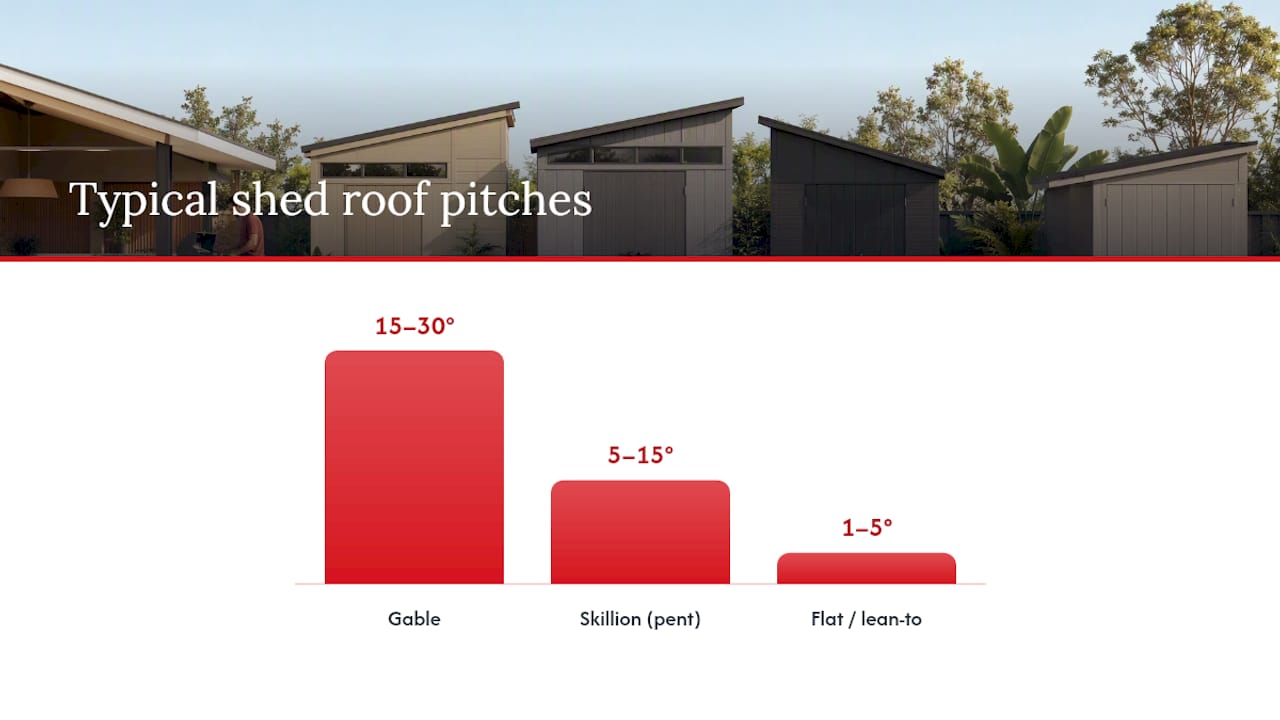
Typical pitch ranges: gable roofs on Australian garden sheds run approximately 15°–30°; skillion roofs are commonly pitched at 5°–15°; flat or near-flat roofs sit at 1°–5° (a minimum fall is needed to prevent ponding).
Pro Tip: A skillion roof pitched at 10°–15° and oriented north-facing gives you the best angle for rooftop solar panels on a shed, without adding height that might trigger a council permit.
Pro Tip: If your shed will store tall equipment like a ride-on mower or kayak rack, a gable roof’s central ridge gives you that extra vertical clearance right where you need it.
1. Gable roof
A gable roof has two sloping planes that meet at a central ridge, forming a triangular end wall (the gable). It is the most recognisable shed roof form in Australia and suits a wide range of uses.
Pitch: typically ranges from about 15° to 30° for garden sheds in Australian conditions.
Pros:
- Best headroom of the three styles, with usable loft space above the wall plate
- Natural cross-ventilation through gable-end vents reduces summer heat build-up
- Sheds rain efficiently to both sides, reducing gutter load per side
- Timeless look that complements most existing house styles
Cons:
- Two roof planes mean more material and slightly more complex framing than a skillion
- The ridge height can push the overall shed height above council exempt-development thresholds on smaller lots
- Gable ends can be vulnerable to wind uplift if not braced correctly
Gable roofs provide extra loft storage and improved ventilation, making them the go-to choice for a backyard workshop where you want to hang tools overhead or store seasonal gear above head height. In rural settings, a gable shed with a 25° pitch and Colorbond cladding is a practical standard.
Editor note: include a photo of a gable shed in a suburban Australian backyard with visible gutter and downpipe.
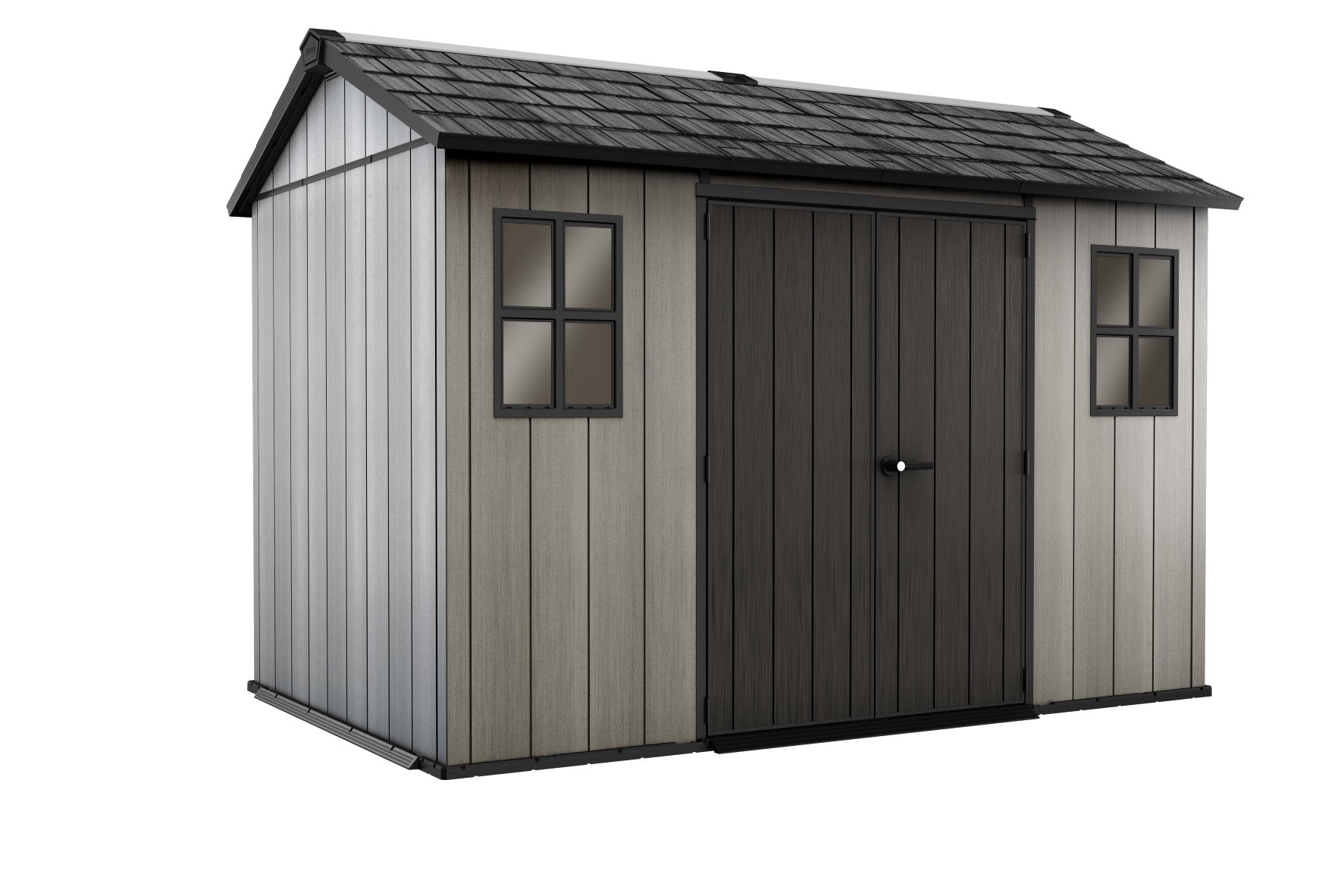
Maintenance: clean gutters on both sides twice a year; inspect ridge capping after storms.
2. Skillion (pent or mono-pitch) roof
A skillion roof is a single flat plane sloping in one direction, sometimes called a pent, mono-pitch, or lean-to roof when attached to a wall. According to standard roof-shape classifications, lean-to, pent, and skillion are all variants of the same single-slope form.
Pitch: generally between about 5° and 15° for most shed applications; steeper pitches can improve drainage on larger spans.
Pros:
- Simplest framing of all three styles, one roof plane, fewer cuts and joints
- Lower overall height on the low-wall side, which often keeps the shed within exempt-development height limits
- Ideal orientation for solar panels on the high-wall side facing north
- Modern, clean aesthetic that suits contemporary homes and urban backyards
Cons:
- Headroom tapers from the high wall to the low wall, which can limit storage near the low end
- All run-off goes to one side, so that gutter and downpipe need to be sized for the full roof area
- Very shallow pitches (under 5°) risk ponding if the gutter blocks
Site constraints such as local council height limits and wind exposure frequently determine whether a skillion or gable roof is practical; a skillion’s lower profile can often avoid permit hurdles in dense suburbs. For a boundary shed in a typical Sydney or Melbourne backyard, that lower profile is often the deciding factor.
Editor note: include a photo of a pent-profile shed against a timber fence in an urban backyard.
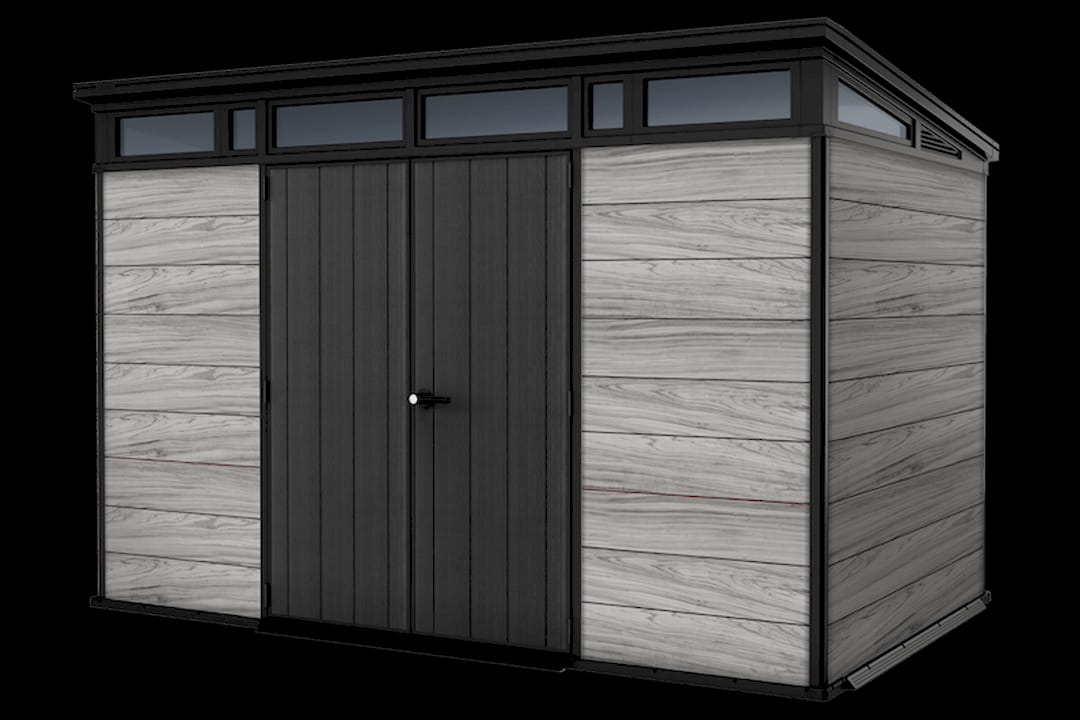
Maintenance: clear the single gutter after leaf fall; check flashing at the high wall if the shed is attached to a fence or structure.
3. Flat or near-flat roof
A flat roof on a shed is never truly flat; it needs a minimum fall of around 1°–5° to drain. Membrane-covered flat roofs are common on lean-to additions and low-boundary sheds.
Pitch: 1°–5° minimum fall; anything less risks ponding.
Pros:
- Lowest possible overall height, the best choice when council height limits are very tight
- Uniform interior height across the full floor area
- Simple structure, easy to build or buy as a kit
Cons:
- Ponding water shortens membrane life and increases maintenance; flat roofs require careful drainage design and older membrane systems can have higher upkeep costs than pitched roofs
- No loft storage
- Requires regular inspection of the membrane and drainage outlets
Flat roof sheds suit urban infill sites, side-of-house storage, and anywhere a low profile is non-negotiable. They are less suited to high-rainfall areas unless drainage is engineered carefully.
Editor note: include a photo of a flat-roof lean-to shed attached to a house wall.
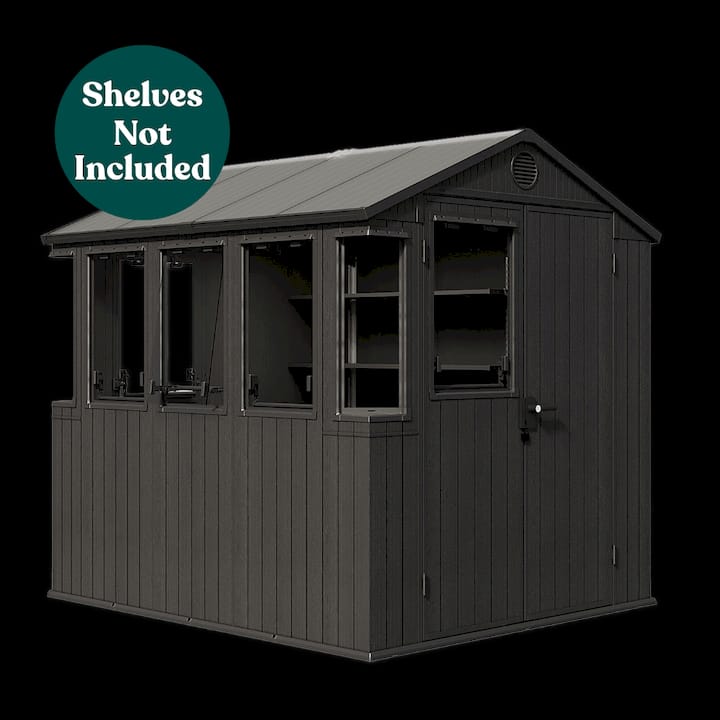
Maintenance: inspect membrane and drainage outlets every six months; clear debris from the roof surface after storms.
4. Lean-to (attached) roof
A lean-to is a skillion-profile roof where the high wall is fixed to an existing structure, typically the house or a fence. It shares the same single-slope geometry as a skillion, but draws structural support from the host wall.
Pros: minimal footprint, no freestanding high wall needed, natural weather protection on the attached side. Cons: requires the host wall to be structurally sound; run-off must be directed away from the house foundation.
Lean-to sheds are popular for firewood storage, bike shelters, and side-of-house tool storage in Australian suburban blocks.
5. Heritage and ornamental roof forms
Gambrel (barn-style double-slope), hip, and Dutch-gable roofs appear on heritage properties and prestige garden buildings. They offer character and additional loft volume but involve more complex framing and higher build costs. For most homeowners, these are a premium aesthetic choice rather than a practical one.
How to choose the right roof style for your shed
Work through these steps before you commit to a style.
- Measure your setback and height limit. Check your local council’s exempt-development rules for outbuildings. In many Australian councils, a shed over 2.4 m wall height or 3.0 m ridge height triggers a development application. A skillion or flat roof often keeps you under those thresholds where a gable would not.
- Assess wind exposure. Coastal and elevated sites face higher wind loads. A lower-pitch skillion presents less wind resistance than a tall gable. Check your site’s wind region under AS 4055 or ask a local certifier.
- Decide on loft storage vs. uniform headroom. If you want to store kayaks, surfboards, or seasonal boxes overhead, a gable’s central ridge is the practical choice. If you need consistent standing height across the full floor, a flat or low skillion works better.
- Consider solar orientation. A north-facing skillion pitched at 10°–15° is the most efficient orientation for rooftop panels in most of Australia.
- Check drainage and guttering. A gable splits run-off to two gutters; a skillion concentrates it to one. Size your downpipe accordingly, especially in high-rainfall areas like coastal Queensland or Tasmania.
- Ask your council or certifier two questions: “What is the maximum ridge height for an exempt outbuilding on my lot?” and “Does my site fall in a bushfire attack level (BAL) zone that affects material choice?”
Pro Tip: In most Australian states, a shed under 10 m² and below the council’s height threshold can be built without a development application, but rules vary by council. Always confirm with your local authority or a private certifier before you build.
Questions to ask your installer: What is the design wind speed for my site? What fixings pattern is required for that wind region? Does the roof pitch affect the warranty on the cladding material?
Which materials and pitches work best for each roof style?
Material choice and pitch are linked. Get one wrong and the other suffers.
Colorbond steel is the benchmark for Australian shed roofs. Its baked-on paint system resists UV degradation and handles the temperature swings common across Australian climates. Colorbond is widely recommended for Australian shed roofs for its corrosion resistance, though coastal sites in severe marine zones should specify a higher corrosion-protection grade and stainless fixings. One practical note: darker Colorbond colours like Woodland Grey absorb more heat in summer, so pair them with sarking or a lighter interior lining if the shed will be used as a workshop.
Zincalume is the unpainted steel substrate under Colorbond. It is cheaper but lacks the UV and colour stability of a painted finish. Suitable for rural machinery bays where appearance is secondary.
Resin and plastic panels (as used in Keter’s modular sheds) offer genuine weather resistance without rusting or painting. They suit smaller garden and potting sheds where the priority is low maintenance and easy assembly rather than spanning large roof areas.
Polycarbonate panels let natural light into the shed without a skylight cut-out. They work well as a partial roof panel on a skillion or lean-to, but they degrade faster under high UV without a UV-stabilised coating, and they add less insulation value than steel.
Pitch thresholds to keep in mind:
- Gable: 15°–30° suits most Australian garden shed spans and handles heavy rainfall without ponding risk
- Skillion: 5°–15° is the practical range; below 5° requires engineered drainage; above 15° starts to add height that may affect council limits
- Flat/near-flat: minimum 1°–2° fall to a gutter; membrane selection matters more than pitch at this range
Common roofing sheet types include metal, polycarbonate, asphalt, and bitumen; corrugated metal remains the most practical choice for Australian sheds given its drainage performance and durability.
Pro Tip: For coastal sites within 1 km of the ocean, specify stainless steel screws and check that your cladding carries a corrosion-resistance rating suitable for a marine environment. Standard zinc-plated fixings can fail within a few years in salt air.
Which Keter shed suits your chosen roof style?
Keter’s Australian range maps neatly to the three main shed roof profiles, and every model arrives as a DIY-assembly kit with no concrete footings required.
- Keter Oakland Garden Shed 1175 (3.5 x 2.3 m): a gable-profile resin shed suited to general garden storage, lawn equipment, and tools. The central ridge gives useful standing headroom and the weather resistant resin panels need no painting or sealing.
- Keter Signature Pent 11x7 Shed Stormgrey Look (3.4 x 2.2 m): a pent (skillion) profile shed in a contemporary grey finish. Its single-slope roof keeps the overall height low, making it a practical fit for compact urban backyards and sites where council height limits are tight. The modern profile suits homes with a contemporary or Hamptons-style exterior.
- Keter Potting 6x8 Shed Dark Grey (1.9 x 2.4 m): a compact shed designed for potting, small tool storage, and garden organisation. Its small footprint fits side-of-house positions and tight boundary setbacks where a larger shed simply would not fit.
All three models include assembly guides and dimension specs on the Keter product pages, so you can verify headroom, footprint, and gutter-run clearance before you order. For more guidance on sizing, the garden shed sizes guide covers Australian footprint options in detail.
What most homeowners get wrong about shed roofs
The most common mistake is choosing a roof style for looks alone, then discovering the ridge height exceeds the council’s exempt-development limit after the slab is poured. The second most common is fitting undersized gutters on a skillion roof, where the entire catchment area drains to a single gutter. A 3 m wide skillion in a high-rainfall area can push 60–80 litres per minute through that one outlet during a heavy storm; a standard 90 mm half-round gutter is often not enough.
Wind uplift is the third overlooked factor. A gable end with no diagonal bracing and undersized fixings is a liability in a wind region above N2. Always check the manufacturer’s recommended screw pattern and spacing, not just the minimum.
Three things you can do right now:
- Look up your council’s exempt-development height limit for outbuildings online or call the duty planner. Write the number down before you choose a roof style.
- Check the wind region for your postcode using the AS 4055 wind region map or ask a local certifier. It takes five minutes and can change your material and fixing spec entirely.
- Download the assembly guide for the Keter model you are considering from the Keter assembly guide and confirm the ridge height against your council limit before you buy.
Keter sheds make the roof decision easier
Choosing a shed roof style is one thing; finding a shed that actually delivers on that choice is another. Keter’s Australian range takes the guesswork out of the build by pairing each roof profile with a fully engineered, weather resistant resin kit that goes together without a tradesperson.
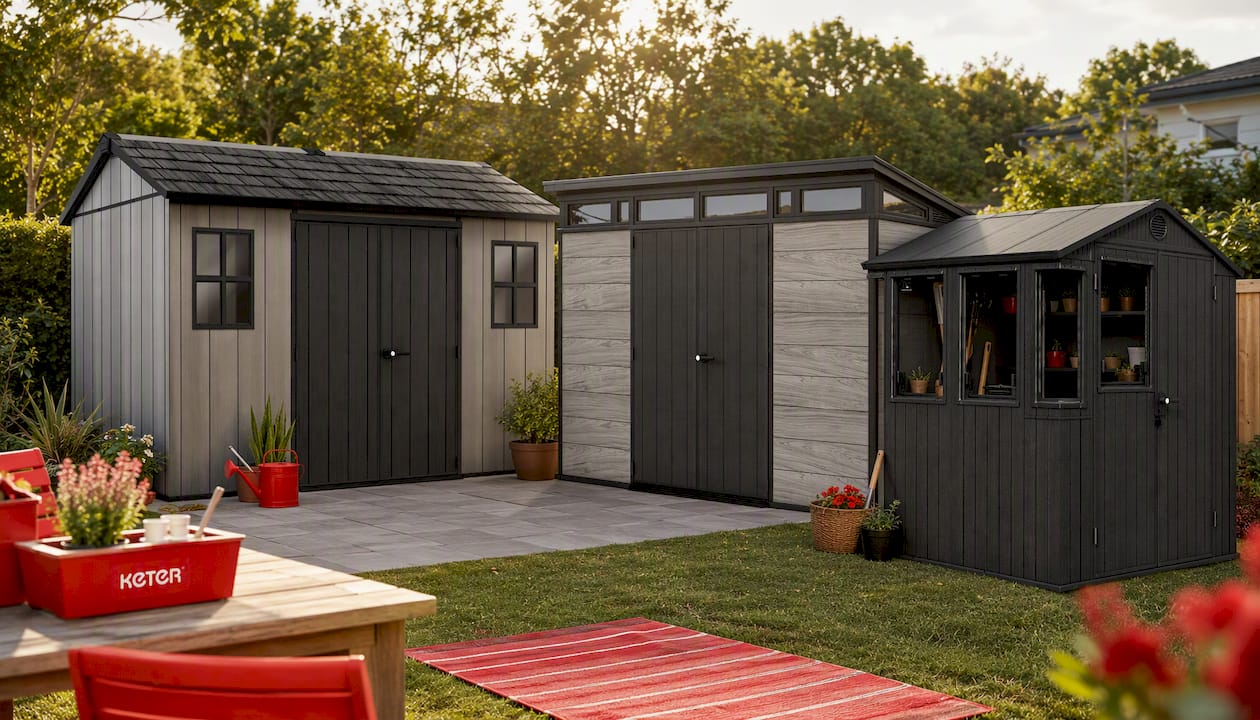
The Keter Signature Pent gives you a clean skillion profile with a low ridge height, ideal for tight urban blocks. The Oakland Garden Shed 1175 delivers a gable roof with genuine standing headroom for a workshop setup. And the Keter Potting 6x8 fits where nothing else will. Head to the Keter product pages to check dimensions, download assembly guides, and confirm delivery options for your area.
Sources
- Skillion Roof Guide for Australian Homes | Fortified
- Skillion Roof vs. Gable Roof: Know the Difference - Dhursan Construction
- List of roof shapes
FAQ
What is the best roof style for a shed?
For most Australian backyards, a gable roof is the best all-round choice for storage and workshop sheds because it offers the most headroom, good ventilation, and efficient rain shedding. A skillion (pent) roof is the better option when council height limits are tight or solar panels are a priority.
What are the main types of shed roofs?
The four most common shed roof types are gable (two slopes meeting at a ridge), skillion or pent (single slope), flat or near-flat (minimal fall to a gutter), and lean-to (a skillion attached to an existing wall). Standard roof-shape classifications also include hip and gambrel forms, though these are less common on garden sheds.
What is the easiest roof to build on a shed?
A skillion (pent) roof is the simplest to build because it has one flat plane, fewer cuts, and no ridge beam to set. Pre-engineered resin shed kits like the Keter Signature Pent take that simplicity further, arriving with all panels pre-formed and an assembly guide included.
What pitch should a shed roof have in Australia?
Gable roofs on Australian garden sheds typically run at 15°–30°. Skillion roofs are commonly pitched at 5°–15°, with 10°–15° recommended for solar panel efficiency. Flat or near-flat roofs need a minimum fall of 1°–2° to prevent water pooling.
Do I need council approval for a shed in Australia?
Most Australian councils allow small outbuildings under a certain size and height without a development application, but the thresholds vary by state and local council. Check your council’s exempt-development provisions for outbuildings, or speak with a private certifier, before you finalise your roof style and ridge height.
Recommended
- Garden shed sizes in Australia: your complete buying guide – Keter Australia
- From Box to Backyard: A Step-By-Step Guide to Assembling Your Keter Shed Kit | Keter Australia
- What Is a Shed Kit? The Complete Guide to Quick and Easy Outdoor Storage – Keter Australia
- Top 8 Things You Need to Know Before Buying a Garden Shed from Keter – Keter Australia


