
Resin shed lifespan: what Australian homeowners should expect

A well-sited, UV-stabilised resin shed in Australian conditions lasts well over a decade before structural failure becomes a concern, though cosmetic wear such as fading may appear earlier. Australian buyer guides confirm 10+ years is common for a properly installed model, and the gap between a 10-year shed and a 20-year shed almost always comes down to three things: UV-stabilised HDPE panels, a firm level base, and correct anchoring to AS 1170.2 wind-load requirements. If you’re in a bushfire-prone area, AS 3959 compliance is an additional check worth making before you buy. Ketergroup builds its resin sheds from recyclable, weather-resistant materials with these conditions in mind.
Key takeaways
A well-sited, UV-stabilised resin shed in Australian conditions typically lasts 15–20 years, with base preparation and correct anchoring being the single biggest determinants of where in that range your shed lands.
| Point | Details |
|---|---|
| Typical lifespan range | A well-sited resin shed in Australia lasts 15–20 years with basic maintenance. |
| Base and anchoring first | A firm level base and correct anchoring extend lifespan as much as panel quality does. |
| Annual maintenance | Wash annually and inspect biannually for cracks, loose anchors, and worn seals. |
| Warranty check | Confirm the warranty covers UV stability and material defects, and register the product promptly. |
| Ketergroup for Australian conditions | Ketergroup resin sheds use weather resistant, recyclable HDPE designed for Australian UV, coastal, and wind conditions. |
Table of Contents
- How long does a resin shed actually last?
- What factors determine how long your resin shed will last?
- How does resin compare to timber and metal sheds?
- How to make your resin shed last as long as possible
- What to check before you buy: warranty, specs, and the right questions
- When should you repair versus replace a resin shed?
- Why Ketergroup resin sheds are built for Australian conditions
- What maintenance and repairs typically cost over a shed’s lifespan
- A practical note from an Australian perspective
- Ketergroup outdoor storage and shed solutions for Australian homes
- Sources
- FAQ
How long does a resin shed actually last?
“Lifespan” means different things depending on what fails first. Cosmetic end-of-life arrives when panels fade noticeably, surface gloss dulls, or minor brittleness appears at edges. This is normal after years of Australian sun and does not mean the shed is unsafe. Structural end-of-life is a different matter entirely: fractured load-bearing panels, a corroded internal steel subframe, door-header failure, or foundation movement that shifts the frame out of square. That is when replacement becomes a safety question, not just an aesthetic one.
For realistic planning, here are typical lifespan ranges by material in Australian conditions:
| Material | Typical lifespan range | Main failure mode | Variability drivers |
|---|---|---|---|
| Resin / HDPE | Typically more than a decade | UV brittleness, cosmetic fade | UV stabiliser quality, base, anchoring |
| Treated timber | 10–15 years | Rot, termites, warping | Treatment grade, ventilation, climate |
| Uncoated steel | 10–20 years | Surface rust, corrosion | Coating quality, coastal exposure |
| Galvanised / Zincalume steel | 20–30 years | Mechanical damage, sealant failure | Coating integrity, wind zone |
Resin resists rot, termites, and rust entirely, which explains why it consistently reaches the upper end of that range with basic upkeep, while timber and uncoated steel depend heavily on treatment quality and local conditions.
What factors determine how long your resin shed will last?
Material and construction quality
Not all resin is equal. High-density polyethylene (HDPE) with UV stabilisers and anti-fade additives holds its structural integrity well into the second decade. Panels without those additives become brittle and chalky much sooner under Australian UV. On larger shed models, a galvanised steel subframe carries the roof and wall loads; the quality of that steel matters as much as the panel grade.
- HDPE grade and UV stabilisers: look for panels described as UV-stabilised or UV-protected, not just “resin.”
- Steel reinforcement: larger sheds need an internal steel subframe; confirm it is galvanised or powder-coated.
- Panel thickness and interlocking design: thicker, tongue-and-groove panels resist racking and wind uplift better than thin snap-fit designs.
- Base type: a 100 mm reinforced concrete slab or compacted crushed rock with edge restraints is the gold standard. Soil or uneven pavers allow movement that stresses joints and seals.
- Anchoring: neglecting anchoring is a frequent cause of premature failure in windy conditions, and correct anchoring can extend usable life as much as choosing a higher-grade panel.
- Drainage and ventilation: water pooling under the floor accelerates joint degradation; overhanging vegetation traps moisture and debris on the roof.
Climate callouts for Australian conditions
Coastal areas: salt-laden air corrodes uncoated steel fittings and hinges faster than the panels themselves. Resin panels handle salt air well, but check that hinges and anchor bolts are stainless or galvanised.
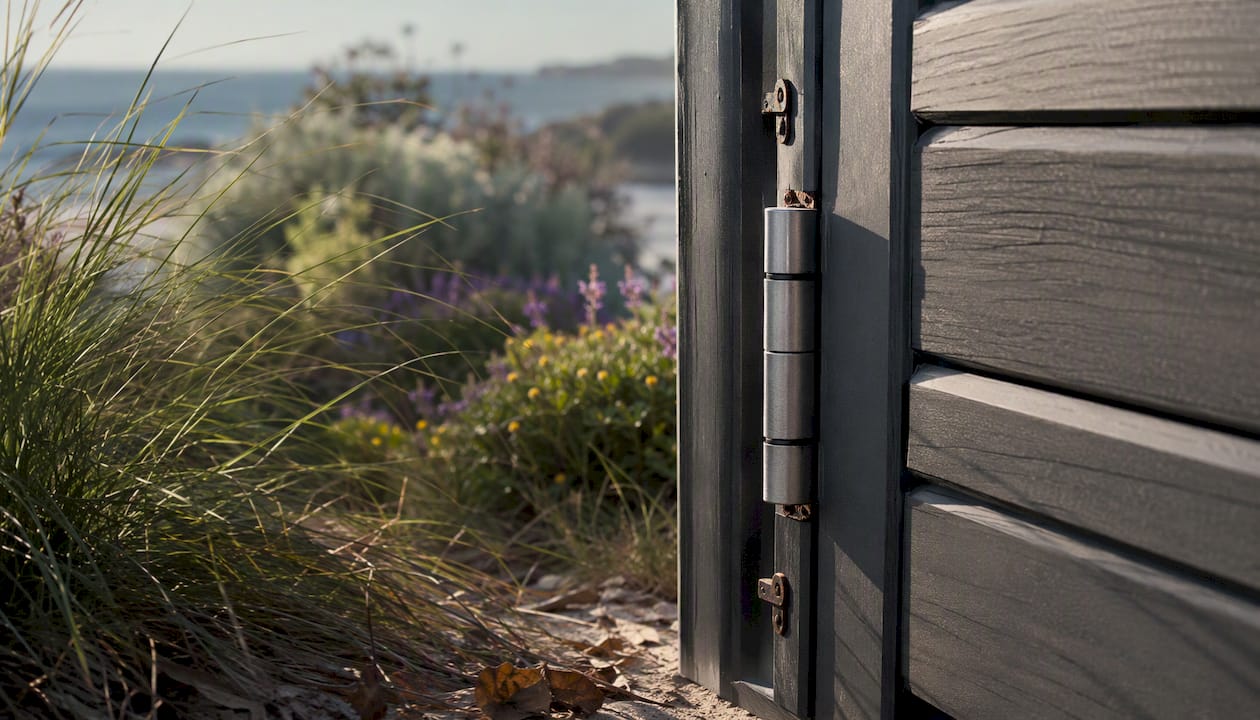
Inland and high-UV regions: prolonged direct sun is the primary enemy of resin. UV-stabilised panels with anti-fade additives are non-negotiable in Queensland, the Northern Territory, and inland New South Wales or Western Australia.
Bushfire-prone areas: AS 3959 sets construction requirements for buildings in bushfire-prone areas. Most residential resin sheds are not rated to AS 3959 standards, so check your local council overlay and discuss siting with your installer before purchase.
High-wind and cyclonic regions: AS 1170.2 defines wind-load categories across Australia. In regions rated W50 or above, an engineered steel shed may be the safer structural choice. Resin sheds perform well in standard suburban wind zones when correctly anchored.
Pro Tip: After any storm, walk the perimeter and check anchor bolts, door seals, and roof panel clips. Catching a loose anchor early costs nothing; replacing a panel after wind uplift costs significantly more.
Usage and load
Storing a ride-on mower or heavy machinery puts constant point-load stress on the floor and walls. Internal shelving bolted to resin panels can crack them over time if loads exceed the panel’s rated capacity. Use freestanding shelving units inside larger sheds to distribute weight independently of the walls.
How does resin compare to timber and metal sheds?
Timber sheds have a warm aesthetic appeal, but wood-boring insects and rot are major failure modes that resin avoids entirely. In Queensland and coastal New South Wales, termite activity can compromise an untreated timber shed within five years. Even treated pine requires periodic re-sealing, staining, and inspection in a way that resin simply does not.
Uncoated steel rusts in coastal or high-humidity environments unless the coating is maintained. Resin handles salt air and humidity without any surface treatment. Where steel genuinely wins is in engineered high-wind and cyclonic zones: a certified steel shed built to AS 1170.2 specifications carries documented wind ratings that most resin sheds cannot match. For a suburban backyard storing garden tools, bikes, and outdoor furniture, resin is the lower-maintenance, longer-lasting choice. For a workshop in a cyclonic region or a vehicle shelter in a high-wind zone, an engineered steel structure is worth the additional cost.
The maintenance difference over a decade is meaningful. Timber needs re-treating every two to three years. Steel needs rust-spot attention and coating touch-ups. Resin needs an annual wash and a biannual inspection.
How to make your resin shed last as long as possible
Follow this sequence from purchase through long-term care:
- Choose a UV-stabilised model. Confirm the product description explicitly states UV-stabilised or UV-protected HDPE panels before you buy.
- Prepare a firm, level base. A 100 mm reinforced concrete slab is ideal. Compacted crushed rock with edge restraints is a practical alternative. Avoid placing the shed directly on soil or loose pavers.
- Follow the anchoring instructions exactly. Use the anchor kit supplied or specified by the manufacturer. In wind-exposed sites, discuss anchor bolt depth and spacing with a local installer.
- Leave clearance around the shed. A 300–500 mm gap on all sides allows air circulation, reduces moisture build-up, and makes annual inspections straightforward.
- Fit ventilation if storing chemicals or fuel. A louvred vent or whirlybird prevents vapour build-up and reduces internal temperature spikes that accelerate panel ageing.
- Keep the roof clear. Remove leaf litter and debris after rain. Debris traps moisture and adds weight that stresses roof panel clips over time.
- Wash annually. A mild detergent and a soft brush removes grime, bird droppings, and surface oxidation. Avoid abrasive pads that scratch UV coatings.
- Inspect biannually. Check for hairline cracks at panel joints, loose anchor bolts, worn door seals, and any rust on steel fittings. Small repairs made promptly prevent larger failures.
- Check anchors after storms. Re-torque any loosened bolts and replace damaged anchor plates immediately.
Ketergroup’s resin shed care guidance covers these steps in detail for Australian conditions, including advice on moisture management and UV care specific to local climates. For internal moisture control, the shed moisture barrier guide is worth reading before you finalise your base design.
What to check before you buy: warranty, specs, and the right questions
Warranties for resin sheds typically cover UV stability and material defects, with terms varying by model. Plastic shed warranties often have shorter coverage than steel shed warranties. Before you commit, confirm:
- Warranty term and scope: does it cover UV-related fading, structural panel failure, and steel subframe corrosion separately?
- Registration requirement: many warranties require product registration within a set period after purchase.
- Authorised dealer support in Australia: can you access replacement panels, hinges, and anchor kits locally?
- Wind rating documentation: does the model carry a stated wind rating relevant to your postcode’s AS 1170.2 wind category?
- Base specification: what base does the manufacturer require to keep the warranty valid?
Three questions to ask your retailer before purchasing:
- “What wind rating does this model carry, and is it suitable for my postcode’s wind category under AS 1170.2?”
- “Is the internal subframe galvanised steel, and what base specification does the warranty require?”
- “Are replacement panels and spare parts available in Australia, and what is the warranty registration process?”
Documented local support and spare-part availability matter more than most buyers realise, because warranty claims often require proof of correct installation alongside access to replacement components.
When should you repair versus replace a resin shed?
Some issues are straightforward repairs. Others signal that the shed has reached the end of its safe service life.
Repairable issues:
- An isolated cracked panel that is not load-bearing
- A jammed or misaligned door that needs hinge adjustment
- Worn or compressed door seals
- A single loose anchor bolt or damaged anchor plate
- Surface discolouration or minor chalking on non-structural panels
Replacement triggers:
- Multiple fractured load-bearing panels, particularly on the roof or corner posts
- A corroded or buckled internal steel subframe
- Foundation movement that has shifted the frame out of square and cannot be corrected
- Persistent water ingress through failed panel joints that cannot be sealed
- Storm damage affecting more than one structural wall section
The cost-to-repair test is simple: if the parts and labour to fix the shed exceed roughly half the cost of a comparable new model, replacement is usually more economical. Always check whether the repair work will void any remaining warranty before proceeding.
Why Ketergroup resin sheds are built for Australian conditions
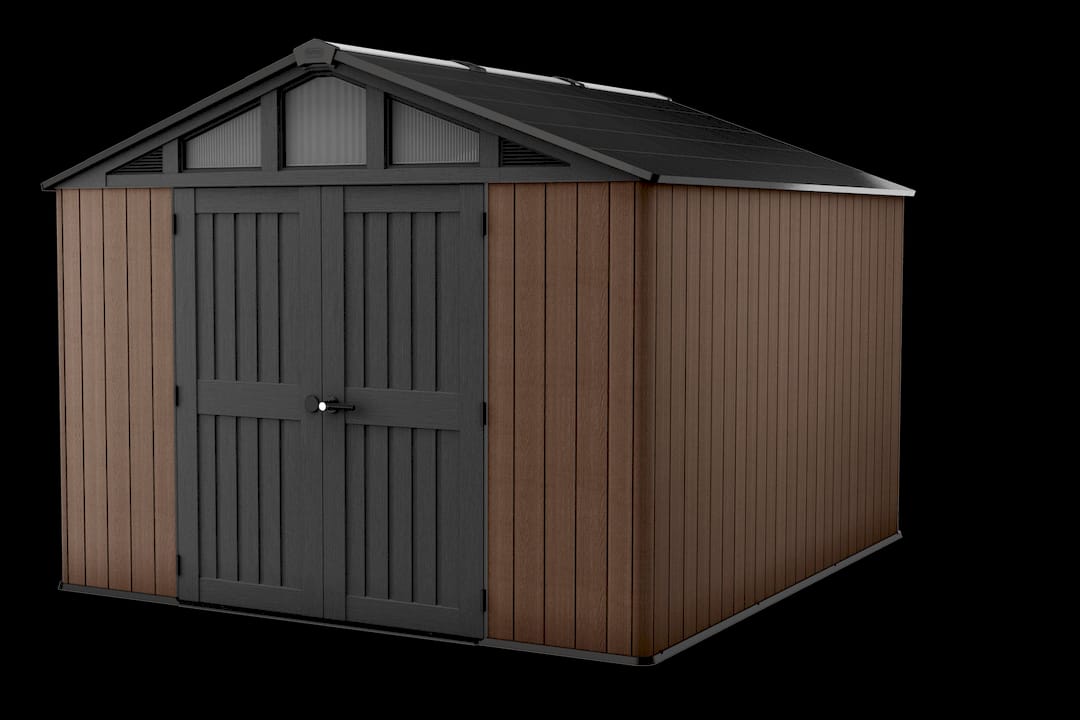
Ketergroup manufactures its sheds and outdoor storage from recyclable resin, designed to handle the UV intensity, humidity, and coastal conditions common across Australia. The range includes weather resistant outdoor storage boxes, garden sheds, and modular storage systems, all built for DIY assembly without specialist tools. Local blog content and product guides cover base preparation, anchoring, and maintenance specific to Australian climates, and spare parts and modular panels are available through local dealer support. Customers consistently highlight ease of assembly and low ongoing maintenance as the standout practical benefits.
What maintenance and repairs typically cost over a shed’s lifespan
Resin sheds have a notably low ongoing maintenance cost compared to timber or uncoated steel. Annual washing requires only a mild detergent and a soft brush, which costs nothing beyond your time. Replacement seals and door hardware, when needed, are minor expenses. A replacement panel, if one cracks after an impact, is the most significant single repair cost you are likely to encounter, and availability through local dealers keeps that manageable.
Timber sheds, by contrast, require periodic re-treatment, staining, and pest inspection, which add up meaningfully over a decade. Steel sheds may need rust-spot treatment and coating touch-ups, particularly in coastal zones. Over a 15-year period, the cumulative maintenance cost of a resin shed is generally lower than either alternative, which is part of why the total cost of ownership favours resin for typical suburban storage use.
For installation, a concrete slab base is the main upfront cost beyond the shed itself. Getting that base right at the start avoids remediation costs later, and most local concreters can quote a standard slab quickly. Material comparison resources for home improvement installations can give you a useful frame of reference when budgeting for site preparation.
A practical note from an Australian perspective
The single most underrated decision in buying a resin shed is the base. Most homeowners focus on the shed itself and treat the base as an afterthought, but a shed sitting on uneven or unstable ground will develop joint stress, door alignment problems, and anchor failures long before the panels show any wear. Get the base right first, anchor correctly, and choose a UV-stabilised model, and a resin shed in a typical suburban Australian setting will give you well over a decade of reliable, low-maintenance service. Check your local council overlay for any bushfire or wind zone overlays before you finalise the siting, particularly in regional areas.
Ketergroup outdoor storage and shed solutions for Australian homes
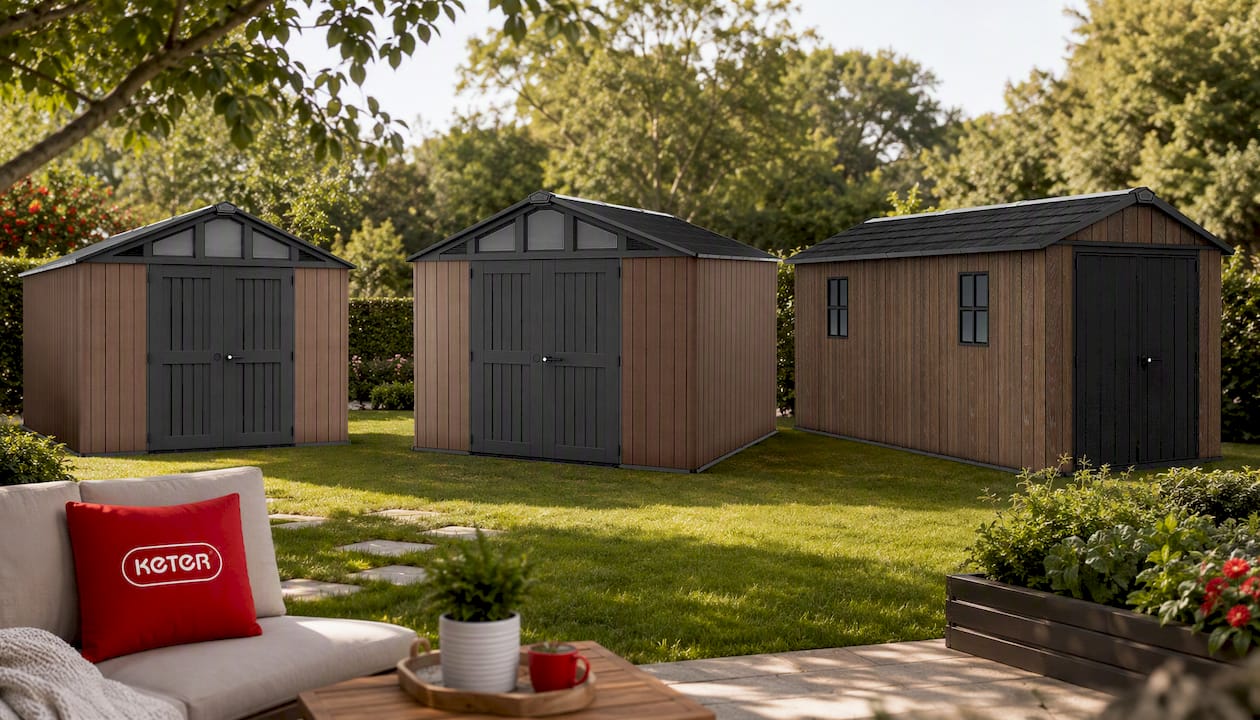
Ketergroup’s resin sheds and outdoor storage range is designed specifically for the Australian climate, with weather resistant panels, recyclable materials, and straightforward DIY assembly. The Store It Out Max Shed is a practical starting point for larger backyard storage, while the Store It Out Prime Shed 880L suits tighter spaces. Beyond sheds, the range extends to outdoor furniture including the Rosalie 2 Seater Sofa, Keter Salta 2 Seater Sofa, Emma 2 Seater Sofa, and Emma Arm Chair 2 Pack, plus storage solutions like the KIS Scuba Box XLarge, Curver Style Storage Box Set (S+M+L), and Curver Style Storage Box Set (M+L) for organising inside your shed or around the garden. Visit the Ketergroup Australia site to view current models, check spare part availability, and find the right shed for your space.
Sources
- Plastic Sheds vs Metal Sheds vs Wood Sheds - Keter US
- 3 Best Resin Garden Sheds (AU 2026) – Keter vs Lifetime vs Outsunny
- Lifetime Sheds Australia: Buyer’s Guide, Local Compliance, and Steel vs Plastic (2025)
FAQ
How long do resin sheds last in Australia?
A well-sited resin shed with UV-stabilised panels typically lasts 15–20 years in Australian conditions. A proper base and correct anchoring are the biggest factors in reaching the upper end of that range.
What are the disadvantages of a resin shed?
Resin sheds can fade and become mildly brittle over time without UV stabilisers, and most are not certified to AS 1170.2 high-wind or cyclonic ratings. They are also generally not suitable as workshops for heavy machinery without additional internal shelving support.
Which lasts longer, metal or resin sheds?
Galvanised or Zincalume steel sheds can last 20–30 years and carry certified wind ratings, making them the stronger choice in cyclonic zones. In standard suburban conditions, a quality resin shed matches or outlasts uncoated steel because it does not rust or corrode.
Are resin sheds worth buying for Australian homes?
Yes, for typical suburban storage of garden tools, bikes, and outdoor equipment. Resin sheds resist termites, rot, and coastal salt air without ongoing treatment, and their total maintenance cost over 15 years is generally lower than timber or uncoated steel alternatives.


