
How to secure outdoor furniture from wind: a practical guide

To secure outdoor furniture from wind, you need to do three things: weigh it down, anchor it in place, and stow what you can’t secure. Do all three before the wind arrives, not during it.
Quick checklist for right now:
- Bring lightweight chairs, cushions, and décor items inside
- Stack and strap remaining chairs against a wall or in a sheltered corner
- Add ballast to tables and heavy items (storage boxes, sandbags, concrete pavers)
- Remove or tightly furl umbrellas and shade sails
- Check the Bureau of Meteorology for active wind warnings in your area
Safety first: NRMA Insurance advises securing outdoor items before a storm, not during one. Once gusts approach around 40 km/h, stop work and move indoors. Anything you haven’t secured by then is better left alone than risked.
Pro Tip: Set a calendar reminder at the start of storm season (October in most of Australia) to do a full outdoor furniture audit while conditions are calm. Reactive preparation in high winds is both ineffective and dangerous.
Key takeaways
Securing outdoor furniture from wind comes down to acting early, using the right combination of weight, anchoring, and stowage, and always checking BOM warnings before you start.
| Point | Details |
|---|---|
| Act before the wind arrives | Prepare in calm conditions; stop work once gusts approach around 40 km/h. |
| Anchor to structural frames | Attach ratchet straps (rated 200–500 kg) to the main frame, never to decorative slats or thin legs. |
| Use ballast and storage together | Concrete blocks of 20 kg+ or full storage boxes add meaningful weight and protect soft goods simultaneously. |
| Embed anchors properly | Anchor bolts should penetrate at least 150 mm into concrete to resist pull-out in high winds. |
| Ketergroup storage doubles as ballast | The KIS Scuba Box XLarge and Curver Style Storage Box Sets store cushions and add weight to your patio at once. |
Table of Contents
- Fast actions you can take in under five minutes
- Anchoring and tie-down methods for decks, turf and concrete
- Using weight and ballast to hold furniture in place
- Straps, non-slip pads and other small fixes that reduce movement
- How windbreaks and smart layout reduce your wind exposure
- Storing cushions, covers and furniture before a storm
- Choosing materials and design features that resist wind
- When to prepare and Australian safety guidance
- What I’ve learned about preparing outdoor spaces for Australian weather
- Ketergroup products that help you secure and stow your outdoor space
- Sources
- FAQ
Fast actions you can take in under five minutes
When a wind warning lands and you have a short window, prioritise in this order: people and pets first, then fragile or glass items, then lightweight furniture, then cushions and soft goods.
Start with anything that can become airborne quickly. Lightweight plastic chairs, pot plants, outdoor rugs, and decorative lanterns are the first things to move. Bring them inside or into a garage if you can. Cushions should always go indoors; wet, wind-battered cushions are harder to dry than they are to protect.
For furniture you can’t bring inside, stack chairs seat-to-seat and move the bundle against a solid wall or into a sheltered corner. A stack of chairs presents far less wind resistance than individual pieces spread across a patio. Once stacked, loop an occy strap or bungee cord around the bundle to keep it together. Rope works too; a few wraps and a secure knot take less than a minute.
Tables are trickier. If a table folds, fold it and lean it flat against a wall. If it doesn’t, push it into the most sheltered corner you have and add weight to the top surface. A full storage box placed on the tabletop adds meaningful ballast fast.
One firm reminder: if the wind is already gusting strongly, don’t attempt to carry large furniture across an open area. Set it down, get yourself inside, and let it be. Tying pieces together and to fixed objects is a solid short-term measure when storage isn’t an option, but only do it while conditions are still safe.
Anchoring and tie-down methods for decks, turf and concrete
Anchoring is the difference between furniture that stays put and furniture that ends up in your neighbour’s yard. The right method depends on your surface.
Anchor types by surface:
- Timber decks: Eye bolts or thru-bolt anchors drilled through the decking board and into the joist below. Always fix into the joist, not just the board surface.
- Concrete slabs: Dynabolts (expansion anchors) or chemical anchors drilled into the slab. Cyclone-proofing guidance recommends embedding anchor bolts at least 150 mm into concrete to resist pull-out under wind loads.
- Turf or soil: Screw-in ground anchors with a helical design. These work well for gazebos and shade sails but are less suited to heavy furniture.
- Pavers: Lift a paver, install a ground anchor into the substrate below, then relay the paver around the anchor point.
Attachment best practice: Always attach straps or rope to the main structural frame of the furniture, never to decorative slats, armrests, or thin legs. Ratchet straps rated for 200–500 kg working load are the right choice for anything substantial; marine-grade rope of at least 10 mm diameter is a reliable alternative. The “weakest link” principle applies here: a high-tension strap is only as strong as the anchor point it connects to, so a poorly embedded bolt will fail before the strap does.
Pro Tip: Cross-tie furniture to two or more anchor points rather than one. A single anchor point creates a pivot; two points prevent rotation and dramatically reduce the chance of the piece lifting.
For redundancy, run one strap front-to-back and a second side-to-side. Test the setup with a firm shake in calm conditions before you rely on it in a storm.
Safety note: Before drilling any permanent anchor, check for underground services (call Dial Before You Dig on 1100) and look up for overhead powerlines. If you’re not confident installing permanent anchors, a licensed tradesperson can do it safely and correctly.
Wind is one of the top wild-weather concerns for Australians, and NRMA’s Wild Weather Tracker data shows many homeowners have experienced outdoor furniture or umbrellas being displaced, with fewer than half taking precautions in advance.
Using weight and ballast to hold furniture in place
Weight is your simplest and most accessible defence against wind. The heavier a piece of furniture is relative to its wind-catch area, the harder it is to move.
Common ballast options:
- Weighted umbrella bases: Purpose-built and easy to fill with water or sand. Always use one rated for your umbrella’s pole diameter and canopy size.
- Sandbags: Inexpensive and flexible. Drape them over chair frames or stack them against table legs. Protect timber decking with a rubber mat underneath.
- Concrete pavers or blocks: Effective and cheap. Blocks of 20 kg or more provide meaningful resistance. Place them on a rubber mat to protect your deck surface.
- Full storage boxes: A large storage box filled with cushions, garden tools, or other items becomes a useful anchor point. The KIS Scuba Box XLarge and the Curver Style Storage Box Set (M+L) are practical examples: they store your cushions and soft goods while adding ballast weight to your outdoor space at the same time.
Ballast guidance by furniture type:
| Furniture type | Suggested minimum ballast | Notes |
|---|---|---|
| Patio umbrella | 20 kg+ weighted base | Fill base with sand, not water, for permanence |
| Lightweight table | 20 kg on tabletop or legs | Distribute across legs, not centred on top |
| Stacked chairs | Strap bundle + 10 kg | Ballast at base of stack only |
| Shade sail | Remove entirely in high winds | No ballast substitutes for removal |
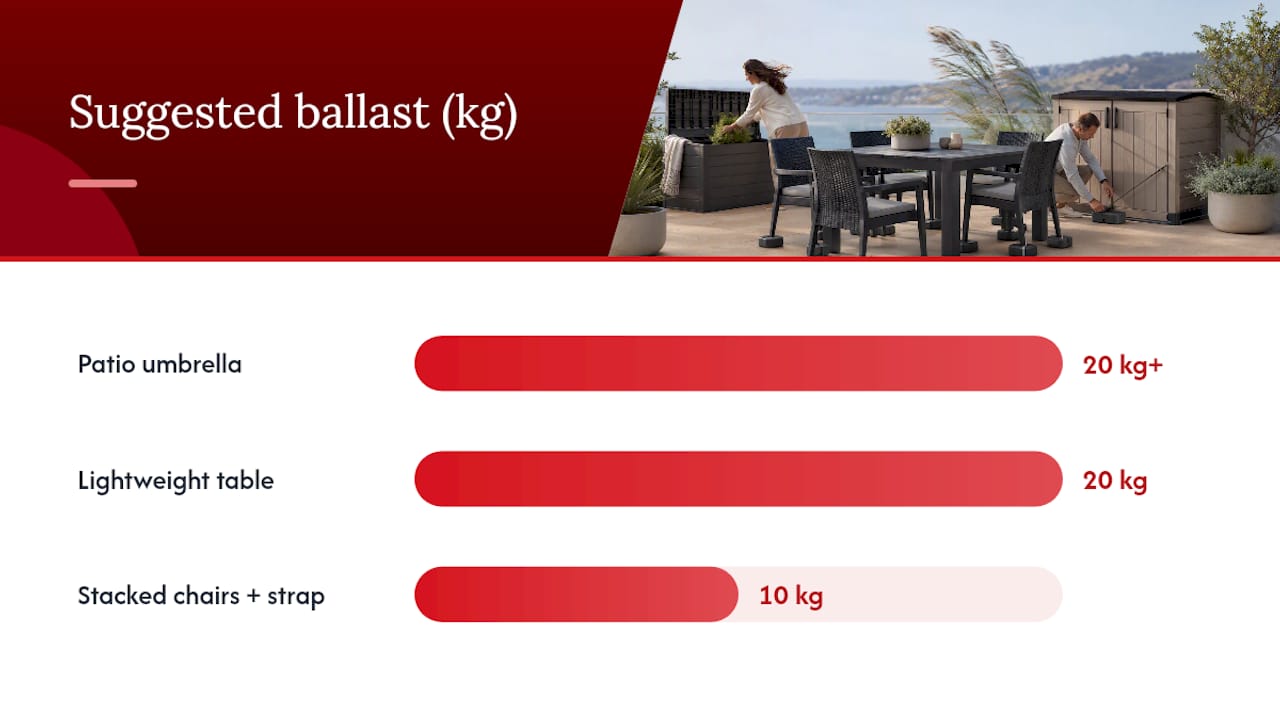
Ballast figures are based on cyclone-proofing guidance from SustainableHomeMag; treat them as a practical starting point, not an engineering specification.
To confirm your ballast is actually working, do a shake test in calm conditions. Grip the furniture and push firmly in the direction the wind would come from. If it shifts easily, add more weight or add a strap. Ballast and tie-downs work best together.
Straps, non-slip pads and other small fixes that reduce movement
Not every situation calls for a drill and a dynabolt. These lower-effort measures reduce sliding and lift without any permanent work.
- Ratchet straps: Use straps with a rated working load appropriate for the furniture weight. Attach to the structural frame only. Ratchet straps are reusable, adjustable, and far more reliable than bungee cords for anything heavier than a stack of chairs.
- Marine rope: A 10 mm braided rope tied with a bowline knot is a strong, weather resistant option. Avoid thin synthetic cord; it cuts into furniture frames and degrades quickly in UV.
- Non-slip rubber pads: Place these under furniture legs to reduce sliding on smooth concrete or tiles. They won’t stop a piece from lifting in strong gusts, but they prevent the gradual creep that happens in moderate winds.
- Anti-skid mats: Larger versions of rubber pads, useful under whole furniture sets on balconies. They also protect decking surfaces from scratching.
- Bungee cords: Acceptable for bundling stacked chairs together as a short-term measure. Not suitable as a primary restraint for anything heavy or in strong winds; they stretch and can release suddenly.
Where not to attach straps: Avoid tying to flimsy lattice fencing, decorative balustrade panels, or thin ornamental legs. These can snap under load and turn into projectiles. If there’s no solid fixed point nearby, ballast is a safer option than a strap attached to something that might fail.
Pro Tip: Keep a small kit in your outdoor storage box: two ratchet straps, a length of marine rope, and a pack of rubber furniture pads. When a wind warning comes through, you won’t be hunting for gear.
When small fixes are no longer enough — if your furniture is regularly moving despite straps and pads — it’s time to install permanent anchors or bring the furniture inside for storm season.
How windbreaks and smart layout reduce your wind exposure
Physical restraints work harder when you reduce the wind load on your furniture in the first place. Positioning and screening can cut the effective wind speed your furniture experiences.
- Orient seating away from the dominant wind direction. In most of coastal Australia, prevailing winds come from the south-west or south-east. Position chair backs toward that direction so the wind pushes into the back of the seat rather than lifting it from the front.
- Use solid fencing or walls as your primary windbreak. A solid fence on the windward side of your patio can reduce wind speed significantly on the lee side. Slatted or open fencing is far less effective because wind passes through the gaps.
- Temporary screens and shade cloth: Shade cloth panels attached to a pergola or fence provide a useful seasonal windbreak. They’re not as effective as solid fencing but are easy to install and remove.
- Hedging and planting: Dense hedges like Pittosporum, Photinia, or Lilly Pilly create effective living windbreaks over time. For planting guidance suited to your region, FarmDaddy’s planting guide covers screening species and spacing.
- Avoid the wind channel effect: On balconies and narrow patios, furniture placed between two walls or structures can experience accelerated wind through the gap. Move furniture away from these channels or use a screen to break the flow.
- Low-profile layouts: Keep furniture close to the ground and avoid tall, freestanding pieces on exposed sites. A low lounge set tucked against a wall is far more stable than a tall bar setting in the middle of an open deck.
Storing cushions, covers and furniture before a storm
The rule is simple: if it’s light enough to blow away, it goes inside. Cushions, outdoor rugs, decorative items, parasols, and small pot plants should all be brought indoors or into a shed or storage box before a storm.
For larger items you can’t bring inside, stacking and bundling reduces the wind profile dramatically. Stack chairs seat-to-seat, nest smaller pieces inside larger ones, and strap the bundle together. A stack of six chairs takes up far less wind-catch area than six individual chairs.
Storage boxes earn their place here in two ways: they protect your soft goods and they add ballast. Fill a large storage box with cushions, throw rugs, and small décor items, then close the lid. The box is now both a safe container and a weighted object on your patio. The Curver Style Storage Box Set (S+M+L) gives you three sizes to work with, so you can sort items by size and distribute the weight across your outdoor space. For a single large-capacity option, a storage shed keeps everything off the patio entirely.
Covers need attention too. A loose furniture cover in high wind acts like a sail and can pull the furniture it’s meant to protect. Specialist cover guidance recommends tie-down straps, elastic hems, and cover clamps to keep covers in place. If your cover doesn’t have tie-down points, remove it entirely before a storm rather than risk it becoming a hazard. TarpsAndAll’s storm prep advice is clear: cheap covers often fail in high winds, and securing covers with proper straps and grommets is worth the investment in storm-prone areas.
Choosing materials and design features that resist wind
The furniture you buy matters as much as how you secure it. Some materials and designs are simply more wind-resistant than others.
- Resin and recycled plastic: Heavier than it looks, UV-stable, and weather resistant without needing annual treatment. Resin furniture from Ketergroup is built to handle Australian conditions and won’t rust, rot, or splinter. For a deeper look at outdoor furniture materials and how they compare, Ketergroup’s guide covers the trade-offs clearly.
- Aluminium: Lightweight, which makes it easier to move but also easier for wind to shift. Aluminium frames need anchoring or ballasting more than heavier materials.
- Timber: Heavier than aluminium and naturally stable, but requires regular maintenance to prevent rot and keep fixings tight. Corroded screws in a timber frame reduce the effectiveness of any strap or anchor attached to it.
- Wrought iron: The heaviest option and naturally wind-resistant, but prone to rust in coastal or humid conditions without proper treatment.
Design features that help: Low centre of gravity, solid bases (not four thin legs), and recessed or clip-in cushion designs all reduce wind susceptibility. Wide, flat bases on chairs and tables are harder to tip than narrow-legged designs.
Features that catch wind: Tall chair backs, loose fabric panels, and open lattice designs all increase wind load. If you live in a consistently windy location, particularly on the coast, prioritise low-profile designs. Ketergroup’s coastal outdoor furniture guide covers material and design choices suited to exposed Australian sites.
Maintenance matters: Check all fixings annually. Replace any corroded bolts, screws, or anchor points before storm season. Galvanised or stainless steel fixings last far longer in coastal conditions than standard zinc-plated hardware.
When to prepare and Australian safety guidance
The single most important timing rule: prepare in calm conditions, not during a storm. NRMA property guidance is explicit on this point. Waiting for obvious storm signs is a common failure; by the time you can see the weather turning, it’s often already unsafe to be moving furniture outside.
Practical safety threshold: Stop outdoor anchoring and stowage tasks once gusts approach around 40 km/h. At that speed, lightweight items can become airborne and cause injury.
How to use BOM warnings:
- A BOM wind watch means conditions may develop. Use this as your trigger to prepare.
- A BOM wind warning means dangerous conditions are expected or occurring. Stop work and stay inside.
- A gale warning or cyclone alert means all loose items should already be secured or stowed. Do not go outside to secure furniture at this stage.
Practical safety checklist:
- Check the BOM website or app before starting any outdoor prep work
- Look up for overhead powerlines before moving tall items or installing anchors
- Call Dial Before You Dig (1100) before drilling permanent anchors into the ground
- Wear gloves when handling ratchet straps under tension
- Never work alone when moving heavy furniture in breezy conditions
- Call a licensed tradesperson for permanent anchor installation if you’re unsure
NEMA’s resilience guidance reinforces this: loose garden items can become dangerous wind-borne debris, and installing and maintaining tie-down points before storm season is far safer than reacting when a warning is already active.
What I’ve learned about preparing outdoor spaces for Australian weather
There’s a tendency to treat outdoor furniture as permanent. You set it up in spring, enjoy it through summer, and assume it’ll still be there after a storm. That assumption costs Australians every year in damaged furniture, broken fences, and insurance claims.
The advice in this article isn’t complicated, but it does require doing the work before you need it. A set of ratchet straps in your storage box, a couple of anchor points installed on a calm weekend, and a habit of checking BOM before a front rolls in will protect your outdoor space far better than any single product.
What I find genuinely useful about Ketergroup’s storage boxes is that they solve two problems at once. You’re not just storing your cushions safely; you’re also adding meaningful weight to your patio. A full KIS Scuba Box XLarge sitting on your deck is doing real work as ballast while keeping your soft goods dry. That kind of practical double-duty is exactly what outdoor living in Australia calls for.
Ketergroup products that help you secure and stow your outdoor space
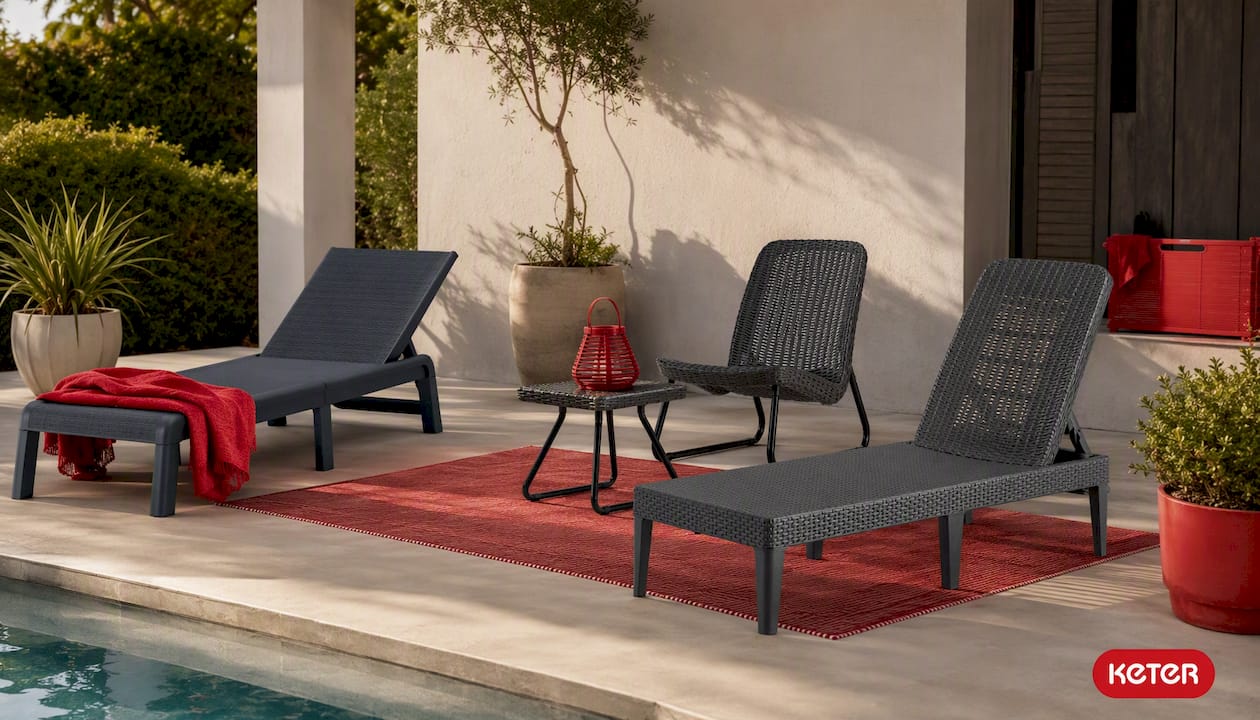
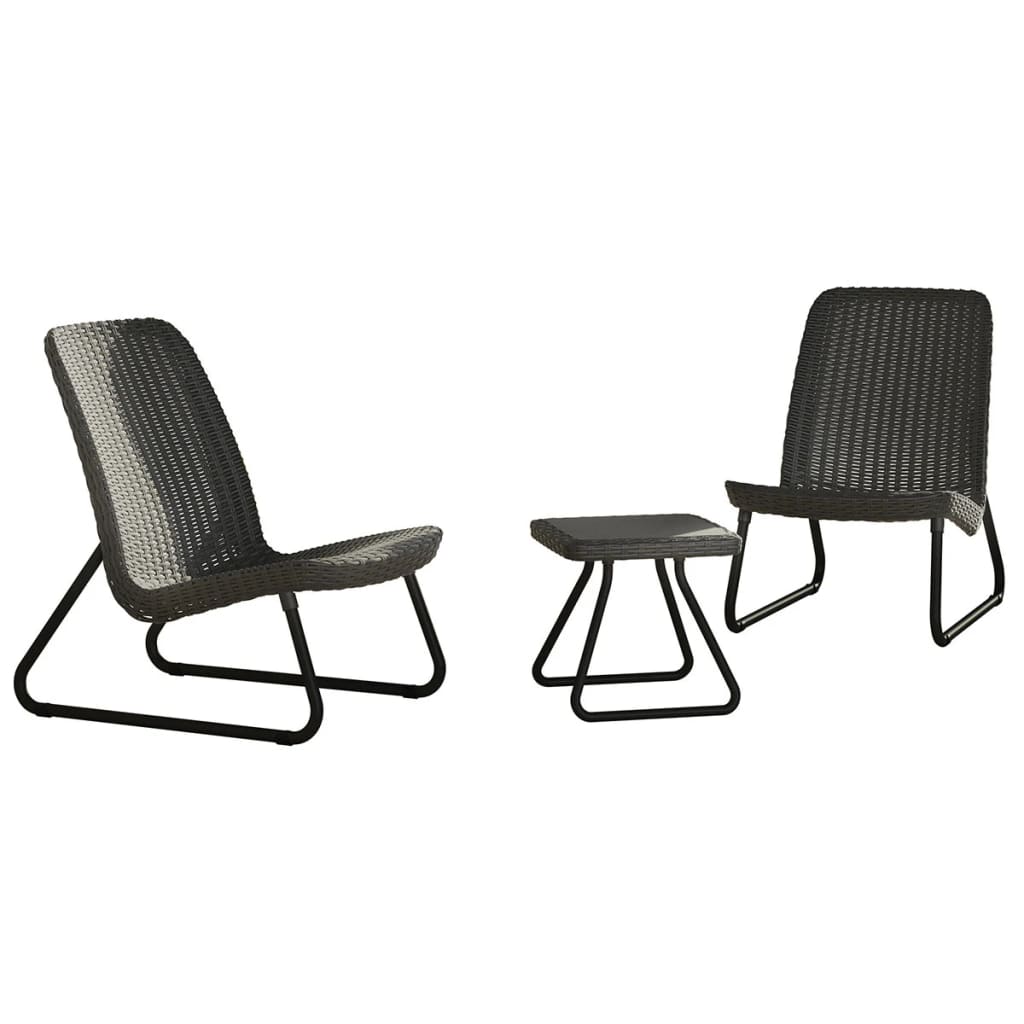
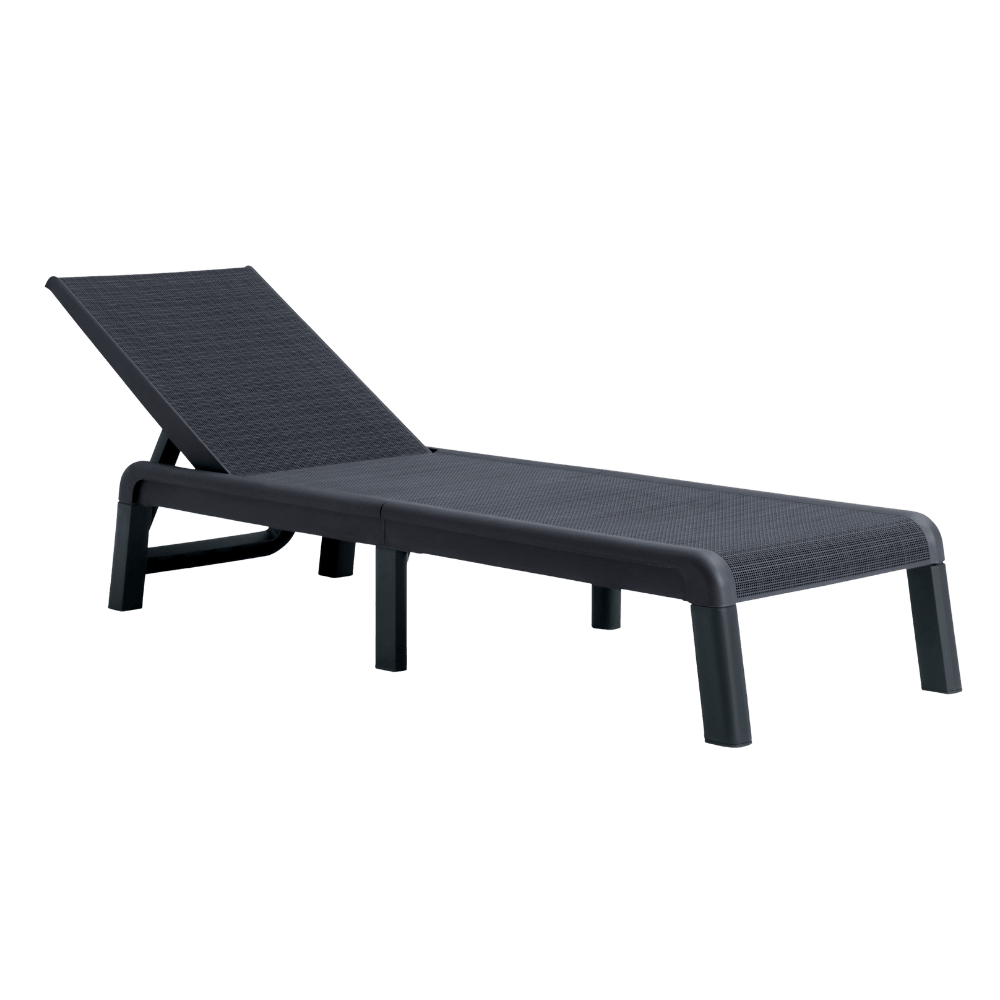
Ketergroup’s weather resistant furniture and storage range is built specifically for Australian outdoor conditions. The pieces are designed to be practical first: durable resin construction, UV-stable finishes, and designs that sit low and stable rather than catching the wind.
For seating that holds its ground, the Rosalie 2 Seater Sofa and the Keter Salta 2 Seater Sofa offer solid, low-profile frames suited to exposed patios. The Emma 2 Seater Sofa and Emma Armchair 2 Pack are compact enough to stack and stow quickly when a storm is forecast.
For storage and ballast, the KIS Scuba Box XLarge holds cushions, covers, and small décor items while adding weight to your outdoor space. The Curver Style Storage Box Set (S+M+L) gives you a flexible three-size system to distribute storage and ballast across your patio. Browse the full range at Ketergroup to find the right fit for your space.
Sources
- Protect your outdoor living space | NRMA Insurance
- Keep your yard maintained | NEMA
- Cyclone‑proof your garden and yard in Queensland | SustainableHomeMag
- How to keep outdoor furniture from blowing away | Ferguson Home
FAQ
How do you secure outdoor furniture covers from blowing away?
Use covers with built-in tie-down straps, elastic hems, or grommet points, and secure them with cover clamps or additional straps. If your cover has none of these features, remove it entirely before a storm rather than risk it acting as a sail.
What wind speed will move patio furniture?
Lightweight chairs and cushions can shift in gusts around 40 km/h. NRMA guidance recommends stopping outdoor work once gusts approach around 40 km/h, at which point unsecured lightweight items are already at risk of becoming airborne.
How do you keep things from blowing over on a patio?
Combine ballast (20 kg+ concrete blocks or full storage boxes), tie-down straps attached to structural anchor points, and smart placement against walls or in sheltered corners. Stacking chairs and removing umbrellas and shade sails before high winds also reduces the risk significantly.
How do you secure a patio cover from wind?
Fix the cover using tie-down straps through grommet points, elastic hem cords looped under the furniture frame, and cover clamps on the edges. For heavy-duty protection in storm-prone areas, specialist wind-rated covers with multiple attachment points are worth the investment over standard covers.
Recommended
- Coastal outdoor furniture: the Australian buyer’s guide – Keter Australia
- Outdoor furniture materials: your guide for Australian homes – Keter Australia
- How to Organise Your Backyard: Outdoor Furniture, Sheds & Storage Solu – Keter Australia
- Outdoor toy storage ideas for busy families – Keter Australia


