
How to prevent outdoor furniture fading in Australia

A layered approach — shade, UV-rated materials, regular rotation and breathable covers — is the fastest way to prevent outdoor furniture fading. Australia’s UV index regularly reaches high levels, particularly in the warmer months, so the gap between protected and unprotected furniture can mean years of colour difference. Start this weekend: move removable cushions into shade or a storage box, and you’ve already done the most important thing.
The core actions at a glance:
- Position furniture under a shade sail, pergola, or umbrella rated for UV exposure
- Choose fabrics rated UPF 30+ as a minimum, UPF 50 for around 98% UV blockage
- Rotate cushions weekly during high-UV months so wear is even
- Use breathable covers when furniture is not in use
- Rinse coastal furniture regularly to remove salt residue
Pro Tip: Check the Bureau of Meteorology’s daily UV index for your region before deciding whether to cover or store cushions. A very high UV index is common across most of Australia in summer and warrants extra protection.
Key takeaways
Preventing outdoor furniture fading in Australia comes down to three habits: block UV with shade and covers, choose materials with UV protection built in, and store cushions when not in use.
| Point | Details |
|---|---|
| Shade is the first line of defence | A shade sail or umbrella cuts direct UV exposure during the hours when fading risk is highest. |
| UPF 50 fabric blocks ~98% of UV | Choose solution-dyed acrylic or polyester rated UPF 50 for the best long-term colour retention. |
| Rotate and store cushions regularly | Regular rotation during the high-UV months and off-season storage can greatly extend cushion lifespan. |
| Annual timber oiling prevents cracking | Oil or seal timber annually or as needed to reduce UV damage and moisture-driven splitting. |
| Ketergroup storage and furniture | Ketergroup’s weather-resistant resin furniture and ventilated sheds make the shade-and-store habit easy to maintain. |
Table of Contents
- What you can do this weekend to protect fading furniture
- Why does outdoor furniture fade so quickly in Australia?
- How to care for each outdoor furniture material
- A simple maintenance schedule to keep colour looking fresh
- Which protective products actually work in Australian conditions?
- Storage strategies and realistic lifespan expectations
- Ketergroup products as part of your fading-prevention strategy
- How to tell fading apart from dirt or mildew
- Eco-friendly product choices for Australian homeowners
- What actually works in Australian backyards
- Ketergroup: weather-resistant furniture and storage built for Australian backyards
- Sources
- FAQ
What you can do this weekend to protect fading furniture
No specialist tools needed. Work through these five steps in order:
- Bring all removable cushions inside or into a storage box — this single action stops the most UV damage.
- Set up a shade umbrella or sail over the main seating area; angle it to block the harshest afternoon sun.
- Apply a UV-protective fabric spray to any cushions or fabric panels left outdoors — spot-test on a hidden area first and never apply to hot surfaces or in windy conditions.
- Fit breathable covers over frames overnight; avoid fully sealed plastic covers in humid climates as they trap moisture.
- If you’re near the coast, rinse metal and wicker frames with fresh water to remove salt before covering.
Pro Tip: Rotate cushions 180 degrees weekly during October through March. The side facing the afternoon sun fades fastest, and rotation doubles the usable life of most cushion sets.
Why does outdoor furniture fade so quickly in Australia?
UV radiation breaks down the chemical bonds in dyes and fibres; once colour is lost, no amount of cleaning restores it. Australia sits close to the ozone hole over Antarctica, which means UV levels here are measurably higher than at equivalent latitudes in the northern hemisphere. The Bureau of Meteorology records extreme UV (index 11+) across most of the country for five or more months each year.
UV is the primary cause, but it works alongside three other forces:
- Heat-driven oxidation bleaches pigments and makes plastics and resins brittle over time
- Moisture encourages mould and mildew on fabrics and timber, which accelerates surface breakdown
- Salt air corrodes metal fastenings and speeds up colour loss on frames and wicker, particularly within a few kilometres of the coast
UPF benchmark: UPF 50 fabric blocks approximately 98% of UV radiation, making it the most practical standard to aim for when choosing outdoor textiles.
Regional variation matters too. Darwin and north Queensland face near-constant extreme UV year-round. Inland areas like Broken Hill combine intense UV with low humidity, which dries out timber and resin faster. Coastal cities such as Sydney and Melbourne get a longer moderate-UV window but add salt and moisture stress.
How to care for each outdoor furniture material
Timber
Oil or seal timber at least once a year. An annual clean and coat of oil prevents splitting from moisture cycles and reduces UV damage to surface fibres. Use a soft brush and mild soap for cleaning, allow the timber to dry fully, then apply a penetrating oil or UV-resistant sealer. Avoid pressure-washing aged timber — it lifts grain and opens the surface to faster moisture absorption.
Do not use: bleach, solvent-based strippers, or high-pressure water on bare or aged timber.
Metal and aluminium
Rinse metal frames monthly in coastal areas, more often after storms. Touch up paint chips promptly with a rust-inhibiting primer before corrosion takes hold. Powder-coated aluminium is the most practical choice for Australian conditions because it resists salt air corrosion and doesn’t rust. Check fastenings and bolts annually — these corrode faster than the frame itself.
Do not use: steel wool or abrasive pads on powder-coated surfaces.
Resin and plastic
Wipe down with mild soapy water and a soft cloth. UV-stabilised resin holds colour significantly longer than standard plastic because UV-absorbing compounds are blended into the material during manufacture. Avoid abrasive cleaners, which scratch the surface and create microscopic channels where UV penetration accelerates. Keep resin furniture out of direct contact with very hot paving — sustained heat above 60°C can cause warping.
Wicker and rattan
Natural wicker needs oiling with a penetrating oil annually and should be dried in the shade, never in direct sun. Synthetic (resin) wicker is far more practical for Australian outdoor use — it doesn’t crack, doesn’t absorb moisture, and holds colour better under UV. Both types benefit from breathable covers during extended periods of non-use.
Outdoor fabrics and cushions
Solution-dyed acrylic and solution-dyed polyester are the best choices for fade resistance because the pigment is locked into the fibre during manufacture rather than applied to the surface. UV-protective fabric sprays reduce colour loss but need reapplication every season or after heavy rain. Always allow fabric to dry completely before covering or storing to prevent mildew.
Pro Tip: In very hot inland climates, choose lighter-coloured cushions. Darker colours absorb more heat, which accelerates both fading and fabric degradation.
A simple maintenance schedule to keep colour looking fresh
Combining debris removal, spot-cleaning with mild soap, and rinsing prevents fibre degradation and mildew — and it takes less than 20 minutes a month.
| Frequency | Task |
|---|---|
| Monthly | Brush off debris, rinse coastal salt, spot-clean stains with mild soap and water |
| Start of summer | Rotate cushions, deep-clean fabrics, check covers for brittleness |
| End of summer | Store cushions indoors or in a shed, inspect timber for re-oiling |
| Annual | Oil or seal timber, refresh UV fabric spray, replace brittle covers, check metal fastenings |
Do not use dishwashing detergent with degreaser, bleach on coloured fabrics, or a pressure washer on cushion seams — all three accelerate colour loss and fibre breakdown faster than UV alone.
Which protective products actually work in Australian conditions?
Commercial sealers and sprays are available for residential use; the key is choosing products designed for outdoor furniture and following label safety and disposal guidance. Here’s what each category does:
- UV fabric sprays: temporary protection, need reapplication every 3–6 months; useful for extending the life of existing cushions
- Timber oils and sealers: penetrate the surface to block moisture and reduce UV penetration; choose products with UV inhibitors listed on the label
- Breathable furniture covers: slow fading by blocking direct sun; use covers with ventilation to prevent moisture build-up, especially in humid coastal areas
- Anti-corrosion sprays: protect metal fastenings and frames; look for products rated for marine environments if you’re within 5 km of the coast
Buying criteria for Australian conditions: UPF rating on fabrics, breathability in covers, UV stabilisers in resin products, and water-based or low-VOC formulations for enclosed or semi-enclosed areas. Follow local council disposal rules for any solvent-based products.
Pro Tip: Always spot-test any spray or treatment on a hidden area and allow 24 hours before full application. Some UV sprays slightly alter the sheen of certain fabrics.
Storage strategies and realistic lifespan expectations
The single biggest lever for extending furniture life is getting cushions out of the sun when they’re not in use. A dedicated outdoor storage shed or box makes this habit easy to maintain.
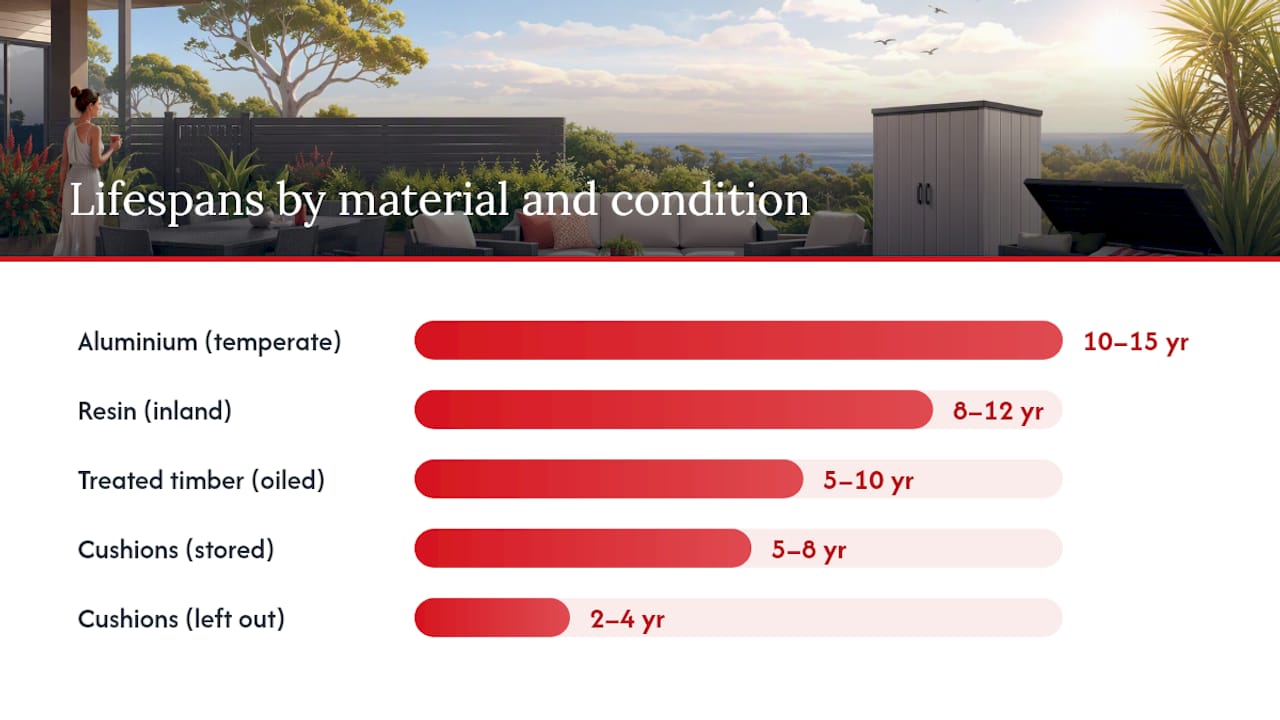
Realistic lifespan by material and region:
- Powder-coated aluminium: 10–15 years in temperate climates, 7–10 years coastal
- UV-stabilised resin: 8–12 years inland, 6–10 years coastal
- Treated timber: 5–10 years with annual oiling, less without
- Solution-dyed acrylic cushions: 5–8 years with regular storage, 2–4 years left out year-round
Signs it’s time to repair or replace:
- Colour loss that doesn’t respond to cleaning — fading has reached the fibre, not just the surface
- Fabric that feels brittle or tears at seam lines
- Structural corrosion at joints or fastenings that affects stability
- Timber that has cracked deeply or shows persistent mould despite treatment
For seasonal storage, the Store It Out Prime Shed 880L fits neatly against a fence and holds a full set of cushions and accessories. The Keter Signature Horizontal Shed 2020L suits larger sets or families who want to store frames as well as cushions over winter.
Ketergroup products as part of your fading-prevention strategy
This section describes Ketergroup’s own products as a practical option — kept separate from the general guidance above.
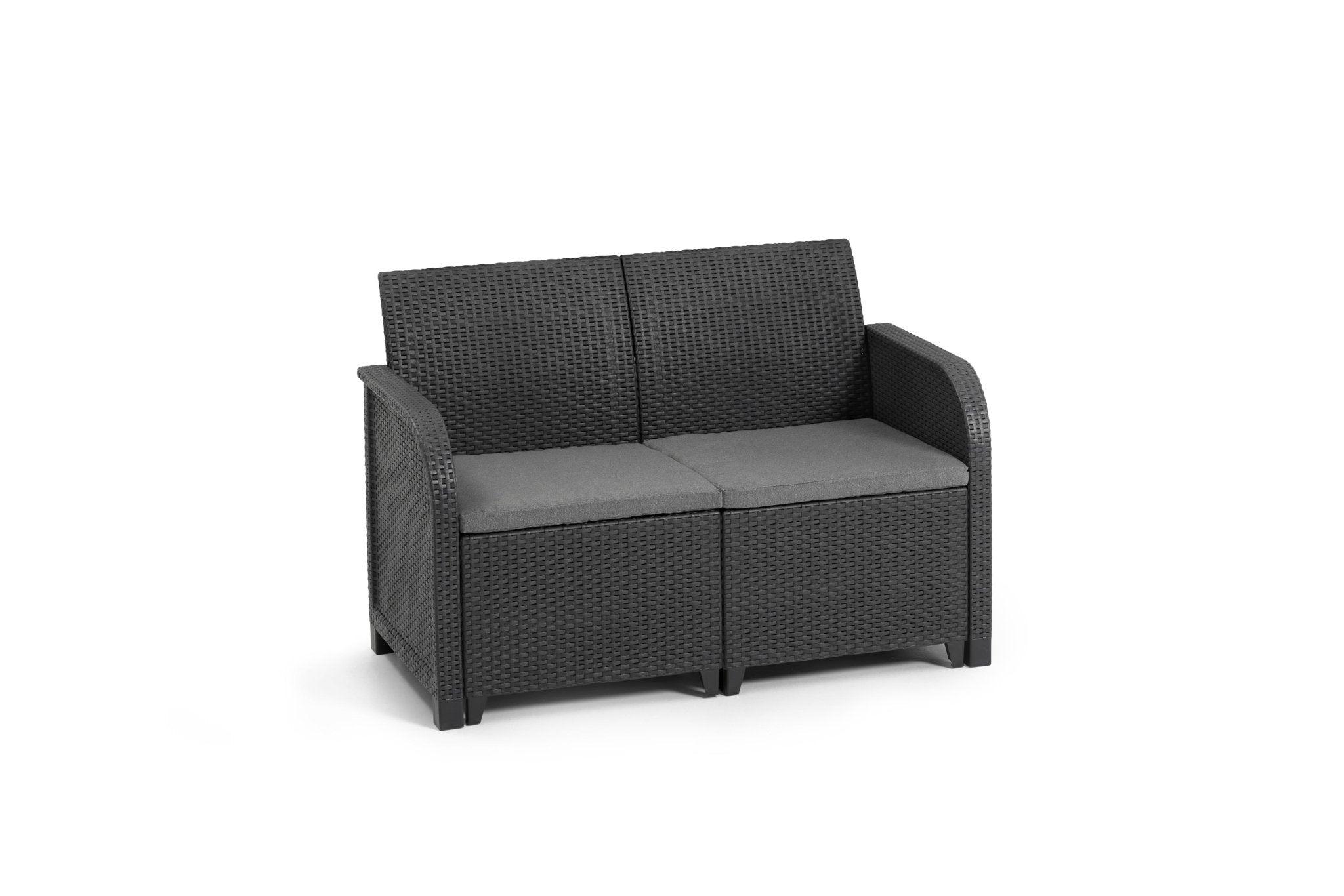
Ketergroup designs furniture and storage from UV-stabilised, recyclable resin built to handle Australian conditions without constant maintenance. The Rosalie 2 Seater Sofa, Keter Salta 2 Seater Sofa with Oat Cushions, and Emma 2 Seater Sofa all feature removable cushions, making the weekly rotation habit straightforward. The frames are weather resistant and constructed from materials that resist UV-driven colour loss at the structural level.
For storage, the Store It Out Prime Shed 880L is a compact, ventilated option that keeps cushions dry and out of direct sun between uses. For a larger footprint, the Keter Oakland Garden Shed 1175 provides enough room for full furniture sets. All Ketergroup sheds are made from recyclable resin and require no painting or sealing.
Pro Tip: Pair a Keter storage box or shed with a shade sail for a two-layer approach: the sail blocks UV during use, and the shed protects cushions when you’re not outside.
How to tell fading apart from dirt or mildew
These three problems look similar but need different responses:
- Fading: colour loss is even across the fabric or frame surface, doesn’t change when wet, and doesn’t brush off. UV damage is permanent.
- Dirt: surface discolouration that lifts with mild soap and water. Often concentrated in seams, folds, or textured surfaces.
- Mildew: dark spots (grey, green, or black) that appear in damp areas, often smell musty, and spread if left untreated. A diluted white vinegar solution (1 part vinegar to 4 parts water) removes early mildew from most outdoor fabrics without damaging colour.
Quick test: dampen a white cloth and rub the affected area. If colour transfers to the cloth, it’s likely dirt or mildew. If the surface looks the same wet and dry, the colour loss is UV fading.
Eco-friendly product choices for Australian homeowners
Protecting your furniture doesn’t have to mean harsh chemicals. Practical, lower-impact options include:
- Water-based timber oils with UV inhibitors — effective, low-VOC, and safe around pets and children once dry
- Plant-derived fabric cleaners available at most hardware stores — gentle on solution-dyed fabrics and safe for grey-water disposal
- White vinegar for early mildew treatment on fabrics and some timber surfaces
- Resin and recycled-plastic furniture (such as Ketergroup’s range) — no painting, no sealing, and made from recyclable materials that reduce landfill at end of life
When disposing of solvent-based sprays or sealers, follow your local council’s chemical disposal guidelines. Many councils run periodic hazardous waste collection days. For outdoor furniture materials that are already built to resist UV at the material level, the ongoing chemical load is minimal.
What actually works in Australian backyards
Most fading-prevention advice focuses on products, but the habit that makes the biggest difference is the simplest: get cushions out of direct sun when you’re not using them. Shade first, then covers, then rotation. Products like UV sprays and timber oils extend the benefit, but they don’t replace the fundamentals.
The remaining 20% is material choice at purchase — solution-dyed fabrics and UV-stabilised resin do the work passively, without any extra effort from you. Ketergroup’s blog on transforming your patio covers practical layout ideas that put shade and storage at the centre of the design.
Ketergroup: weather-resistant furniture and storage built for Australian backyards
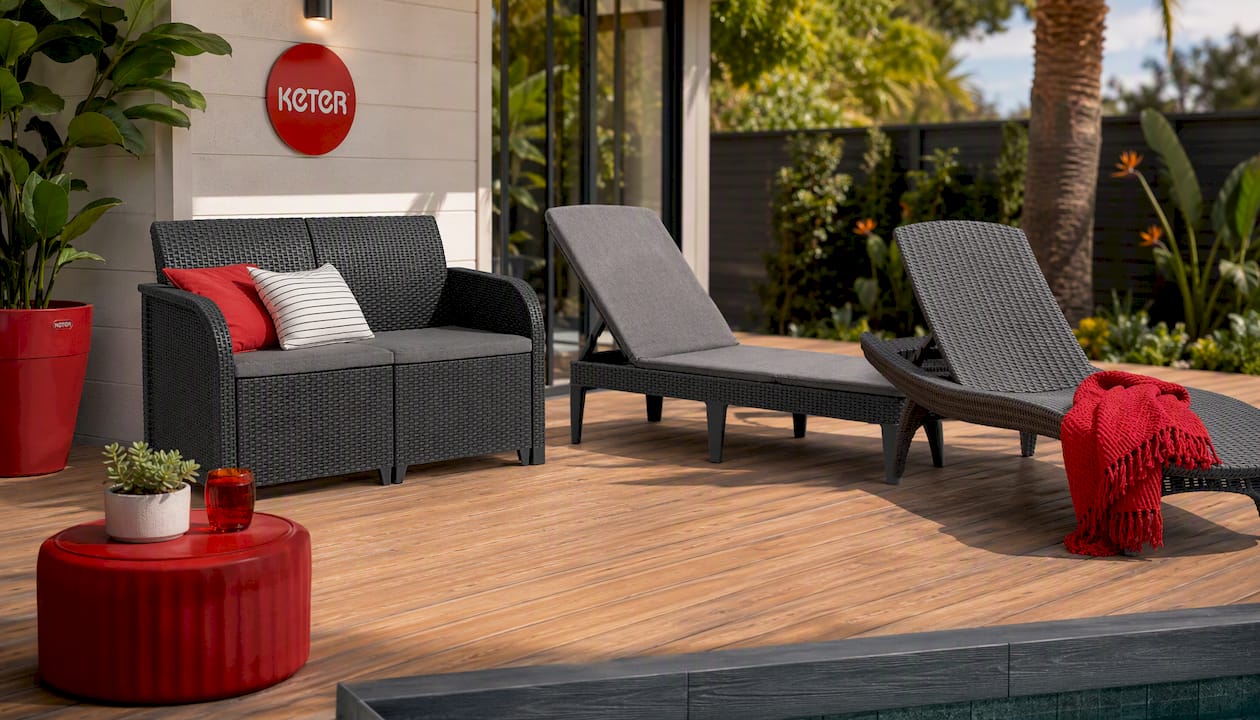
If you’ve been storing cushions on a chair or leaving them out overnight, a dedicated Ketergroup storage shed changes that habit immediately. The Store It Out Prime Shed 880L fits against most fences and holds a full set of cushions, keeping them dry, shaded, and ready for next use. For furniture itself, Ketergroup’s sofas — including the Rosalie 2 Seater Sofa and the Salta and Emma ranges — are built from UV-stabilised, recyclable resin that holds its colour without annual painting or sealing. No maintenance contracts, no specialist products, just well-made pieces that handle Australian summers. Browse the full Ketergroup range at Ketergroup and find the storage or seating option that fits your space.
Sources
FAQ
What is the fastest way to prevent outdoor furniture fading?
Move removable cushions into shade or a storage box when not in use, and fit a shade sail or umbrella over the main seating area. These two steps cut direct UV exposure more than any spray or treatment.
How often should I reapply UV fabric spray to outdoor cushions?
UV-protective fabric sprays typically need reapplication every 3–6 months, or after heavy rain. Always spot-test first and apply to clean, dry fabric in mild conditions.
Does UPF 50 fabric really make a difference outdoors?
Yes. Solution-dyed acrylic and polyester rated UPF 50 retain colour significantly longer than surface-dyed alternatives.
How do I know if my furniture is fading or just dirty?
Rub the affected area with a damp white cloth. If colour transfers, it’s likely dirt or mildew and can be cleaned. If the surface looks the same wet and dry, the colour loss is UV fading and is permanent.
Which Ketergroup products help with cushion storage?
The Store It Out Prime Shed 880L is a compact, ventilated option for cushion storage between uses. The Keter Signature Horizontal Shed 2020L suits larger furniture sets or full off-season storage.
Recommended
- Outdoor furniture materials: your guide for Australian homes – Keter Australia
- Coastal outdoor furniture: the Australian buyer’s guide – Keter Australia
- Transform Your Garden with Adirondack Chairs & Storage Tables – Keter Australia’s Outdoor Solutions
- Eco friendly outdoor furniture for Australian homes – Keter Australia


