
Plastic shed pros and cons: what you're really weighing up

A plastic shed’s biggest strength is also its most obvious weakness: it will never rot, rust, or need repainting, but it won’t stop a determined intruder or shrug off a decade of harsh afternoon sun without some fading and brittleness. If you’re storing garden tools, a mower, and pool gear in a damp or shaded corner of the yard, plastic is often the smartest buy you’ll make this year. If you’re planning to lock away power tools worth thousands of dollars, or you live somewhere the sun bakes the backyard from noon until dusk, you need to weigh that decision more carefully.
Three quick signals tell you which way to lean:
- Climate and placement — a shaded, damp spot favours plastic; a north facing, sun blasted spot needs a UV rated model or extra shade.
- Value of what you’re storing — mowers, hoses, and pots are low risk; cordless tool kits and bikes need better locks.
- Maintenance tolerance — if you’d rather never sand, stain, or treat anything again, plastic wins outright.
Keter builds several weather-resistant options designed for exactly this trade-off, from compact deck boxes through to full-size garden sheds, and you’ll find the current range at Keter Group.
Key Takeaways
Plastic sheds succeed by trading upfront cost and security strength for near-zero maintenance and reliable resistance to rot, rust, and pests over a 10 to 20 year lifespan.
| Point | Details |
|---|---|
| Match material to climate | Choose plastic for damp, shaded yards; consider timber or metal for harsh, exposed sun. |
| Anchoring is not optional | Fit the manufacturer’s anchor kit and check it each season to prevent wind movement. |
| Upgrade locks for valuables | Add a padlock hasp or internal cabinet before storing bikes, tools, or anything of value. |
| Budget for the whole lifespan | Factor in base preparation and correct sizing, not just the purchase price, over 10 to 20 years. |
| Ketergroup covers most yard sizes | Models like the Keter Potting 6x8 Shed and Signature Horizontal Shed suit everyday garden storage needs. |
Table of Contents
- What are plastic sheds actually made from?
- What are the biggest advantages of a plastic shed?
- What are the downsides of plastic sheds?
- How does plastic compare with timber and metal sheds?
- How long does a plastic shed actually last?
- Do you need a base under a plastic shed?
- What can you actually store in a plastic shed?
- What Keter’s product range tells us about doing this well
- What does a plastic shed really cost you over time?
- Do plastic sheds keep your belongings secure?
- What do homeowners actually use plastic sheds for?
- Our honest take on choosing a plastic shed
- Where to find the right Keter shed for your backyard
- Sources
- FAQ
What are plastic sheds actually made from?
Most modern plastic sheds use high-density polyethylene (HDPE) or polypropylene resin, sometimes with a steel frame bonded inside the panels for rigidity. Build quality varies a lot between models. Cheaper single-wall designs use one layer of moulded plastic, while better double-wall sheds sandwich a rigid foam or reinforced cavity between two panels, which resists denting, muffles noise, and holds its shape in heat far better than a thin single-wall box.
Quality resin sheds typically avoid rot and rust altogether and are simple to hose down, and most now ship with moulded floors and shelving points already built in, which saves you drilling into the walls later.
Common factory features worth checking before you buy include:
- A moulded, slip-resistant floor rated to carry garden equipment.
- Skylight panels or vents that bring in light without a window to crack.
- Sliding or hinged doors wide enough for a mower or wheelbarrow.
- Pre-marked shelf and hook points that don’t require structural drilling.
Size is where plastic hits a ceiling. Most residential resin sheds top out well short of a full workshop footprint, so if you’re planning a proper tool bench or want to park a ride-on mower inside, you’ll want to check internal dimensions closely before assuming a plastic model will do the job.
What are the biggest advantages of a plastic shed?
The case for plastic comes down to how little it asks of you once it’s up. Here’s what homeowners notice first:
- Maintenance drops to almost nothing. No painting, no rot treatment, no annual sanding back of weathered timber. A wipe down with soapy water once or twice a year is usually enough.
- Moisture, rot, and pests simply aren’t a problem. Termites can’t eat resin, and damp shaded corners that would rot a timber frame within a few seasons don’t touch plastic at all.
- Assembly is genuinely fast, and most panel-based kits go together with basic hand tools in an afternoon, which matters if you’re renting or expect to relocate in a few years.
- Ongoing cost of ownership is lower. Buyers often focus on the sticker price and overlook the maintenance bill that comes with timber over a decade, and that gap is where plastic earns its keep.
- Finishes have improved. Wood-look and rosewood-effect panels give you a timber aesthetic without the timber upkeep, though the range of colours and styles still lags well behind what timber and metal offer.
Pro Tip: Site your shed under a tree or against a fence line that gives it afternoon shade. It won’t just look tidier tucked away, it will fade and warp far more slowly than one baking in full sun all day.
What are the downsides of plastic sheds?
Security is the first place plastic falls down. Locking mechanisms are often moulded into the door rather than fitted as a separate hardened unit, and review after review flags security and fixation points as the weakest part of a plastic shed unless you add a padlock hasp or aftermarket security kit. Don’t store anything you’d hate to lose, cordless tools, bikes, or generators, in a base-model plastic shed without upgrading the lock first.
Sun exposure is the second issue. UV breaks down the resin’s surface over years, which shows up as colour fade first and brittleness later, particularly on north or west-facing roof panels that cop direct sun for most of the day. Thermal expansion in extreme heat can also cause panels to warp slightly if the shed isn’t anchored evenly.
Other realistic limits to plan around:
- Customisation is limited. Mounting heavy shelving or pegboards on plastic walls needs specific fixing points; you generally can’t just screw into the panel.
- Wind vulnerability is real. A plastic shed is lighter than timber or metal, so an unanchored unit can shift or lift in a strong gust.
- Snow and roof load ratings vary between models, so check the manufacturer’s rated load before assuming it’ll cope with heavy debris or standing water.
- End-of-life disposal is a genuine consideration. Resin is recyclable in principle, but not every kerbside collection accepts large moulded panels, so check with your local council or the manufacturer’s take-back options before you assume it’s simple.
How does plastic compare with timber and metal sheds?
Every material trades one strength for another. Plastic wins hands down on maintenance and moisture resistance; timber wins on customisation and kerb appeal; metal often wins on raw security and load capacity. None of the three is the right answer for every yard.
- Maintenance: plastic needs almost none; timber needs regular painting or staining; metal needs occasional rust checks, especially at cut edges and joins.
- Lifespan: plastic commonly runs 10 to 20 years depending on sun exposure and load; well-maintained timber can outlast that if treated consistently; metal lasts a long time but is prone to rust in coastal or humid air.
- Security: metal generally offers the strongest resistance to forced entry; timber can be reinforced with proper hardware; plastic is the weakest of the three unless you upgrade the locking hardware.
- Cost of ownership: plastic’s lower upkeep usually offsets timber’s cheaper upfront price over a decade or more.
- Climate fit: plastic suits damp, shaded, humid climates; metal suits dry inland areas away from salt air; timber suits temperate climates where owners are happy to maintain it.
A sensible middle path many homeowners land on: use a plastic shed for garden tools, hoses, and low-value gear, and keep higher-value tools in a hardened metal cabinet or a locked garage instead of asking one shed to do both jobs.
How long does a plastic shed actually last?
Realistically, budget for a working lifespan of 10 to 20 years, with sun exposure doing most of the damage over that window. A shed in full sun all day will fade and stiffen faster than one tucked into afternoon shade, and heavier snow or wind loads will shorten the life of a poorly anchored unit regardless of climate.
A short seasonal checklist keeps most sheds running the full stretch:
- Clear gutters, roof grooves, and drainage points before the wet season so water doesn’t pool on the roof panel.
- Check every fixing, hinge, and seal twice a year, tightening anything that’s worked loose.
- Test the door lock and hinges for stiffness or cracking, particularly after a hot summer.
- Inspect panels for brittleness or hairline stress marks, especially around vents and corners.
Run the maths over 10 to 20 years and plastic usually comes out ahead of timber once you account for paint, stain, and rot repairs, even though timber can sometimes undercut it on day one.
Do you need a base under a plastic shed?
Yes, almost always. A shed sitting directly on grass or bare soil will shift, trap moisture underneath, and throw the door frame out of square within a season or two.
- Concrete slab — the most stable option and best for anchoring bolts, though it costs the most and takes longest to prepare.
- Compacted crushed rock — a solid middle ground that drains well and is far cheaper than concrete.
- Timber frame base — quick to build and levels uneven ground, but needs checking for movement over time.
Because plastic sheds are lighter than timber or metal, anchoring is essential rather than optional, and most manufacturers supply anchor kits for exactly this reason. Exposed, windy sites need a full anchor kit and a proper base from day one; a sheltered courtyard can sometimes get away with a simpler paved or timber base.
Pro Tip: Check your anchor points every autumn and spring. Ground movement from wet and dry seasons is the most common reason a shed that started out dead level ends up leaning within a year.
What can you actually store in a plastic shed?
Plastic sheds earn their keep on everyday garden gear: mowers, hoses, hand tools, pots, outdoor cushions, and bikes all sit happily inside without any risk of rust or rot. What you should avoid storing without an upgraded lock is anything genuinely valuable, cordless power tool kits, generators, or a decent bike collection, since the moulded locks on entry-level models aren’t built to resist a determined attempt.
Sizing comes down to three practical measurements:
- Door width — measure your mower or wheelbarrow before you buy; a narrow door is the most common regret owners report.
- Depth for larger items — bikes and mowers need clear floor length, not just width, to fit without wedging.
- Shelving clearance and ventilation — leave room for shelf brackets and check the model has vents, since a sealed plastic box traps humidity around stored fuel and fertiliser.
Inside, keep heavier items like bags of soil or fertiliser on the floor rather than shelving, since moulded shelf brackets are rated for lighter garden tools and pots, not sustained heavy loads.
What Keter’s product range tells us about doing this well
Keter designs its storage range around recyclable resin materials that hold up outdoors while feeding back into a circular economy rather than ending up in landfill after a single decade of use.
That focus on durable, recyclable materials shapes every model in the range, from compact deck boxes to full garden sheds, and it’s paired with an emphasis on assembly that doesn’t require a tradesperson.
A few starting points depending on your situation:
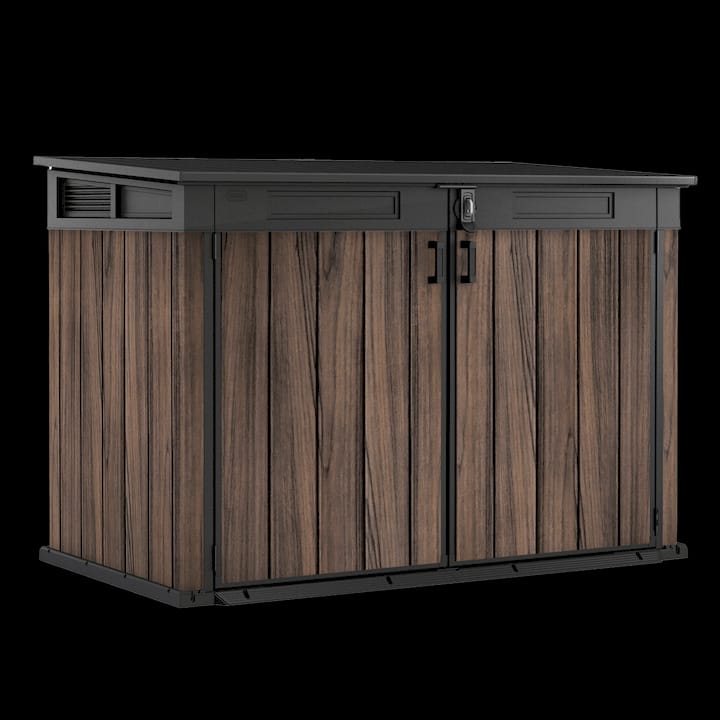
- If you need a stylish, mid-size unit with a timber look and no timber upkeep, the Keter Signature Horizontal Shed in Rosewood Look covers general garden storage in a low profile that suits smaller yards.
- If you’re after a genuine workhorse for potting and general tool storage, the Keter Potting 6x8 Shed gives you enough floor space for a mower alongside a potting bench.
- If space is tight and you just need to lock away bikes or bins, the Store It Out Prime Shed, available through Bunnings, is built for exactly that footprint.
For a walkthrough on what’s in the box and how the panels go together, Keter’s shed kit guide is worth a read before you commit.
What does a plastic shed really cost you over time?
The sticker price on a plastic shed rarely tells the full story. Timber looks cheaper walking out of the store, but the maintenance bill catches up within a few years once you add paint, stain, and the occasional rotten board replacement.
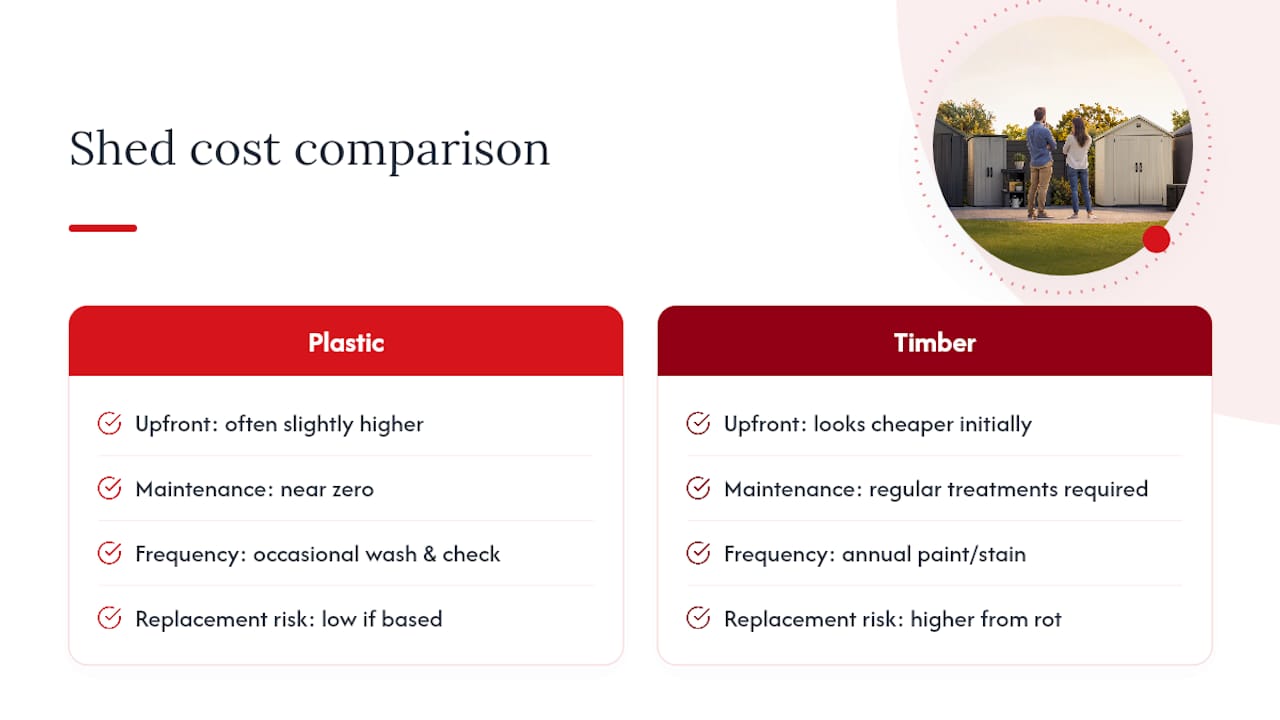
Plastic’s ongoing costs are close to zero. You’re not budgeting for annual treatments, and there’s no rust to sand back or timber to replace after a wet winter. The only real recurring cost is an occasional wash down and a check of the anchor bolts each season, both of which take minutes rather than a weekend.
Where the total cost of ownership can blow out is if you buy the wrong size or skip the base and anchoring. A shed that needs replacing in five years because it wasn’t anchored properly, or one you outgrow within two seasons because it was sized too small, costs more in the long run than paying slightly more upfront for the right model and a proper base. Treat the base, anchor kit, and correct sizing as part of the purchase price, not optional extras, and the maths on plastic holds up well against both timber and metal over a decade or more.
Do plastic sheds keep your belongings secure?
Security is the honest weak point of plastic sheds, and it’s worth being upfront about what that means in practice. Standard moulded locks are fine for deterring casual opportunists but won’t stop someone determined, since the lock mechanism is often part of the plastic moulding rather than a separate hardened unit fitted through the door.
That doesn’t mean plastic sheds are unsafe for everyday use. It means you match what you store to the security level you’ve got. Garden tools, hoses, mowers, and outdoor furniture are low-risk items that don’t need bank-vault protection. Cordless power tools, bikes, and anything with resale value deserve a padlock hasp kit or an internal lockable cabinet inside the shed itself.
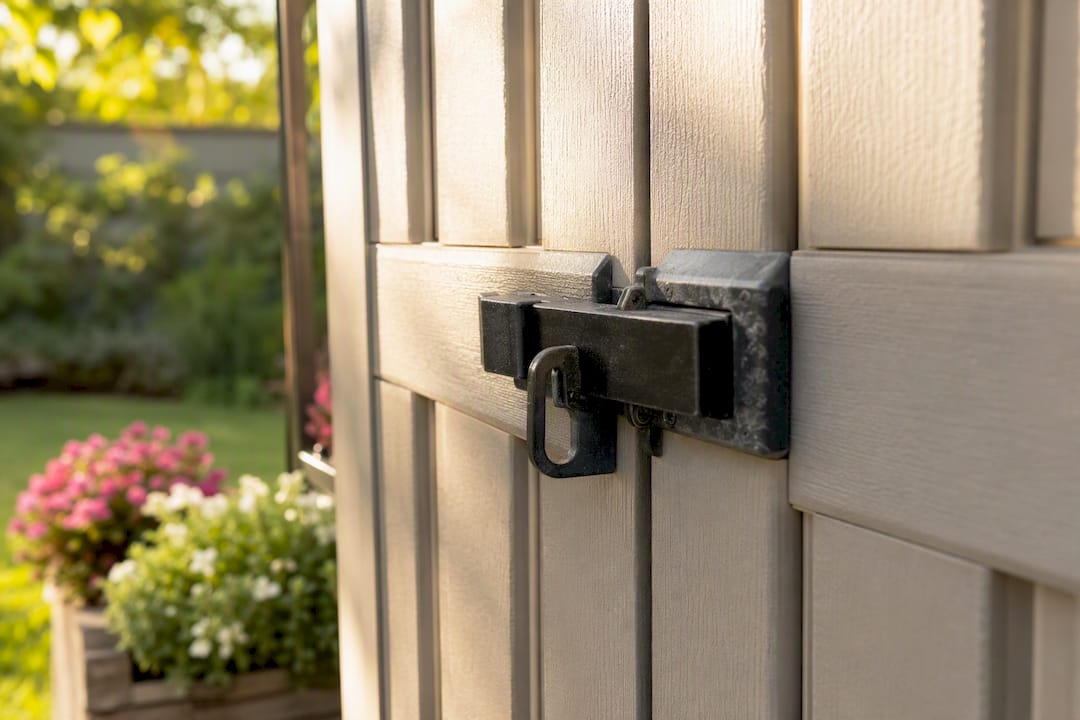
If security is a genuine priority, for example you’re storing a decent tool collection, it’s worth reading a broader guide on security door materials and hardware to understand what separates a deterrent lock from a genuinely resistant one, and applying that thinking to your shed’s door and hasp rather than assuming the factory lock is enough on its own.
What do homeowners actually use plastic sheds for?
The sweet spot for plastic is everyday garden and yard storage rather than anything workshop-grade. Mowers, whipper snippers, hoses, pots, cushions, and pool equipment are exactly what these sheds are designed to hold, and they do it without any risk of the rot or rust that plagues timber and metal in damp corners.
Where plastic starts to strain is heavier duty use: a full woodworking bench, a ride-on mower, or long-term storage of anything you’d be devastated to lose to a break-in. Those jobs are better suited to a hardened metal cabinet, a garage, or a larger timber structure built with security in mind from the start.
Between those two extremes sits a broad middle ground plastic handles well: potting sheds, bike storage, seasonal decoration storage, and general overflow from a garage that’s run out of room. If you’re weighing up size, a compact unit suits a courtyard or townhouse, while a larger potting-style shed suits a family backyard with an active garden.
Our honest take on choosing a plastic shed
The research keeps pointing to the same conclusion: plastic sheds solve a maintenance problem, not a security problem, and treating them as though they solve both is where buyers end up disappointed. If you’re shaded, damp-prone, or simply tired of painting a timber shed every few years, plastic is close to the ideal answer. If your priority is locking away expensive gear, no plastic shed on the market will match a hardened metal cabinet, and pretending otherwise sets you up for a bad surprise.
Where conventional buying advice falls short is treating anchoring as an afterthought. It’s not a nice extra, it’s the difference between a shed that lasts two decades and one that leans, cracks, or blows over within a few seasons. Get the base right, get the anchor kit fitted properly, and size the unit for what you actually own rather than what looks good in a catalogue photo.
Prioritise site and anchoring first, security second if you’re storing anything valuable, and aesthetics last. Get those in the right order and a plastic shed will earn its keep for years.
— Liza
Where to find the right Keter shed for your backyard
Ketergroup makes the maintenance side of this decision easy: every shed in the range is built from weather-resistant recycled resin, so you’re not choosing between “looks good” and “lasts a decade without upkeep.” Compared with sourcing timber, primer, and stain every couple of years, a resin shed from Ketergroup gets you storage that’s ready to use within an afternoon and stays that way with barely any attention.
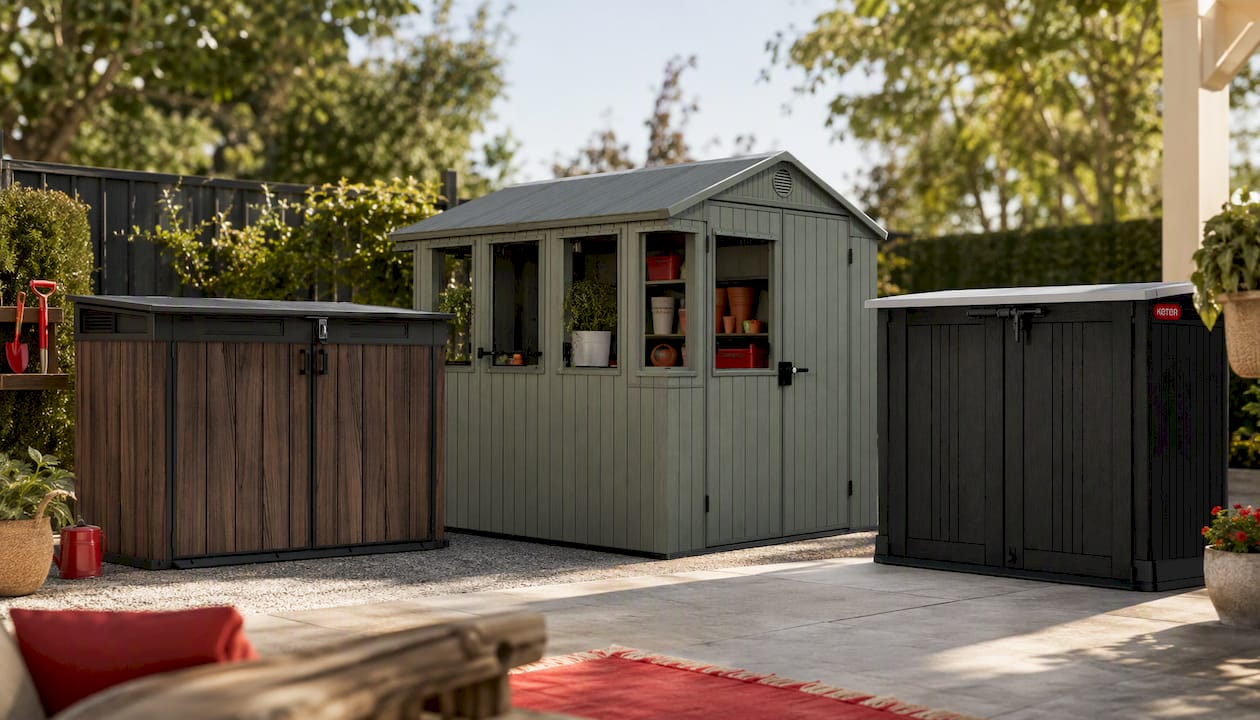
If your yard needs a low profile, wood-look option, the Keter Signature Horizontal Shed fits neatly against a fence line. For a family backyard with an active garden, the Keter Potting 6x8 Shed gives you room for a mower and a potting bench side by side. And if you’re tight on space, the Store It Out Prime Shed, sold through Bunnings, handles bikes and bins without eating your whole courtyard. Browse the full range at Keter Group and match a model to the storage jobs you listed earlier in this guide.
Sources
- Ultimate shed comparison plastic vs wood vs metal | StorageShedHQ
- Metal vs Wooden vs Plastic Sheds: Which Should You Buy? | ShedBuilder
- Secure anchoring for tool sheds | GroundGrabba
FAQ
What are the downsides of plastic sheds?
The main downsides are weaker security than metal or timber, gradual UV fading and brittleness in full sun, limited customisation for mounting heavy shelving, and vulnerability to wind if not properly anchored.
How long will a plastic shed last?
Most resin sheds last 10 to 20 years, with sun exposure, load, and how well it’s anchored being the biggest factors in where a shed lands in that range.
Are plastic sheds worth buying?
Yes, for the right job. They’re an excellent choice for low maintenance garden and tool storage in damp or shaded spots, though they’re not the right pick if you need bank-vault security for expensive equipment.
Do I need to put anything under a plastic shed?
Yes. A level base such as compacted crushed rock, a timber frame, or a concrete slab prevents shifting and moisture problems, and it gives you a solid surface to fix an anchor kit to.
Are plastic sheds waterproof?
They’re weather resistant rather than fully sealed. Resin panels shed rain and resist rot far better than timber, but you’ll still want ventilation to stop condensation building up inside on humid days.
Recommended
- What’s the Best Shed? Steel vs Wood vs Plastic – The Ultimate Showdown – Keter Australia
- The Best 10 Sheds for Your Garden – Keter Australia
- Top 8 Things You Need to Know Before Buying a Garden Shed from Keter – Keter Australia
- What Is a Shed Kit? The Complete Guide to Quick and Easy Outdoor Storage – Keter Australia


