
2–4 Hour Install: Australian Plastic Shed Flooring That Skips Concrete

Interlocking polypropylene tiles or a moulded resin floor built into your shed kit give you the best combination of durability, moisture protection and easy DIY installation for most sheds. Rolled PVC works fine as a cheap, temporary fix. Raised drainage panels suit wet-use sheds like mower bays. Whatever you choose, the subfloor needs to be level and the shed properly anchored, or even the best flooring won’t last.
TL;DR:
- Interlocking polypropylene tiles or moulded resin floors offer the best durability, moisture resistance, and DIY ease for most shed applications, especially in wet-use environments.
- Rolled PVC flooring is the most affordable and easiest to install temporarily but provides less load support and can shift underfoot if not secured properly.
- Proper subfloor preparation, including a level base such as gravel or concrete, and correct anchoring are essential to prevent shifting, flexing, or water pooling under the flooring.
- Raised drainage tiles are ideal for sheds that handle wet gear or frequent hosedowns, as they allow water to flow underneath and prevent pooling on the surface.
- Choosing environmentally resistant, recyclable plastic flooring with high UV and chemical resistance extends product lifespan and reduces environmental impact, especially when rated for at least 10-15 years.
Table of Contents
- Types of plastic shed flooring and what they’re good for
- Which plastic flooring suits your shed’s actual use?
- How to choose, prep and install plastic shed flooring
- Caring for plastic shed flooring and mistakes to avoid
- Why Keter’s product knowledge shapes this advice
- Subfloor preparation and anchoring guidance
- Moisture barrier and drainage considerations
- Environmental impact and recyclability of plastic flooring
- Plastic flooring vs timber, metal and concrete
- A quick take from Keter
- Get your shed floor sorted with Keter
- Sources
- FAQ
Types of plastic shed flooring and what they’re good for
Not all plastic shed flooring does the same job, and picking the wrong type for your shed is one of the most common (and avoidable) mistakes DIYers make.
Interlocking tiles are the most flexible option. They come in solid-faced or raised drainage styles, and both are typically made from polypropylene or heavy-duty PVC. These materials resist water, most chemicals and UV breakdown, which matters if your shed cops direct sun through a window or door gap for years on end. Drainage tiles raise the surface slightly so water and grit fall through to the ground below, rather than pooling on top. That makes them the better pick for anywhere you expect washdowns or wet gear. Solid tiles feel more comfortable underfoot and suit dry storage or a hobby space where you’ll be standing for a while. Tile sizes typically run around a few hundred millimetres square, and most systems let you buy replacement tiles individually if one cracks under a dropped tool box.
Rolled PVC is the budget option. It rolls out fast, trims easily and costs less than tiles, but it has real limits: it can shift underfoot if it’s not glued or taped down, and it doesn’t offer the same load-bearing strength for heavy equipment.
Moulded resin floors, built into shed kits, work differently again. Rather than sitting loose on the ground, the floor panels lock into the wall base itself, which ties the whole structure into a rigid box and seals against ground moisture. That’s a genuine structural upgrade over a wall-only shed sitting on bare ground or timber.
Raised deck panels, often made from recycled plastic, suit sheds where drainage and airflow under the floor matter more than a perfectly flat surface.
When you’re comparing products, look for:
- UV stabilisation rating, so the plastic doesn’t go brittle in direct sun
- Chemical resistance, especially if you’re storing fuel, oil or garden chemicals
- Whether replacement tiles are sold separately
- Drainable vs solid face, matched to how wet the space gets
Which plastic flooring suits your shed’s actual use?
The right floor depends on what’s going in the shed and how often you’re walking or wheeling things across it.
- General storage (boxes, seasonal gear, camping equipment): solid interlocking tiles or a resin floor built into the shed kit. You want a clean, dry surface, not drainage.
- Mower and outdoor equipment bays: raised drainage tiles. Grass clippings, fuel drips and hose-downs all need somewhere to go besides sitting on the surface.
- Hobby or workshop use: cushioned or textured PVC tiles, particularly if you’re standing for long stretches at a workbench. Flexspec’s Australian sheds guide points out that comfort underfoot matters more than raw toughness once you’re spending hours on your feet rather than just walking through.
- Heavy tool storage or a small workshop with machinery: rigid polypropylene tiles rated for higher point loads, paired with a genuinely level base underneath.
Pro Tip: If you’re rolling a workbench, generator or heavy toolbox across the floor regularly, lay a sheet of sacrificial plywood or a rubber mat along that path. It spreads the load and stops localised dents or cracking on tiles that aren’t rated for concentrated weight.
Point loads are the sneaky failure mode with plastic flooring. A tile rated for even weight distribution can still crack under a car jack stand or a narrow steel leg because the load isn’t spread across the tile’s full surface.
How to choose, prep and install plastic shed flooring
Get the groundwork right and installation itself is genuinely a weekend job, not a renovation project.
Start with a choice checklist:
- Check door clearance. Adding tiles or panels raises floor height by anywhere from a few millimetres to over a centimetre, and that can catch on the door frame if you don’t account for it upfront.
- Match the load rating to what you’re storing. A ride-on mower needs a different spec than seasonal storage boxes.
- Decide on drainage. Wet-use sheds need raised tiles; dry storage doesn’t.
- Plan for edge trims. Most tile systems sell border pieces that give a finished look and stop edges lifting.
Prep the subfloor before you touch a single tile. A compacted gravel pad is the most reliable base for most backyard sheds, and it drains well. A concrete slab is the gold standard if you’re anchoring a larger shed or storing anything heavy. If your existing base has minor dips or unevenness, a layer of luan plywood or a self-levelling compound can fix it without a full re-pour. Whichever base you’re working from, an integrated resin floor still needs that base dead level, or you’ll get door binding and panel flex over time, according to flooring specialists at D and G Flooring.
Then install:
- Unpack tiles or rolled flooring and lay them flat at the site for 24 to 48 hours before fitting. This lets the plastic acclimatise to local temperature and cuts down on buckling later from thermal expansion.
- Dry lay a row to check fit and orientation before locking anything together.
- Keep the locking loops on interlocking tiles facing the same direction (usually toward the back wall), which makes snapping rows together much faster.
- Trim edge tiles by scoring deeply on both sides with a utility knife, then snapping cleanly along the line.
- Tap joints firmly home with a rubber mallet to seat the locks fully.
Most homeowners can fit modular interlocking tiles across a shed floor roughly 2.4 metres by 3 metres in about two to four hours, using nothing more than a rubber mallet and a utility knife. Rolled PVC takes about the same time but involves more trimming around corners and fittings.
If you’ve gone with a resin shed that includes an integrated floor, anchoring matters more than people expect. The floor panels add stiffness by locking the wall bases together, but that only works if the whole structure is fixed down properly. An unanchored resin floor can still flex or rack under wind load or a heavy, uneven load inside.
Caring for plastic shed flooring and mistakes to avoid
Plastic flooring is low-maintenance, but a few habits will add years to it.
- Hose down or sweep tiles regularly, and deal with oil or fuel stains quickly. Most polypropylene and PVC tiles resist chemical staining, but leaving spills to sit for weeks isn’t a fair test of that resistance.
- Keep the shed ventilated. Trapped moisture under solid tiles in a sealed shed can cause condensation problems even when the flooring itself is waterproof.
- Leave small expansion gaps around the perimeter, especially in tin or dark-coloured sheds that heat up fast in the sun.
- Slide sacrificial plywood pads under jack stands, generators or anything with narrow, concentrated feet.
- Replacing a damaged tile usually just means unlocking the surrounding pieces, lifting the cracked one out and clicking a new one in. No adhesive, no fuss.
Why Keter’s product knowledge shapes this advice
I’ve written before for the Keter blog about shed bases, shelving layouts and weighing up the pros and cons of plastic sheds generally, and the same theme keeps coming up: preparation matters more than the product you buy. Keter builds its sheds from recyclable resin engineered to be weather resistant and low-maintenance, which is exactly the standard I hold flooring advice to as well. That background is why the guidance here leans so heavily on checking level, anchoring properly and confirming whether a floor is included before you buy, rather than just listing products and hoping for the best.
— Liza
Subfloor preparation and anchoring guidance
Every flooring decision in this guide assumes one thing: a level, stable base underneath. Skip that step and even premium tiles or a resin floor will develop gaps, rock underfoot or let water pool in low spots.
For most backyard installs, a compacted gravel pad of moderate depth gives you drainage and a firm surface without the cost of concrete, as recommended by Over Bonnet Storage Australia. Rake it flat, tamp it down in layers, and check level with a long spirit level or straight edge across the full footprint, not just one corner. A concrete slab is worth the extra cost if you’re storing anything heavy or if your yard tends to hold water after rain, since it won’t settle unevenly the way gravel can over a few seasons.
Anchoring isn’t just about wind. A shed that shifts even slightly on its base will rack the floor panels, particularly with integrated resin floors where the walls and floor are locked together as one unit. Standard anchor kits bolt through the base into the pad below, whether that’s a slab, a timber frame or ground anchors driven into a gravel bed. Check your shed’s anchoring instructions against your specific base type before you buy fixings, because a slab needs different anchors than a gravel or paver base. A properly prepared base with the right shed base option for your yard will save you from redoing flooring work in a year or two.
Moisture barrier and drainage considerations
Ground moisture is the quiet killer of shed flooring, and it works from underneath where you can’t easily see it happening.
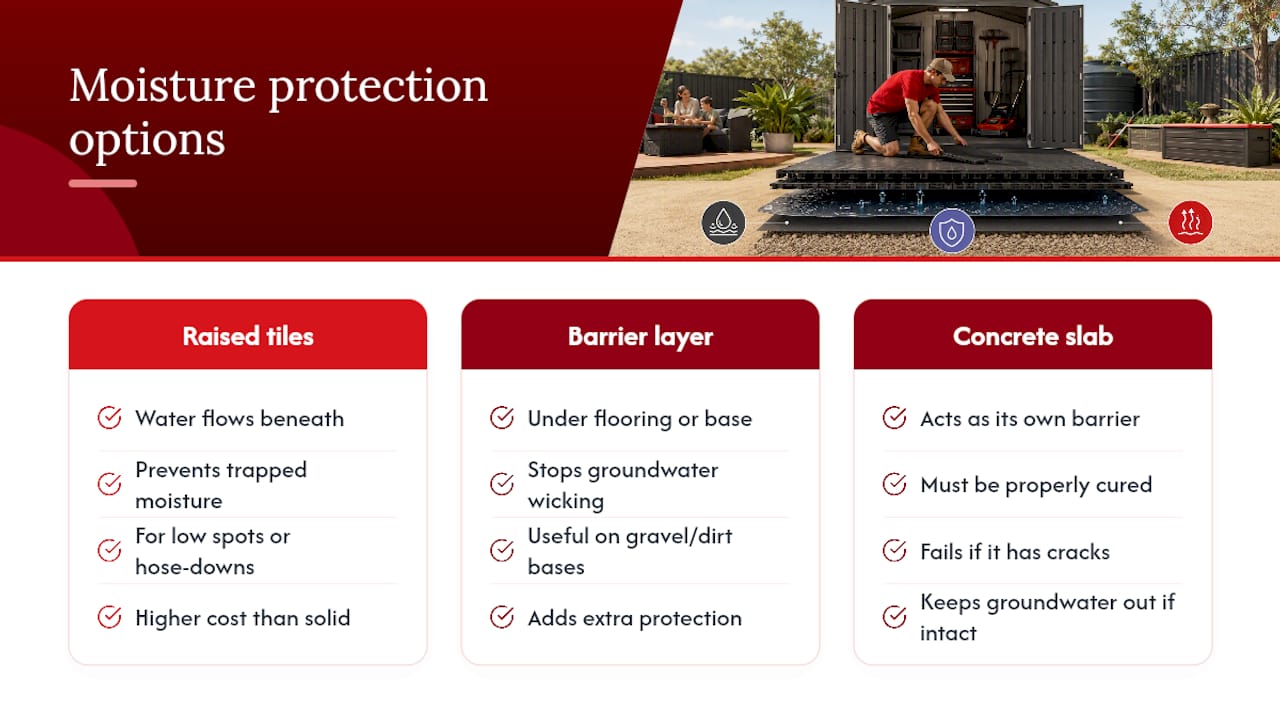
Even flooring that’s fully waterproof on the surface can trap moisture below if there’s no path for it to escape. That’s the core reason raised drainage tiles exist: they let water flow underneath rather than sitting trapped under a glued sheet, which is a common failure point in poorly planned installs. If your shed sits in a low spot in the yard, or you’re expecting regular hose-downs for mower or bike storage, raised tiles are worth the extra cost over solid ones.
A moisture barrier under the flooring, or under the whole shed base, adds another layer of protection, particularly on gravel or dirt bases where groundwater can wick upward. Compare that against a concrete slab, which acts as its own barrier as long as it’s properly cured and doesn’t have cracks letting water through. Understanding how shed moisture barriers work helps you decide whether you need a separate barrier layer or whether your chosen flooring and base already handle it. Either way, ventilation at the top of the shed matters just as much. A sealed, airless shed with waterproof flooring can still fog up with condensation on cold mornings, which is a moisture problem the floor alone can’t fix.
Environmental impact and recyclability of plastic flooring
Plastic flooring gets an unfair reputation on sustainability, largely because people picture single-use plastic rather than the durable, recyclable resin most shed flooring is actually made from.
Look for products made from recycled plastic where possible. Australian-made recycled panels exist that are UV stabilised and resistant to both fresh and saltwater, which extends useful life well beyond a single season and keeps the material in circulation rather than landfill. That durability is itself an environmental win: a floor that lasts 15 years without cracking or rotting has a far lighter footprint than a timber floor that needs replacing every five years due to rot or insect damage.
At end of life, most polypropylene and PVC tiles can be recycled through specialist plastics recycling streams, though household kerbside collection generally won’t take large rigid tiles. Check with your local council or a specialist recycler before assuming it’s kerbside friendly. The bigger sustainability lever, realistically, is buying flooring rated to actually last, so you’re not replacing it every few years regardless of what happens to the old material afterward.
Plastic flooring vs timber, metal and concrete
Timber flooring feels traditional, but it’s the most vulnerable to Australian conditions. Damp ground, humidity swings and the odd termite will get to untreated or poorly sealed timber eventually. Plastic flooring generally outlasts pressure-treated plywood in wet conditions and shrugs off rot, insect attack and most chemical stains that would leave timber stained or swollen.
Metal flooring, usually found in steel shed kits, handles heavy loads well and resists rot completely, but it can get slippery when wet and tends to hold cold and condensation more than plastic does. It’s also more prone to rust at seams and fixing points over time, particularly in coastal areas.
Concrete is the toughest option for a permanent workshop floor, and it’s the obvious choice if you’re bolting down heavy machinery. But it’s expensive, permanent (good luck moving it if you relocate the shed) and cold underfoot without added insulation. It also takes real work and cure time to install properly, which rules it out as a weekend DIY job.
Plastic sits in a sensible middle ground: lighter than concrete, cheaper to install than a poured slab, tougher against moisture than timber, and a lot easier to repair or replace in sections than either alternative.
A quick take from Keter
We build sheds around the idea that the floor shouldn’t be an afterthought. An integrated resin floor gives you one less thing to worry about, while modular tiles let you retrofit an existing shed without starting from scratch. Whichever route suits your yard, the goal is the same: a base that stays flat, dry and solid for years, not just for the first summer.
Get your shed floor sorted with Keter
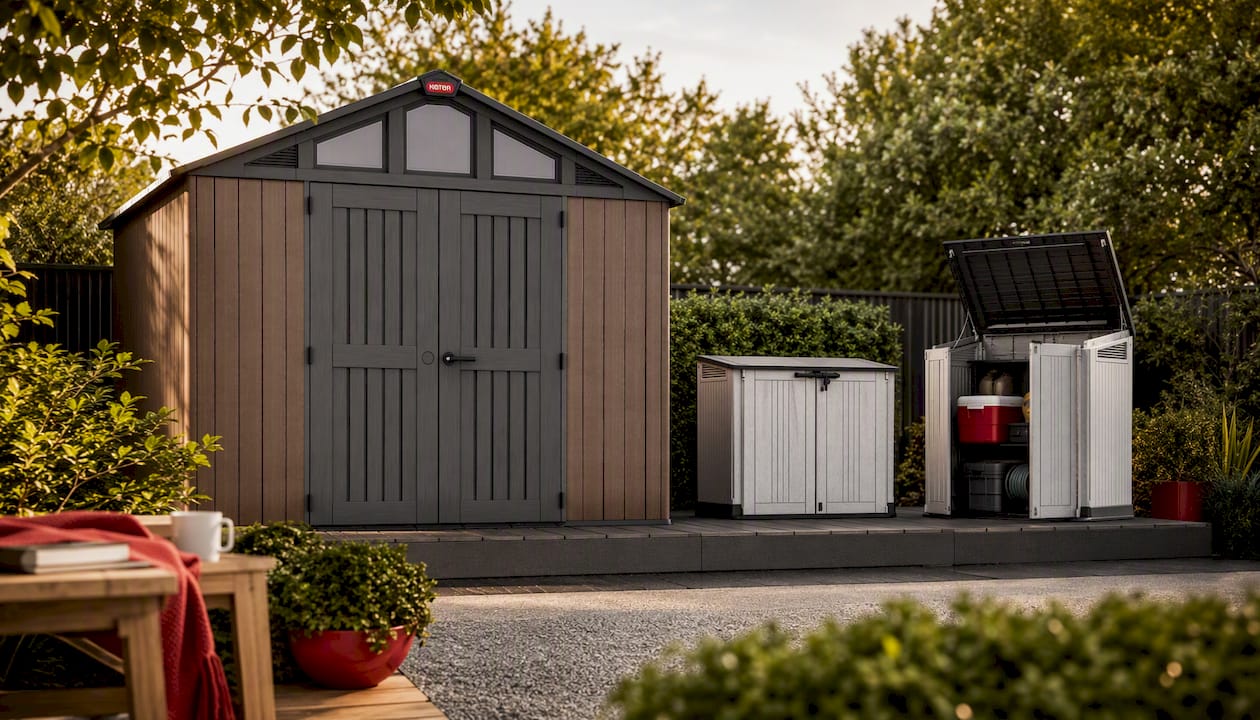
If everything above has you leaning toward a shed that solves the floor question from the start, that’s exactly where an integrated resin design earns its keep. The Keter Stronghold Shed 10 x 8 in Brown (3m x 2.4m) is built from weather resistant recyclable resin, giving you a rigid, sealed structure without the separate flooring project. For smaller storage needs, the Store It Out Prime Shed and the Store It Out Prime Shed with Pistons both offer compact, easy-access storage worth considering if a full-size shed is more than you need.
Before you buy any shed, check the product listing to confirm whether a floor is included and what anchoring hardware comes with it, since this varies between models. Head to the range of Keter sheds to compare sizes and find the one that matches your yard and your storage list.
Sources
FAQ
What is the best flooring for a shed?
Interlocking polypropylene tiles or a moulded resin floor built into the shed kit give the best balance of durability, moisture resistance and DIY-friendly installation for most sheds.
What is the most affordable way to floor a shed?
Rolled PVC flooring is the cheapest plastic option and works fine as a temporary or budget fix, though it lacks the load-bearing strength and secure fit of interlocking tiles.
Can Bunnings offer waterproof shed flooring?
Hardware retailers stock various interlocking tiles and rolled vinyl products, but availability and specific waterproof ratings vary by store and season, so check the product listing for drainage and water resistance details before buying.
What should you put under a plastic storage shed?
A compacted gravel pad or a level concrete slab is the most reliable base, and either one needs to be genuinely flat to stop door binding or floor panel flex over time.


