
110–227 kg: Outdoor Chair Weight Limits for Australia

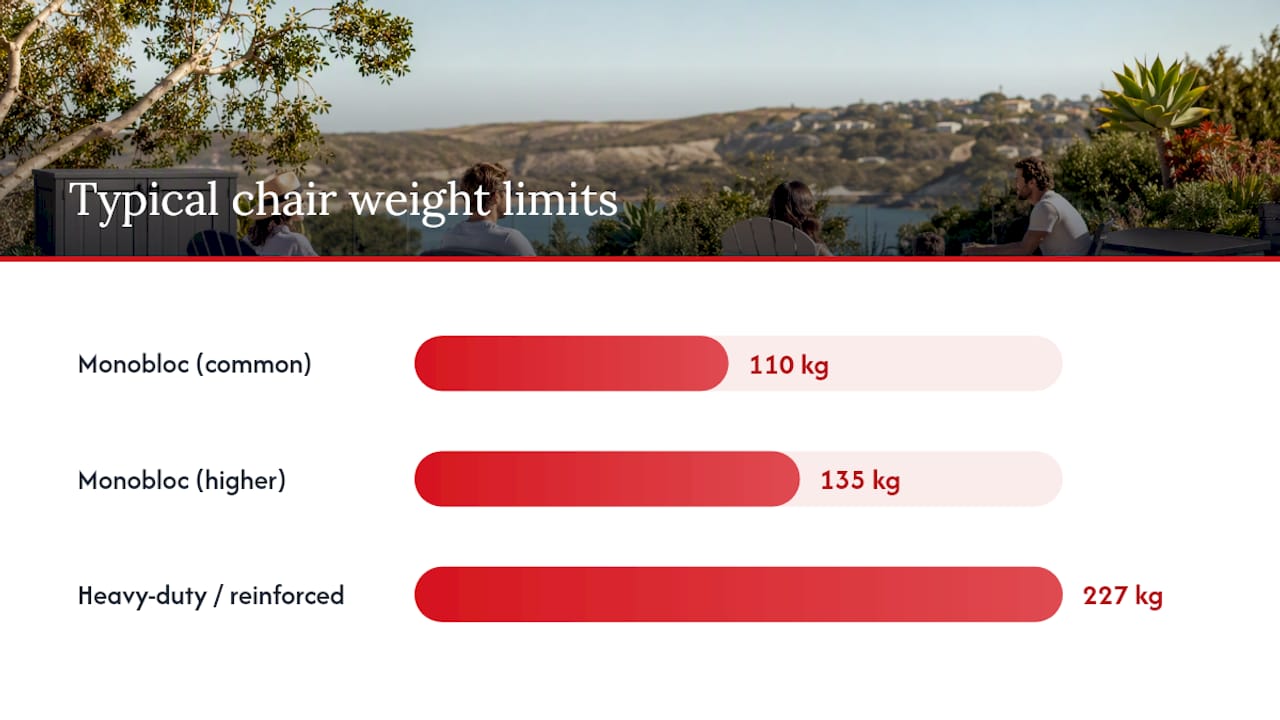
Most consumer outdoor chairs are rated for ratings commonly around 110 kg or 135 kg if they’re plastic monobloc styles, and standard adult outdoor seating generally ranges higher. Heavy-duty and commercial-grade chairs often carry considerably higher weight ratings up to about 227 kg (500 lb) or more, depending on construction and certification.
TL;DR:
- Most consumer outdoor chairs are rated for weights around 110 to 135 kg, with heavier-duty models supporting up to 227 kg or more, depending on design and materials.
- Material quality and design details, such as thick wall sections and reinforced metal frames, significantly influence a chair’s true load capacity beyond its marketing label.
- Certifications according to standards like AS/NZS 3813 and AFRDI indicate tested durability and safety margins, especially for heavy-duty and commercial-grade seating.
- Reputable outdoor chairs clearly state their capacity on the product page, referencing the relevant standards, and show visible signs of construction quality, such as welded or bolted joints.
- Proper maintenance, correct installation, and choosing a chair with a safety margin above your weight are crucial to ensuring long-term reliability and safety.
Table of Contents
- What’s the typical outdoor chair weight limit by category?
- What makes one chair stronger than another?
- Which outdoor chair types hold the most weight?
- How do you choose the right chair for your weight?
- How do you know when a chair’s capacity has dropped?
- What should a good outdoor chair listing actually tell you?
- A pragmatic take on chair shopping
- Where to find a chair built for real outdoor use
- Standards and safety pages worth bookmarking
- Sources
- FAQ
What’s the typical outdoor chair weight limit by category?
Chair capacity varies a lot depending on what you’re buying, and the gap between a $20 stackable chair and a commercial-grade seat isn’t just price. It’s engineering.
Here’s roughly what to expect across common categories:
- Kids’ chairs and stools generally have lower weight limits suitable for children.
- Standard plastic monobloc chairs are commonly rated for users around 110 kg or 135 kg.
- Everyday adult outdoor chairs made from resin, HDPE, or folding types typically support moderate adult weights above standard monoblocs.
- Heavy-duty resin or HDPE chairs with reinforced frames often support significantly higher weights, sometimes up to about 227 kg (500 lb).
- Bariatric or double-wide seating is designed for heavier users and usually have higher capacities, but specific ratings should be confirmed per product.
In Australia, AS/NZS 3813 is the standard used to assess plastic monobloc chairs, and it commonly certifies seating for either 110 kg or 135 kg user mass. AFRDI’s Blue Tick program builds on this with strength and durability tiers, where “normal duty” generally aligns with the 110 kg class and “heavy duty” with 135 kg or above. Heavy duty doesn’t just mean a higher number. It signals the chair has been tested for repeated, sustained use rather than occasional sitting.
Pro Tip: A “heavy duty” label under AFRDI doesn’t automatically mean a higher static weight limit. It often means better proven durability over time, which matters if the chair sees daily outdoor use rather than the odd barbecue.
One distinction trips up a lot of buyers: static versus dynamic load. A static rating measures how much weight a chair supports while someone sits still. Real-world use involves leaning back, shifting weight, and sometimes plonking down heavily, all of which place greater strain on joints and legs than a lab test replicates. That’s part of why the safety margin matters more than the number on the label.
What makes one chair stronger than another?
Two chairs can look nearly identical and carry wildly different capacities, and the difference almost always comes down to material choice and design detail rather than surface finish.
Material matters more than most buyers realise:
- Injection-moulded polypropylene (PP): lightweight and affordable, but wall thickness varies enormously between brands, which is why two “identical-looking” resin chairs can have very different ratings
- High-density polyethylene (HDPE): denser and more resistant to cracking under load, commonly used in faux-wood outdoor furniture styles
- Metal-framed chairs: aluminium or steel subframes under a resin or wicker-style seat generally handle higher loads than all-plastic construction
- Composite resin wicker over metal: combines the weather resistance of resin with the structural backbone of a metal frame
Design cues tell you a lot before you even sit down. Boxed or tapered legs distribute load better than thin cylindrical ones. Cross-bracing between legs stops splay under weight. Thicker wall sections in the seat and backrest resist flexing and stress cracks. Welded or bolted metal subframes, visible on many heavy-duty patio chairs built with reinforcement, are one of the clearest signs a chair was engineered for real load rather than just styled to look sturdy.
Weathering erodes all of this over time. UV exposure makes plastic brittle, corrosion weakens metal fasteners, and loose screws or bolts create points of failure long before the material itself gives out. Check fasteners, joints, and legs when a chair arrives, and again every year if it lives outdoors permanently. Our guide on preventing outdoor furniture fading covers how sun exposure shortens the working life of outdoor materials generally.
Which outdoor chair types hold the most weight?
Not every chair style is built the same way, and knowing the category you’re shopping in tells you a lot about what to expect before you even read the specs.
-
Stackable resin dining chairs typically sit in the 110 to 135 kg range for domestic versions. Commercial stackable variants, built for cafés and venues, often reach 150 kg or higher because hospitality suppliers face liability if a chair fails, which pushes them toward more conservative, well-tested ratings.
-
HDPE and faux-wood styles generally carry higher ratings than basic PP resin, often into the 150 to 200 kg bracket, and tend to last longer outdoors since the denser material resists cracking and UV degradation better.
-
Folding and camping chairs vary enormously. Cheap aluminium-framed folders with thin fabric seats can be rated as low as 100 kg, while heavier steel-framed folding chairs with wide bases are built specifically for 150 kg or more. If you’re after a folding chair for a heavier user, look for wide feet, thick tube diameter, and a rating clearly printed on the packaging.
-
Chaise lounges, rockers, and double-wide chairs need extra scrutiny because stability matters as much as raw capacity. A rocker with a narrow base can tip even within its stated weight limit, and double chairs need combined-weight ratings, not per-seat figures, since two people rarely sit with even distribution.
How do you choose the right chair for your weight?
If the household’s heaviest regular user is 100 kg, look for a chair rated at 120 to 130 kg minimum, not one sitting right at the edge of that number.
Before buying, it’s worth asking a few direct questions, whether you’re in-store or reading a product page online:
- What’s the static weight rating, and is it based on AS/NZS 3813 or an AFRDI classification?
- Has the chair been tested by a NATA-accredited lab, or is the figure just a manufacturer estimate?
- What’s the frame material, and is there a metal subframe under the seat?
- What maintenance does the manufacturer recommend keeping the rating valid over time?
Pro Tip: If a product listing has no capacity figure at all, treat that as a red flag rather than an oversight. Reputable manufacturers list this because they’ve tested for it, and the Gripnatic checklist for outdoor equipment makes the same point: always confirm rated limits before you buy, not after.
Other warning signs include chairs that feel suspiciously light for their size, thin or hollow-sounding legs, missing fasteners in the box, or vague assembly instructions. A chair claiming a 500 lb rating should feel substantial in your hands, not hollow.
Once you’ve got the right chair, use it the way it’s designed to be used. Sit centrally rather than on the edge of the seat, never stand on it, set it up on firm and level ground, and keep young kids away from stacked chairs or lids that could topple if climbed on. The ACCC’s guidance on toppling furniture reinforces this: stability and correct setup matter just as much as the number stamped on the base.
How do you know when a chair’s capacity has dropped?
Every outdoor chair loses some strength over time, and knowing the warning signs saves you from a nasty surprise mid-barbecue. Look out for hairline cracks around the legs or seat joints, plastic that feels brittle or chalky rather than flexible, noticeable wobble that wasn’t there when new, rust or corrosion on bolts, and any cross-bracing that’s cracked or come loose.
Simple maintenance goes a long way toward keeping a chair trustworthy:
- Retighten bolts and fasteners after the first few weeks of use, since materials settle
- Replace worn leg glides or feet before the frame starts bearing directly on the ground
- Store chairs undercover or use covers through the harshest UV months, as detailed in our UV-resistant outdoor furniture guide
- Do a full inspection at least once a year, checking every joint and fastener
Once a chair shows structural damage, don’t seat heavier users on it even if it once handled that weight fine. Retire it for light decorative use, or repurpose it somewhere the load is minimal, rather than gambling on a rating that no longer reflects the chair’s real condition.
What should a good outdoor chair listing actually tell you?
A trustworthy product page does more than show a nice photo. It states the capacity clearly, references the standard behind it, and gives you enough detail on materials and assembly to judge the claim for yourself. Physical cues matter too: leg cross-section, wall thickness, and visible bracing are often better indicators of a genuinely strong chair than the marketing copy sitting next to it.
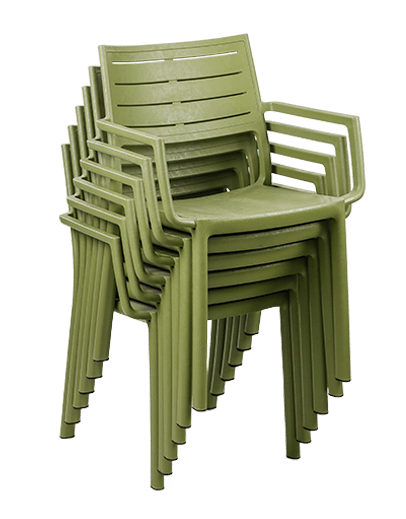
The outdoor furniture range is built around recycled and recyclable resin, with a focus on weather resistant performance and everyday durability rather than seasonal styling. That focus shows up in ranges like the Keter Metaline dining chairs, where the metal-look frame construction is designed to hold up to regular outdoor use across an Australian backyard or entertaining space. When you’re comparing options, check the product page for the stated capacity, note whether assembly instructions call for tightening specific fasteners, and look closely at frame joints in the product photos. Materials matter here too. Our breakdown of outdoor furniture materials for Australian homes explains why resin and metal combinations tend to outperform basic all-plastic builds over several seasons.
A pragmatic take on chair shopping
If you’re torn between two chairs, spend the extra for the one with a slightly higher rating rather than the one that’s a little cheaper. The gap between a 110 kg chair and a 135 kg chair is often a handful of dollars, and it buys you real headroom for movement, uneven ground, and the occasional heavier guest. Maintenance and correct siting matter just as much as the number on the label. A well-cared-for 135 kg chair on level ground will outlast a neglected 180 kg chair with a wobbly leg. Buy with margin, tighten what needs tightening, and check it once a year.
— Liza
Where to find a chair built for real outdoor use
There’s no shortage of options once you know your numbers, and Keter Group’s approach is to build that margin in from the start rather than leave it to chance. The Metaline range uses a metal-look dining chair frame designed for everyday outdoor seating, and it’s sold as a practical set for households that want matching seating without gambling on unlabelled capacity.
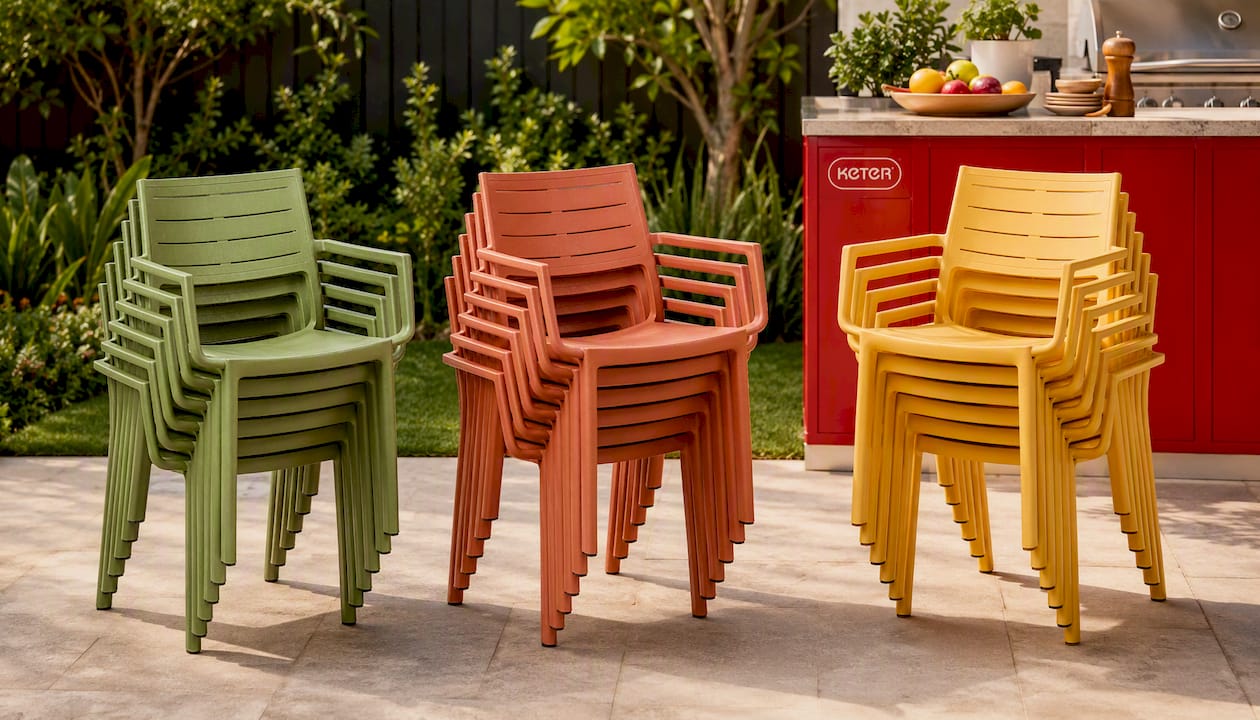
If you like a cooler, contemporary look, the Keter Metaline dining chair in green comes as a six-pack, which suits a full outdoor table setting in one order. Prefer something warmer? The terracotta finish pairs well with timber decking and garden greenery, while the mustard yellow option suits a brighter, more casual setup. Whichever finish you choose, check the product page for the listed capacity and match it against your own safety margin before ordering, and follow the assembly instructions closely since correctly fitted fasteners are part of what keeps any chair performing to its rating over years of outdoor use.
Standards and safety pages worth bookmarking
A few primary sources back everything covered in this guide, and they’re worth checking directly if you want the fine print:
- AS/NZS 3813 information kit — explains the 110 kg and 135 kg test classes for plastic monobloc chairs
- ACCC toppling furniture standard — covers stability hazards and supplier labelling duties
- Heavy-duty patio chair buying guide — details how 300 to 500 lb ratings are genuinely engineered
Sources
- Toppling furniture mandatory standard | ACCC Product Safety
- Heavy duty plastic patio chairs: buying guide (DG Floors)
- Grosfillex chairs weight capacity guide (Resort Contract)
FAQ
What chairs can hold 150 kg?
Heavy-duty resin, HDPE, or metal-framed outdoor chairs with reinforced legs and cross-bracing commonly reach 150 kg, and many commercial stackable chairs are rated at or above this figure due to stricter testing standards.
What kind of camping chair can hold 150 kg?
Look for folding camping chairs with wide, steel-framed bases and thick tube diameter rather than lightweight aluminium folders, since the frame width and material largely determine whether a folding design can safely reach 150 kg.
How much weight can a chair hold in kg?
It depends entirely on the chair type: standard plastic monobloc chairs are commonly rated at 110 to 135 kg under AS/NZS 3813, while heavy-duty and commercial designs can reach 180 to 227 kg or more.
What are some good outdoor chairs for heavy people?
Chairs with metal subframes, boxed or reinforced legs, and a clearly stated capacity rating well above your own weight are the safest bet, and options like the Keter Metaline dining chair range are worth checking for their frame construction and listed specifications.


