
How to keep spiders out of your shed in Australia

Seal every gap around doors, vents and the base plate, clear clutter and vegetation from the perimeter, switch stored items into sealed plastic tubs, and use a safe repellent spray as backup. That combination handles the vast majority of shed spiders you’ll meet, including the redback, without you needing to call anyone. Do all four and you’ve covered the fastest route there is.
TL;DR:
- Sealing gaps around doors, vents, and the base plate is essential for long-term spider prevention, especially in overlooked areas like wall-base seams.
- Rechecking seals every few months is necessary because materials shift and open new entry points over time, even in well-sealed sheds.
- Natural deterrents like peppermint, eucalyptus, or vinegar sprays are temporary solutions and should be used alongside sealing and cleaning efforts.
- Using moisture-resistant sheds made of resin or metal reduces the need for frequent maintenance and limits spider entry points compared to timber structures.
- A regular cleaning routine involving vacuuming webs, upgrading to sealed storage, and controlling the shed environment significantly diminishes spider presence over time.
Table of Contents
- How to keep spiders out of your shed with a quick 90-minute checklist
- Seal and exclude: the mechanical fixes that stop spiders entering
- Are natural spider deterrents actually effective in a shed?
- What chemical sprays are safe to use in a home shed?
- Building habits that keep your shed spider-free long term
- Personal safety and knowing when a spider is genuinely risky
- Why shed material and storage choices matter
- A personal note on sharing the shed with the locals
- Reduce shed pests with the right shed and storage setup
- Sources
- FAQ
How to keep spiders out of your shed with a quick 90-minute checklist
You don’t need a weekend to make a real dent in your shed’s spider population. A focused session, done properly, changes the environment enough that spiders start looking elsewhere for shelter.
Work through these tasks in order:
- Empty the corners. Pull everything out of dark, cluttered corners and sweep or vacuum away webs, egg sacs and dead insects. This is where redbacks like to sit, tucked behind stored items where nothing disturbs them.
- Switch to sealed storage. Move loose items, especially fabrics, gloves and shoes, into sealed plastic tubs. Keep footwear and soft goods off the floor entirely.
- Clear the perimeter. Cut back grass and vegetation touching the shed walls, and shift firewood piles at least a metre away. Spiders and their prey both love that damp, shaded strip against a wall.
- Rethink your lighting. Turn off exterior lights you don’t need, or swap to yellow, insect-reducing bulbs. Fewer insects drawn to the light means fewer spiders turning up to eat them, a link confirmed by RAC WA’s home pest advice.
Seal and exclude: the mechanical fixes that stop spiders entering
Cleaning buys you time, but sealing buys you a genuinely spider-resistant shed. This is the step most people skip, and it’s the one that matters most long-term.
Grab a torch and walk the shed’s exterior at dusk, when gaps show up as thin lines of light or draught. Check the door frame, window seals, vent covers and, importantly, where the walls meet the base plate. That base plate seam is one of the most commonly missed entry points because it sits low and out of eye line.
Fixes worth doing:
- Fit weatherstrips or a draft excluder along the bottom and sides of the door.
- Run exterior-grade caulk into any hairline cracks in the frame or base.
- Cover vents with fine flyscreen mesh so air still moves but insects can’t get through.
- Pack steel wool or fine metal mesh into larger gaps around pipes or cabling. Spiders and rodents can’t chew through it, according to Strathalbyn H Hardware’s shed pest-proofing guide.
Preventing entry through mechanical sealing, rather than trying to fight spiders once they’re inside, is the approach the Australian Museum recommends as the most reliable long-term fix.
Pro Tip: Recheck your seals every few months, not just once. Timber shrinks, plastic flexes with heat, and a gap that wasn’t there in winter can open up by summer.
Are natural spider deterrents actually effective in a shed?
Natural repellents work, but only as a top-up to sealing and cleaning, not a replacement for either. Spiders avoid strong scents rather than being killed by them, so the effect fades and needs renewing.
Options worth trying:
- Essential oil spray: Mix 10 to 15 drops of peppermint, eucalyptus or lavender oil into a spray bottle of water and mist entry points, corners and shelving. Reapply every two to three days, and always after rain washes it away.
- Vinegar spray: A diluted vinegar solution works similarly on hard surfaces, but test it first on painted timber or metal, since vinegar can dull some finishes over time.
- Citrus peels: Scattering citrus peel near doorways gives a mild, low-effort deterrent, best used alongside other methods rather than alone.
- Diatomaceous earth: A light dusting along skirting and cracks can help by drying out insects spiders feed on, but keep it away from pets and reapply after damp weather, since moisture reduces its effect.
None of these fixes a gap in your wall. Think of them as maintenance, not a barrier.
What chemical sprays are safe to use in a home shed?
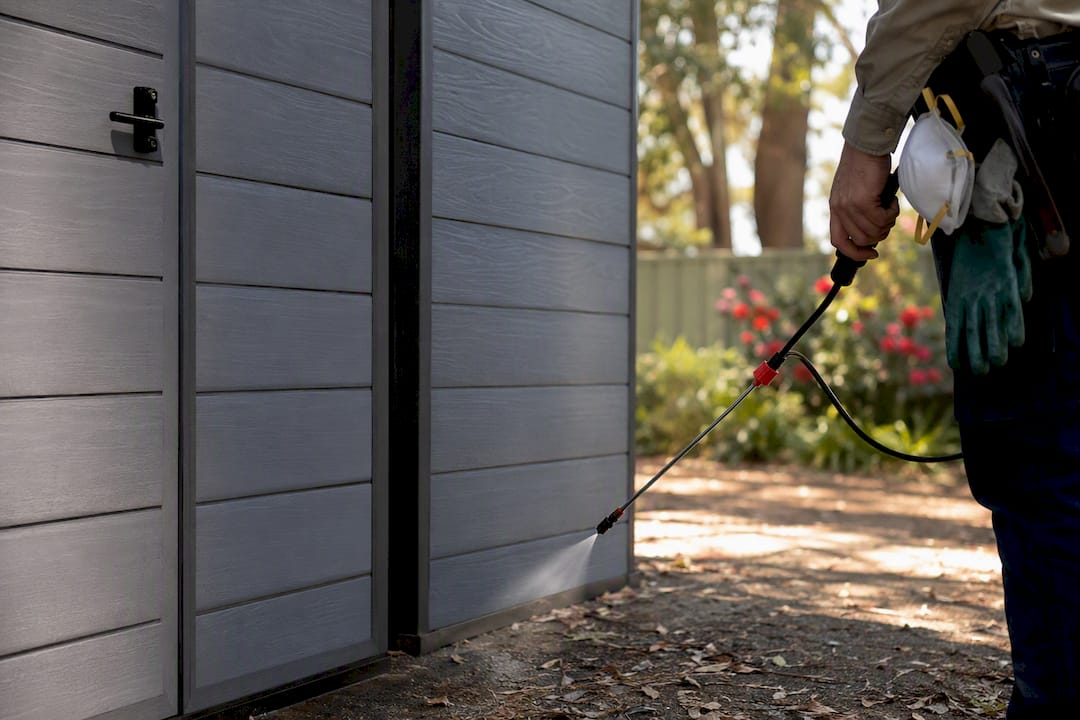
Reach for a chemical spray only after sealing and cleaning are done, and pick a product labelled for domestic or household spider use. Read the front label before you buy, not just the price tag.
Look for:
- Clear “domestic use” or “household spider control” wording on the label.
- Instructions on reapplication frequency, usually every four to eight weeks depending on the product.
- PPE guidance, such as gloves and eye protection during application, and ventilation advice for enclosed sheds.
Apply barrier sprays around doorframes, window seals and vent openings rather than dousing the whole interior. Health.vic’s guidance specifically cautions against spraying insecticide on ground-dwelling spiders, since it can agitate them into more active, visible behaviour rather than controlling them.
If you’re dealing with a heavy infestation, a suspected redback nest near living areas, or you simply don’t want to handle chemicals yourself, a licensed pest controller is the safer call. Services like Paladin Pest Control’s spider control programs outline the kind of professional workflow you’d expect from a local operator here in Australia.
Building habits that keep your shed spider-free long term
A clean, sealed shed slides backwards fast if you don’t keep at it. Build a rhythm rather than treating this as a once-off project.
- Weekly: Vacuum visible webs and give stored boxes a quick shake before opening.
- Spring: Do a full inspection, check every seal from your autumn work, and look for new gaps after winter movement.
- Autumn: Reseal any cracks that opened over the year and refresh your citrus or oil-based deterrents before the cooler months push spiders indoors looking for shelter.
Swap cardboard boxes for sealed plastic containers wherever you can. Cardboard holds moisture, provides a soft harbourage, and gives spiders and silverfish alike a place to nest undisturbed. Raised shelving, good ventilation and moisture control all help too, since damp, still air breeds the insects spiders come to hunt.
Personal safety and knowing when a spider is genuinely risky
Always check dark corners with a torch before reaching in, and wear gloves when clearing boxes or shifting stored gear. Shake out shoes, gloves and clothing before you put them on if they’ve been sitting in the shed a while.
- Redbacks favour dry, sheltered crevices, often tucked behind or under stored items, and are identified by a red or orange stripe on a black body.
- Funnel-webs prefer damp, sheltered ground burrows rather than shed interiors, but treat any large, dark, robust spider with caution if you’re in their range.
- Most spiders you’ll find in a shed, huntsman and daddy long-legs included, are harmless and actually help by eating other insects.
If you spot a redback, a funnel-web, or you’re simply not confident identifying what’s in front of you, step back and call a licensed pest controller rather than attempting removal yourself.
Why shed material and storage choices matter
The shed itself plays a bigger role in pest resistance than most people expect. Timber sheds flex, crack and rot at the joints over time, opening exactly the kind of gaps spiders exploit. Metal sheds resist rot but often develop seam gaps and condensation issues. Resin sheds tend to hold their seals better because the material doesn’t warp, crack or rot the way timber does, according to Keter’s comparison of shed materials.
- Choose sealed plastic tubs over open shelving or cardboard boxes for anything stored long-term.
- Elevate storage off the floor where you can, since floor-level clutter is prime redback territory.
- Keep humidity down with a moisture barrier and decent ventilation, which reduces both mould and the insects spiders feed on.
| Shed material | Pest resistance | Maintenance effort |
|---|---|---|
| Timber | Moderate, gaps develop as it ages | High, needs regular treatment |
| Metal | Good, but prone to seam gaps and condensation | Moderate |
| Resin | Strong, resists cracking and warping | Low |
Even the best-built shed still needs sealing checks and a regular clean-out. Material buys you a head start, not immunity.
A personal note on sharing the shed with the locals
I always check a dark corner with a torch before my hand goes anywhere near it, and I keep the tools I use most in sealed tubs I can reach without digging. Most spiders in an Australian shed are doing you a favour by eating other pests. Respect that, but treat anything that looks like a redback with proper caution, not bravado.
— Liza
Reduce shed pests with the right shed and storage setup
Sealing gaps and clearing clutter goes a long way, but the shed itself either helps that effort or works against it. A weather resistant resin shed holds its seals far better over the years than a timber structure that shrinks and swells with the seasons, which means fewer new gaps for spiders to find each spring.

If you’re shopping for a new shed, the Store It Out Prime Shed 880L is a compact, low-maintenance option that suits smaller yards, and it’s also available at Bunnings if you’d rather see it in person first. For bigger storage needs, the Keter Signature Horizontal Shed in Walnut Look, 2020L gives you a durable resin build with plenty of room to keep gear elevated and organised rather than piled on the floor.
Inside the shed, swap loose boxes for the Curver Style Storage Box Set in Brown (S+M+L) or the Curver Style Storage Box Set (M+L). Both keep fabrics, tools and seasonal gear sealed away from the damp, dark spaces spiders look for. Browse the full Keter Australia range and pick the setup that suits your shed size and how you use it, then follow the sealing and cleaning steps above before you load it up.
Sources
- Spiders in the house and garden — Australian Museum
- Spiders - pest control — Health.vic
- How to get rid of spiders in and around your home — RAC WA
FAQ
What can I put in my shed to keep spiders away?
Peppermint or eucalyptus oil sprays, vinegar, citrus peels and diatomaceous earth act as mild deterrents when paired with sealed plastic storage tubs and a clutter-free floor.
What smell do spiders absolutely hate?
Spiders tend to avoid strong scents like peppermint, eucalyptus and citrus, though the effect is temporary and requires frequent reapplication.
What does WD-40 do to spiders?
WD-40 isn’t a registered spider control product, and relying on it instead of sealing gaps or using a labelled domestic spider spray doesn’t provide a reliable long-term fix.
What repels spiders immediately?
A peppermint or eucalyptus oil spray applied directly to webs and entry points gives the fastest visible effect, but sealing gaps and clearing clutter delivers the more lasting result.


