
Garage cabinet ideas for coastal and inland Australian homes

For most Australian garages, UV-stabilised recycled resin cabinets combined with modular tall and base units are the best starting point. They resist moisture, salt air, and intense UV without rusting, swelling, or needing annual resealing — and many are made from recycled materials, which matters if sustainability is part of your brief.
TL;DR:
- Favour UV-stabilised recycled resin over untreated timber or thin-gauge steel in humid or coastal conditions.
- Anchor tall cabinets to the wall stud and keep all units 50–100 mm off the floor.
- Wipe down shelves seasonally and check door seals once a year.
Table of Contents
- Which garage cabinet materials actually work in Australia?
- Practical garage cabinet layouts that save space
- How to choose weather-resistant, sustainable garage cabinets
- Keter garage cabinet options available in Australia
- Installation and maintenance steps that extend cabinet life
- What do garage cabinets cost in Australia?
- Blending cabinets with a typical Australian garage
- Key takeaways
- Why recycled resin makes sense for Australian garages
- Ready to fit out your garage with Ketergroup?
- Useful sources
- FAQ
Which garage cabinet materials actually work in Australia?
Australian garages are harder on storage than most people expect. UV, coastal salt spray, humidity swings, and the occasional bushfire ember zone all shorten the life of the wrong material. Here is how the three main options compare.
| Dimension | Recycled UV-stabilised resin | Powder-coated steel | Treated timber / composite |
|---|---|---|---|
| Best for | Coastal, humid, low-maintenance | Inland, heavy tools, industrial look | Aesthetic-led, dry inland garages |
| Weather resistance | Moisture-immune, no rust or swelling | Good with coastal-grade coat; corrodes if chipped | Moderate; needs periodic resealing |
| Sustainability | Recycled content; recyclable at end of life | Recyclable steel; higher embodied carbon | Varies; FSC timber is better |
| Maintenance | Wipe clean; no recoat needed | Touch-up paint every 5–10 years | Reseal every 1–3 years |
| Load capacity | Moderate to good; check shelf rating | High; 18-gauge preferred for heavy use | Good with quality plywood construction |
| Coastal fasteners | N/A (no metal exposed) | 316 stainless steel required | 316 stainless steel required |
UV-stabilised resin provides moisture immunity and strong scratch resistance, making it the low-maintenance choice for humid or coastal garages. Steel is the right call for very heavy tool loads, but coastal exposure accelerates corrosion on thin-gauge metal quickly — Colorbond coastal variants and 316 stainless fixings are the minimum spec if you go that route. Timber looks warm and can be customised, but it demands the most upkeep of the three.
Sustainability claims vary between products. “Recycled content” and “recyclable” are not the same thing. Look for a stated recycled percentage on the product datasheet rather than a vague marketing phrase.
Pro Tip: Check the spec sheet for the words “UV stabiliser” or “UV inhibitor” — not just “UV resistant.” A cabinet with a documented UV stabiliser formulation will outlast one with a surface coating alone, especially in Queensland or WA.
Practical garage cabinet layouts that save space
Small Australian garages typically have a moderate amount of usable wall height, and most homeowners use less than half of it. Going vertical is the single biggest upgrade you can make without touching the floor plan.
Four measurements to take before you buy
- Wall length available (subtract door frames and power points).
- Ceiling height to the lowest obstruction (beam, roller door track).
- Vehicle footprint including mirrors — leave at least 600 mm clearance on the driver’s side.
- Door swing radius — standard cabinet doors need 600–700 mm of clear space in front.
Layout ideas by garage type
Single-car garage: Run two tall cabinets on the side wall with a base cabinet between them as a workbench. Keep shelf depth to 300–400 mm on side walls so you preserve vehicle clearance. Modular systems let you start with one unit and expand as your storage needs grow.
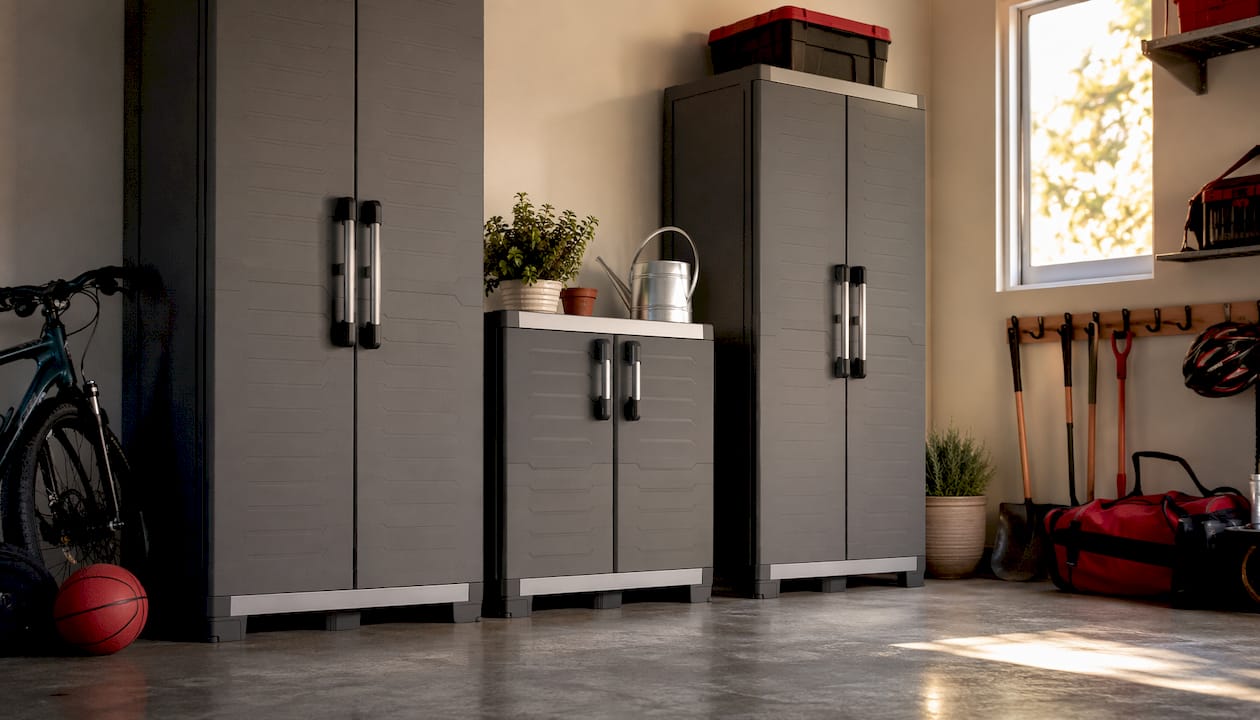
Double garage or workshop: Use a full back-wall run of base cabinets topped with a timber or laminate benchtop, then flank with tall cabinets at each end. Overhead shelving above the benchtop handles lighter, less-accessed items.
Multi-use garage (gym + tools + garden): Zone by activity. Garden tools and sporting gear suit tall cabinets near the door; power tools and hardware belong in locked base cabinets near the workbench. Shallow cabinets on side walls keep the centre clear for a car or workout space.
For shelf depth, plan typical depths suitable for hand tools and larger depths for power tools, with shelves rated for a moderate load capacity uniformly distributed. For custom garage styling ideas that go beyond storage, pairing cabinets with wall panels and a feature colour can turn a functional space into one you actually enjoy spending time in.
Pro Tip: Tape out your cabinet footprint on the garage floor before ordering. It takes five minutes and saves the frustration of discovering a door swing conflict after delivery.
How to choose weather-resistant, sustainable garage cabinets
Use this checklist when comparing products or talking to a retailer.
Material and weather resistance:
- UV stabiliser confirmed on spec sheet (not just “UV resistant” in marketing copy).
- Sealed joints, continuous backs, and door gaskets — these are the features that define a genuinely weather-resistant cabinet.
- Raised plinth or adjustable legs to keep the base off the floor.
Sustainability:
- Stated recycled content percentage, not a vague “eco-friendly” claim.
- End-of-life recyclability noted on the product or brand sustainability page.
Load and size:
- Shelf load rating per shelf (aim for 30–50 kg minimum for tool storage).
- Dimensions checked against your four measurements above.
Practicalities:
- Available in Australia with local support (not a grey-market import).
- Assembly type: tool-free or minimal-tool snap-together is faster and less error-prone.
- Fastener grade: 316 stainless steel for coastal postcodes.
Budgeting without a price list: Resin cabinets generally sit in the mid-range and require the least ongoing spend. Steel costs more upfront for quality gauges and more again if corrosion repair is needed. Timber looks affordable until you factor in annual resealing. Think in total cost of ownership over five to ten years, not just the purchase price.
Keter garage cabinet options available in Australia
Ketergroup’s XL Garage range is built from recycled and recyclable resin with UV stabilisation, making it a practical fit for the criteria above. All three options below are available through ketergroup.com.au.
Keter XL Garage Base Cabinet: A floor-standing base unit suited to workbench integration or standalone storage. The resin construction means no rust, no swelling, and no recoating. Good for garden chemicals, power tools, and anything you want locked away at bench height. Assembly is tool-free and manageable for one person.
Keter XL Garage Tall Storage Cabinet: The single tall unit is ideal for a narrow side wall where you want floor-to-ceiling storage without committing to a full run. Adjustable shelves handle everything from helmets to paint tins.
2 x Keter XL Garage Tall Storage Cabinets: The twin-pack is the smarter buy when you are fitting out a full wall. Flanking a base cabinet or workbench with two tall units creates a cohesive, high-capacity layout without the cost of a custom fit-out.
All three units use UV-stabilised recycled resin, require no painting or sealing, and are suited to coastal and inland Australian conditions alike. Ketergroup publishes sustainability information on recycled content on its product pages — worth checking if you want to verify the claim before buying.
Pro Tip: Pair the base cabinet with the 2-pack tall cabinets for a three-piece layout that covers most single-car garage walls without custom carpentry.
Installation and maintenance steps that extend cabinet life
Installation
- Mark stud positions before fixing any wall-mounted unit — a stud finder takes two minutes and prevents a cabinet pulling away from the wall under load.
- Keep all cabinets slightly off the floor to avoid splash and rising damp; use adjustable legs or a raised plinth.
- Leave a 10–20 mm air gap behind cabinet backs, particularly against masonry walls, to prevent trapped moisture.
- In coastal areas, use 316 stainless steel fasteners throughout — standard zinc-plated screws will show rust within a season.
- Anchor tall cabinets to the wall at the top regardless of whether the manufacturer marks it as optional. A loaded tall cabinet can tip.
Maintenance checklist
- Resin cabinets: Wipe shelves with a damp cloth seasonally. Check door gaskets annually for cracking. No recoating required.
- Steel cabinets: Inspect paint finish every 12 months; touch up chips promptly to prevent crevice corrosion. Full recoat every 5–10 years depending on coastal exposure.
- Timber cabinets: Reseal with an exterior-grade product every 1–3 years. Check for swelling around door edges after wet seasons.
- All types: Add desiccant sachets inside cabinets storing electronics or precision tools in high-humidity environments. Passive vents top and bottom with insect mesh reduce condensation; aim for a vent area proportionate to the cabinet volume.
What do garage cabinets cost in Australia?
Cabinet costs in Australia vary considerably by material and configuration. Resin units generally offer the most accessible entry point and the lowest ongoing cost. Steel cabinets at a quality gauge (18-gauge or heavier) sit higher on the purchase price but suit heavy-duty tool storage well. Timber and custom-built options carry the highest upfront cost and the most maintenance spend over time.
A practical budgeting approach: decide your five-year total cost, not just the sticker price. A resin cabinet that needs no resealing, no rust repair, and no replacement hardware will often cost less over that period than a cheaper steel unit that corrodes in a coastal suburb.
For cheap garage organisation on a tighter budget, start with one base cabinet and one tall unit, then add a second tall cabinet when budget allows. Modular systems that share the same footprint and fixing pattern make this gradual approach work well.
Blending cabinets with a typical Australian garage
Most Australian garages are single or double-car spaces with a roller door, a concrete floor, and limited natural light. A few practical principles help cabinets feel intentional rather than bolted on.
Colour and finish: Neutral tones (grey, charcoal, off-white) read as part of the architecture rather than afterthoughts. Resin cabinets in these colours also show less UV yellowing over time than white units.
Consistent depth: Mixing deep and shallow cabinets on the same wall creates a cluttered look. Stick to one depth per wall run where possible, and use overhead shelving for the overflow.
Floor continuity: If you have an epoxy or painted concrete floor, choose cabinet legs or plinths that lift units clear of the surface rather than sitting flush — it makes mopping easier and the floor look more finished.
Zoning: Treat the garage as three zones: vehicle zone (keep clear), work zone (bench and tool storage), and gear zone (sports, garden, seasonal). Cabinets that define each zone visually make the space feel organised even when it is busy. For more ideas on custom storage layouts, thinking in zones applies equally to garages and indoor storage rooms.
Key takeaways
UV-stabilised recycled resin cabinets in a modular tall-plus-base configuration are the most practical, low-maintenance choice for most Australian garages, including coastal locations.
| Point | Details |
|---|---|
| Preferred material | UV-stabilised recycled resin resists moisture, salt air, and UV without recoating. |
| Installation must | Keep all cabinets 50–100 mm off the floor and anchor tall units to wall studs. |
| Maintenance habit | Check door gaskets and shelf loads annually; add desiccants in high-humidity garages. |
| Layout principle | Use floor-to-ceiling tall cabinets on side walls to multiply storage without reducing vehicle clearance. |
| Ketergroup option | The Keter XL Garage range (base + tall units) covers most single-car garage layouts with recycled resin construction and tool-free assembly. |
Why recycled resin makes sense for Australian garages
There is a tendency in garage storage conversations to treat metal as the serious, grown-up choice and resin as the budget compromise. That framing made sense twenty years ago. It does not hold up now.
Modern UV-stabilised resin is moisture-immune, scratch-resistant, and genuinely durable in the conditions that matter most in Australia: coastal salt air, high UV, and the humidity swings that come with a garage that heats up to 40°C in summer and cools overnight. Metal has real advantages for very heavy loads, and timber has an aesthetic warmth that resin cannot replicate. But for the majority of homeowners storing garden gear, power tools, sporting equipment, and household overflow, resin does the job with less fuss and less ongoing cost.
The sustainability angle is also more honest with resin than it is often presented. Recycled content claims need to be verified on a datasheet, not taken from a marketing headline. Ketergroup publishes this information, which is the right approach. A cabinet made from recycled materials that lasts twenty years in a coastal garage is a better environmental outcome than a cheaper unit replaced every five.
Ready to fit out your garage with Ketergroup?
The Keter XL Garage Base Cabinet is the natural starting point for most Australian garage fit-outs. It is built from UV-stabilised recycled resin, assembles without specialist tools, and pairs directly with the tall cabinet range for a complete wall solution.
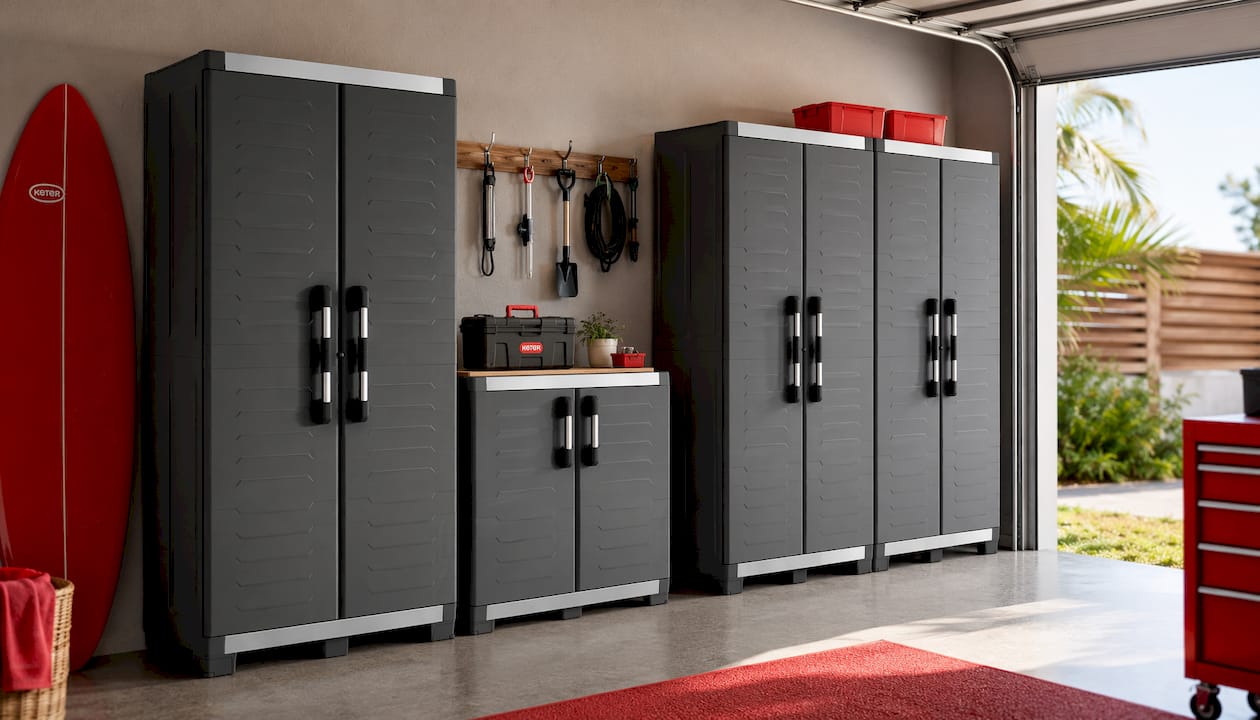
You can browse the full XL Garage range, including the single tall cabinet and the 2-pack tall cabinet set, on the Ketergroup Australia website. All products ship to Australian addresses, and the product pages include assembly guides and full spec sheets so you can confirm dimensions and recycled content before you buy.
Useful sources
The following sources informed the material comparisons, installation guidance, and sustainability notes in this article.
- Garage cabinet systems: metal vs wood vs resin — independent practitioner guide covering material durability, UV performance, and modular system selection.
- Waterproof cabinet guide for Australian sheds — Australian trade resource covering weather-resistant design features, fastener grades, ventilation, and installation clearances.
- Small garage storage ideas: maximise every square metre — practical guide to vertical storage and side-wall cabinet strategies for compact Australian garages.
- Ketergroup Australia sustainability and product pages — manufacturer source for recycled content claims, UV stabilisation specifications, and product availability in Australia.
FAQ
What is the best garage cabinet material for coastal Australia?
UV-stabilised recycled resin is the most practical choice for coastal garages because it is moisture-immune and will not corrode, swell, or require recoating. If you prefer steel, use coastal-grade powder-coated steel with 316 stainless fasteners throughout.
How do I organise a small single-car garage with cabinets?
Place tall cabinets on side walls at 300–400 mm depth to preserve vehicle clearance, and use a base cabinet as a workbench along the back wall. Vertical floor-to-ceiling storage multiplies usable volume without increasing your floor footprint.
Are Keter garage cabinets available in Australia?
Yes. The Keter XL Garage Base Cabinet and Keter XL Garage Tall Storage Cabinet range are available through ketergroup.com.au, with full spec sheets and assembly guides on each product page.
How far off the floor should garage cabinets sit?
Keep cabinets 50–100 mm off the floor using adjustable legs or a raised plinth. This clearance reduces splash damage, rising damp, and makes cleaning the floor underneath much easier.
Do resin garage cabinets need maintenance?
Resin cabinets need very little upkeep. A seasonal wipe-down and an annual check of door gaskets is usually all that is required. No painting, sealing, or rust treatment is needed, which is one of the main practical advantages over steel or timber in Australian conditions.
Recommended
- Summer Sorted: Outdoor Storage Box Ideas to Tame Backyard Clutter – Keter Australia
- The Secret to Effortless Outdoor Style: Discover Keter’s Signature Wood-Look Storage Sheds – Keter Australia
- From Garden Tools to Family BBQs: Transform Your Outdoors with Keter Storage Boxes Australia – Keter Australia
- Transform Your Garden with Adirondack Chairs & Storage Tables – Keter Australia’s Outdoor Solutions


