
Coastal outdoor furniture: the Australian buyer's guide

For most Australian coastal homes, the best choice is an aluminium-framed lounge or sofa set with synthetic wicker or HDPE detailing and quick-dry cushions. Three reasons back that up: aluminium resists the salt-air corrosion that eats through steel frames within seasons, UV-stable synthetic materials hold their colour under intense coastal sun, and the whole package needs little more than a rinse to stay looking good year-round.
Before you buy, check the product page for these three things: a named frame material (powder-coated aluminium, not just “metal”), a cushion spec that mentions quick-dry or reticulated foam, and a warranty that covers outdoor use. Skip any listing that leaves those details vague.
Pro Tip: If your deck or balcony faces the water directly, prioritise sealed joints and marine-grade stainless hardware over aesthetics. Salt settles on every surface and reactivates with each rain shower, so the weakest point in a frame is always where moisture collects.
- Powder-coated aluminium or HDPE frames resist rust and UV fading
- Quick-dry cushions with solution-dyed acrylic covers reduce mildew after rain
- Low-maintenance materials mean less reconditioning and more time enjoying the space
Table of Contents
- What does coastal outdoor furniture actually include?
- Which materials genuinely hold up on the Australian coast?
- How do you choose cushions and fabrics for seaside use?
- What does a practical coastal maintenance routine look like?
- How do you choose the right coastal outdoor furniture set?
- Which Ketergroup products suit coastal outdoor living?
- Where can you buy coastal outdoor furniture in Australia?
- A quick buying checklist for decks, patios and balconies
- Key takeaways
- What most buyers get wrong about coastal furniture
- Useful sources
- FAQ
What does coastal outdoor furniture actually include?
The term covers more than a couple of chairs and a table. For a well-set coastal patio, the full category spans lounge sets, dining sets, sun loungers, daybeds, side tables and outdoor storage boxes. Each plays a different role, and some face far harsher conditions than others.
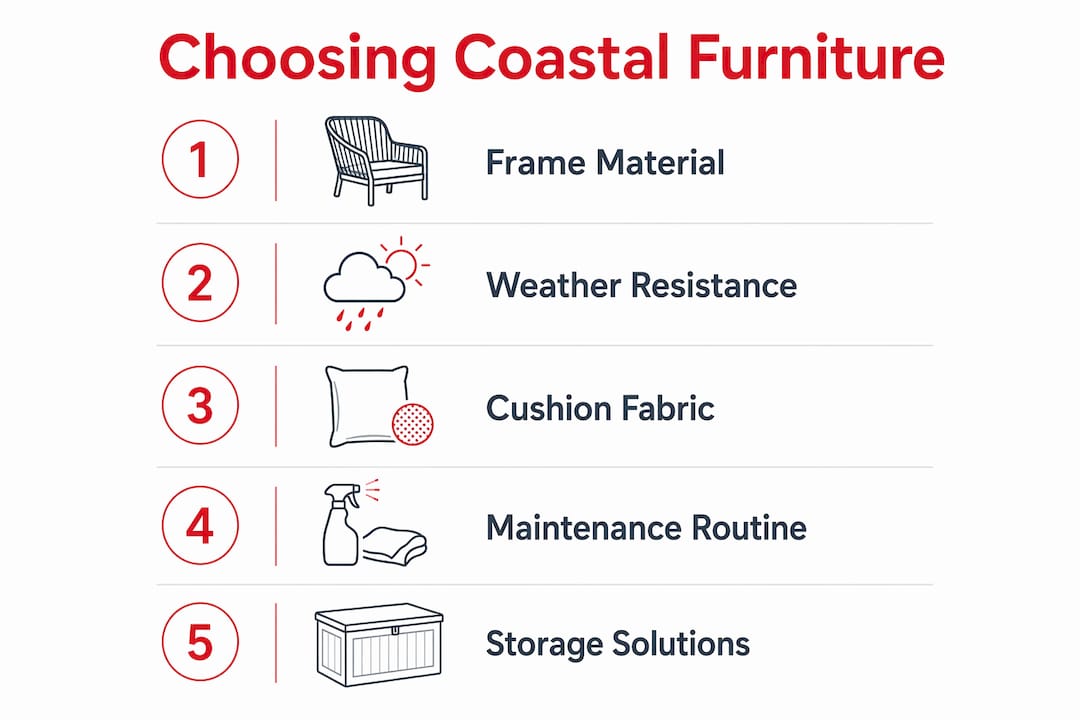
Styling cues for beach-style patio furniture tend to run toward light, natural tones: sandy neutrals, soft whites, warm taupes and occasional teak accents. Woven textures in synthetic rattan add visual warmth without the weight of timber. These aesthetic choices also happen to be practical, since lighter colours absorb less heat and woven surfaces allow airflow.
The pieces that take the hardest beating are sun loungers and dining chairs, because they sit fully exposed for hours at a time. A lounge sofa tucked under a pergola gets some shelter; a sun lounger beside a pool or on an open deck gets none. That difference matters when you are comparing construction quality across product types.
- Lounge sets and sofas: the social hub of any coastal patio; look for sturdy frames and deep, comfortable cushions
- Dining sets: need weather-resistant table surfaces (resin, aluminium or treated teak) and stackable or foldable chairs for easy storage
- Sun loungers and daybeds: highest UV and salt exposure; prioritise UV-stable materials and quick-dry cushions
- Side tables and storage boxes: often overlooked, but a good outdoor storage solution doubles as a surface and keeps cushions dry
Which materials genuinely hold up on the Australian coast?
Australian coastal climates combine intense UV, salt-laden breezes and heavy seasonal use — a combination that exposes every weakness in a furniture frame within a year or two. The materials that consistently perform are:
- Powder-coated aluminium: lightweight, corrosion resistant even under salt-air exposure, and easy to wipe clean. Look for thicker coatings and sealed joints rather than the thinnest spec available.
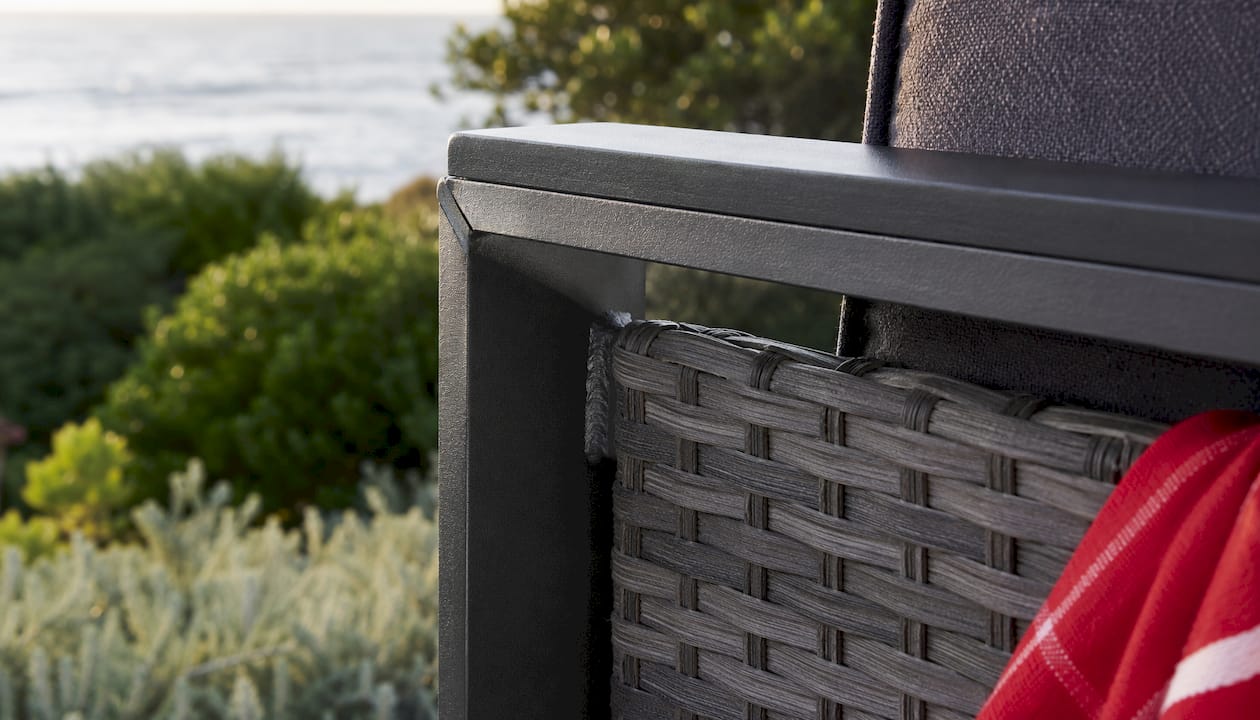
- Synthetic (PE) wicker over aluminium: the wicker itself is UV-stabilised resin, so it won’t crack or fade the way natural rattan does. The aluminium core means the frame won’t rust.
- HDPE (high-density polyethylene): dense, UV-stable and completely impervious to moisture. Common in sun loungers and storage boxes.
- FSC-certified teak: the natural oils in quality teak resist moisture and fungal attack, but teak performs best in covered outdoor areas unless you commit to regular oiling.
- Marine-grade stainless steel (316 grade): for hardware, bolts and fasteners in high-salt locations. Standard 304-grade stainless can still rust near the ocean.
Coastal UV reality: Water reflects UV from multiple directions, meaning furniture near the ocean receives amplified UV exposure compared to an inland garden. UV stabilisation in both the frame coating and the woven material is not optional — it is the difference between a five-year piece and a two-year one.
Failure modes to avoid include thin tubing that flexes under load, welds that are inconsistent or visible as blobs rather than clean seams, and any coating described only as “powder-coated” without a thickness or grade. Structural weakness in welds and thin sections causes wobble and component failure before you ever notice surface rust.
How do you choose cushions and fabrics for seaside use?
Cushion quality is where many coastal furniture sets fall short. The frame might be excellent, but a cushion filled with standard polyester foam will stay damp for days after rain, turning into a mildew factory by mid-summer.
The combination that works best is a reticulated foam core with a solution-dyed acrylic cover. Quick-dry foam allows water to pass straight through, so cushions dry within hours rather than days. Solution-dyed acrylic means the colour is locked into the fibre itself, not printed on the surface, so UV fading is minimal even after years of direct sun.
Look for these features on any cushion spec:
- Removable, zip-off covers for easy washing
- Mildew-resistant fabric treatment (often listed as an anti-microbial finish)
- UV stabiliser rating on the fabric (Sunbrella and similar solution-dyed acrylics are the benchmark)
- Piping or binding that won’t fray or discolour faster than the main fabric
For accessories, a coastal-style lounge chair pairs well with a dedicated outdoor storage box so cushions can be stowed quickly when a storm rolls in. Clip-on shade sails or a pergola overhead extend fabric life significantly by cutting direct UV hours.
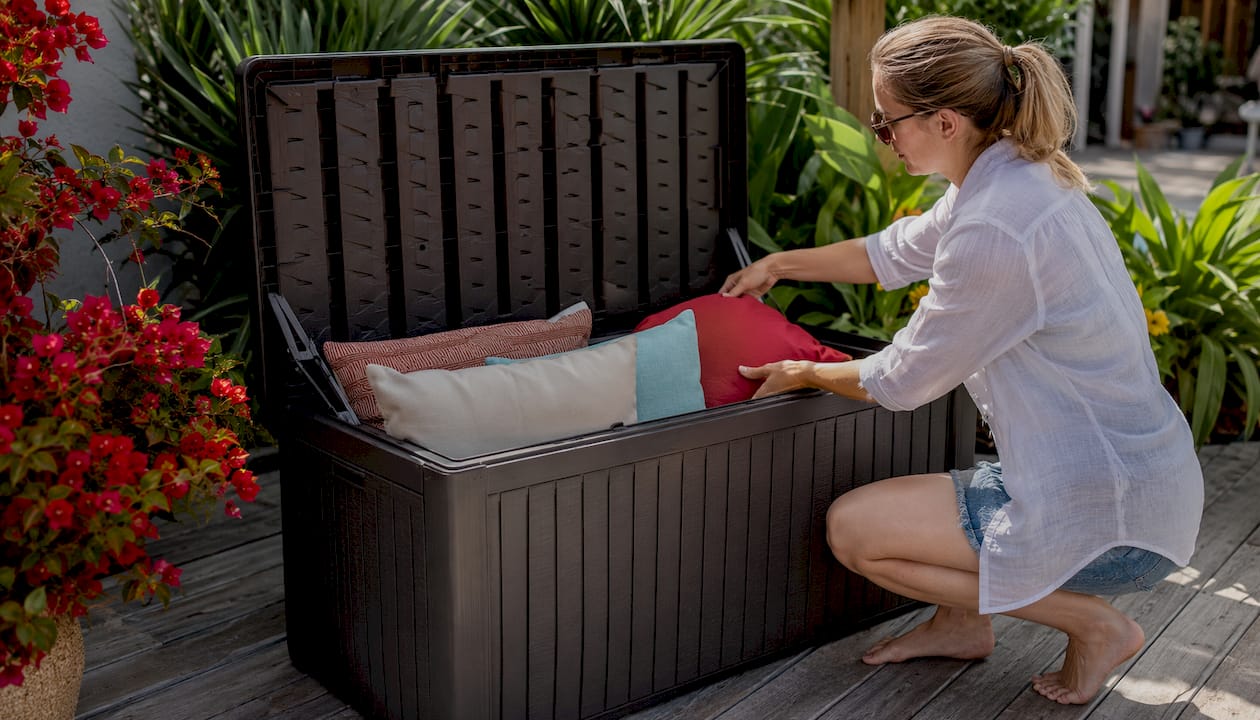
Pro Tip: Store cushions in a ventilated outdoor storage box rather than a sealed bag. Trapped moisture is the main cause of mildew, and a ventilated box lets any residual dampness escape overnight.
What does a practical coastal maintenance routine look like?
Salt spray is the constant variable. It deposits on frames, hardware and woven surfaces, then reactivates with every rain shower or morning dew. A simple routine keeps it manageable.
Weekly (during summer or high-use periods):
- Rinse all frames and woven surfaces with fresh water from a garden hose.
- Wipe down hardware, armrests and table surfaces with a damp cloth.
- Shake out or brush cushion covers to remove salt and debris.
Monthly:
- Wash frames with a mild soap solution and a soft brush; rinse thoroughly.
- Inspect joints, welds and hardware for early signs of corrosion or loosening.
- Check cushion covers for mildew spots; treat early with a diluted white vinegar solution.
Seasonally (end of summer or before extended wet periods):
- Deep-clean all surfaces; allow to dry completely before storing.
- Apply a UV protectant spray to synthetic wicker if the manufacturer recommends it.
- Store cushions in a ventilated box or bring indoors.
- Cover frames with breathable outdoor furniture covers, not plastic sheeting.
For aluminium and resin wicker, avoid abrasive cleaners or steel wool — a soft cloth and mild detergent are all you need. For teak, a teak cleaner followed by teak oil once or twice a year keeps the timber from greying. For HDPE, warm soapy water and a brush handle almost any stain.
How do you choose the right coastal outdoor furniture set?
A clear decision framework saves you from a purchase you’ll regret after the first winter.
Six criteria to evaluate:
- Coastal suitability: Does the product page name the frame material and coating type? If it just says “metal frame,” walk away.
- Material and finish: Powder-coated aluminium, synthetic wicker over aluminium, or HDPE are the safest bets. Ask about coating thickness for aluminium.
- Cushion specification: Quick-dry foam and solution-dyed acrylic covers are the standard to meet. Anything less is a compromise.
- Assembly quality: Look for clean welds, consistent coating coverage and reinforced corner joints. Poor welds are the leading cause of early structural failure.
- Delivery and returns: Check whether the retailer delivers to your postcode and what the return process looks like for large items.
- Warranty scope: A warranty that covers outdoor use and specifies what it covers (frame, fabric, hardware) is worth more than a vague “12-month guarantee.”
Questions to ask before you buy:
- What grade is the stainless steel hardware? (316 marine-grade for high-salt locations)
- Is the powder coating applied to a minimum thickness, and are the joints sealed?
- Are cushion covers removable and machine-washable?
Red flags that predict early failure:
- Frame material listed only as “metal” or “alloy” with no further detail
- Thin, lightweight tubing that flexes when you press it
- No mention of UV stabilisation in the cushion or wicker spec
- Hardware described as “stainless” without a grade
- No local stock or Australian returns process
Which Ketergroup products suit coastal outdoor living?
Ketergroup builds its outdoor furniture from recycled and recyclable resin with powder-coated frames, which makes the range a natural fit for Australian coastal conditions. The materials don’t rust, won’t absorb moisture and need nothing more than a rinse to stay clean. Here are three sofas worth considering for a seaside patio.
-
Rosalie 2 seater Sofa: A compact two-seater with a clean coastal silhouette. The resin construction resists salt and UV without any special treatment, making it a practical choice for exposed decks or balconies where space is limited.
-
Keter Salta 2 Seater Sofa with oat cushions: The warm oat-toned cushions suit the natural palette of a coastal setting, and the frame’s weather-resistant resin means you’re not fighting rust after every wet season. A solid pick for anyone who wants a relaxed, low-fuss look.
-
Emma 2 seater Sofa: Slightly softer in styling, the Emma suits smaller patios and covered outdoor areas. The resin frame handles humidity and salt air well, and the cushion spec is designed for outdoor use.
All three pair naturally with Ketergroup’s storage solutions. The Corfu 4 seater storage lounge set takes the concept further with integrated storage built into the frame itself.
Pro Tip: Pair any Ketergroup sofa with a dedicated outdoor storage box to keep cushions dry and ventilated between uses. It’s the single most effective way to extend cushion life in a coastal climate.
Where can you buy coastal outdoor furniture in Australia?
Online vs. showroom: Buying online gives you access to the full Ketergroup range with home delivery, which suits most coastal suburbs well. A showroom visit is worth it if you want to check cushion depth and frame rigidity before committing, particularly for larger lounge sets.
When buying online for a coastal address, check:
- Whether the retailer delivers to your postcode (some bulky-goods carriers don’t service remote coastal areas)
- Lead times for cushions, which sometimes ship separately from frames
- Packaging quality — frames should arrive boxed and wrapped to protect coatings during transit
Ketergroup products are available directly through ketergroup.com.au, with delivery across Australia. The product pages list dimensions, materials and assembly details so you can confirm fit before ordering. For styling inspiration, pairing your furniture with coastal wall art is an easy way to pull the whole outdoor space together.
A quick buying checklist for decks, patios and balconies
Before you confirm your order, run through these steps.
Measure and plan:
- Measure your outdoor area length and width.
- Measure any doorways or gates the furniture needs to pass through on delivery.
- Allow at least 90 cm of circulation space around dining tables and 60 cm beside lounges.
- Check cushion depth against your available seat depth — a 60 cm cushion on a 55 cm frame overhangs awkwardly.
- Confirm you have somewhere to store cushions (a storage box or indoor space).
Sizing rules of thumb:
- A two-seater sofa typically needs a 1.5 m x 2.5 m clear zone including a coffee table.
- A four-seater dining set needs roughly 2.5 m x 3 m to allow chairs to pull out comfortably.
- A sun lounger on a narrow deck needs at least 70 cm width and 2 m length of clear space; the Keter Daytona sun lounger is a compact option worth checking for tight spots.
For small seaside balconies, modular sets and stackable chairs are worth prioritising. They let you reconfigure for entertaining and tuck away neatly when the space needs to breathe.
Key takeaways
Weather-resistant coastal outdoor furniture for Australian homes should combine powder-coated aluminium or HDPE frames, UV-stable synthetic wicker or resin detailing, and quick-dry solution-dyed acrylic cushions for the best balance of durability and low maintenance.
| Point | Details |
|---|---|
| Frame material is the priority | Powder-coated aluminium or HDPE resists salt-air corrosion without constant reconditioning. |
| Cushion spec matters as much as the frame | Quick-dry reticulated foam with solution-dyed acrylic covers prevents mildew and UV fading. |
| Rinse weekly during summer | Fresh-water rinsing removes salt deposits before they reactivate with moisture and corrode joints. |
| Check construction quality, not just material | Sealed joints, consistent coating and clean welds determine real-world longevity near the coast. |
| Ketergroup for coastal ease | The Rosalie, Salta and Emma two-seater sofas offer weather-resistant resin frames suited to Australian seaside patios. |
What most buyers get wrong about coastal furniture
The most common mistake is treating “outdoor furniture” and “coastal outdoor furniture” as the same category. They are not. A dining set that performs well in a sheltered suburban garden can fail within two seasons on an exposed beachfront deck, not because the material is poor, but because the execution is wrong for the environment.
Coating thickness, sealed joints and hardware grade are the details that separate a five-year piece from a two-year one, and they rarely appear in product photography. The brands that are transparent about these specs are usually the ones confident enough in their construction to share them. When a product page skips the material detail entirely, that silence is informative.
Ketergroup’s approach of using recycled resin and powder-coated frames sidesteps many of these failure points by choosing materials that are inherently resistant rather than relying on coatings alone. For Australian coastal homes, that design philosophy aligns well with the conditions. The 2025 outdoor furniture trends piece on the Ketergroup site is worth a read if you want more context on where durable, sustainable outdoor design is heading.
Useful sources
The following sources informed the materials, failure-mode and maintenance advice in this article. Ketergroup product pages are listed for direct reference.
- What Are the Best Outdoor Furniture Sets for Australian Sun, Salt & Heavy Seasonal Use — Upinteriors: material recommendations and cushion spec guidance
- Why Outdoor Furniture Fails So Quickly in Coastal Projects — CG Outdoor: structural failure modes, salt-spray corrosion and construction quality
- Rosalie 2 seater Sofa — Ketergroup Australia product page
- Keter Salta 2 Seater Sofa — Ketergroup Australia product page
- Emma 2 seater Sofa — Ketergroup Australia product page
- Ketergroup Australia — full outdoor furniture range
FAQ
What is the best material for coastal outdoor furniture in Australia?
Powder-coated aluminium and HDPE are the top choices for Australian coastal conditions because both resist salt-air corrosion and UV fading without regular reconditioning. Synthetic wicker over an aluminium frame combines durability with a relaxed coastal aesthetic.
How often should you clean outdoor furniture near the ocean?
A fresh-water rinse weekly during summer removes salt deposits before they reactivate with moisture and corrode joints or coatings. A mild soap wash monthly and a seasonal deep-clean before wet periods keeps frames and cushions in good condition.
Are Ketergroup sofas suitable for exposed coastal decks?
Yes. Ketergroup’s recycled resin frames and powder-coated construction are weather resistant and handle salt air, UV and humidity without rusting or cracking. The Rosalie, Salta and Emma two-seater sofas are all practical options for seaside patios.
What cushion fabric works best near the beach?
Solution-dyed acrylic with a reticulated foam core is the benchmark for coastal cushions. The foam dries within hours after rain, and the solution-dyed fabric resists UV fading far longer than printed or woven alternatives.
How do you know if outdoor furniture will last on the coast?
Check the product page for a named frame material, coating type, hardware grade and cushion spec. Red flags include vague descriptions like “metal frame,” no mention of UV stabilisation, and hardware listed only as “stainless” without a grade.
Recommended
- Transform Your Garden with Adirondack Chairs & Storage Tables – Keter Australia’s Outdoor Solutions
- Adirondack Chairs & Outdoor Furniture: Creating a Relaxing Patio Retreat | Keter Australia
- www.ketergroup.com.au
- The Secret to Effortless Outdoor Style: Discover Keter’s Signature Wood-Look Storage Sheds – Keter Australia


