
Outdoor toy storage ideas for busy families

The simplest, most durable choice for storing kids’ toys outside is a weather-resistant resin storage box. It handles Australian sun, rain, and humidity without rusting, rotting, or fading, and most families can set one up in under an hour. Start by placing storage close to where play actually happens, and you’ll find kids are far more likely to use it.
The most practical outdoor toy storage approaches, from easiest to most involved:
- Lidded resin storage box or deck box — the top pick for most yards
- Storage bench — doubles as seating and a toy chest
- Resin or metal shed — best for bulk and seasonal storage
- Large lidded stacking bins — affordable and stackable
- Fence-mounted crates or cubbies — great for small yards
- Mesh or ventilated bags — the right call for water toys
- Rolling cart or trolley — portable and easy to move indoors
- Ball rack or open bin — makes putting balls away a one-second job
Table of Contents
- Why does outdoor toy storage need different thinking?
- Seven outdoor toy storage ideas that actually work
- How to choose materials, clean toys, and rotate seasonally
- Simple DIY weekend hacks for outdoor toy storage
- Why a resin storage box is often the smartest choice for Aussie yards
- Key takeaways
- The case for keeping it simple
- Ready-made storage that works from day one
- Useful sources and further reading
- FAQ
Why does outdoor toy storage need different thinking?
Outdoor storage choices hinge on three things: weather exposure, toy type, and where play happens. Get those right and your system will actually be used. Get them wrong and you’ll end up with what professional organiser Taya calls the “toy graveyard” — a scatter of faded, mouldy toys with no obvious home.
The three considerations that matter most outdoors:
- Weather: Australian sun is harsh. UV fades plastic, warps wood, and degrades foam. Rain and humidity breed mould inside any storage that doesn’t seal or drain properly.
- Hygiene and drying: Wet toys sealed in an airtight box will mould within days. Water toys need ventilation, not a lid.
- Accessibility: Kids won’t use storage they can’t reach or open easily. A single-step “toss it in” system beats a multi-step one every time.
Pro Tip: Design your storage so putting something away takes one action. An open ball bin kids can toss into from a metre away gets used. A lidded box that requires lifting, placing, and closing gets ignored.
Seven outdoor toy storage ideas that actually work
1. Resin storage box (deck box)
A lidded resin box is the workhorse of backyard toy organisation. Resin boxes resist UV and damp better than untreated wood, need almost no maintenance, and hold a surprising amount. Place it within arm’s reach of the play area. Lift the lid, drop the toys in, done.
Pros: Durable, low maintenance, locks out pests. Cons: Not ideal for wet toys unless you leave the lid ajar to air out.
2. Storage bench
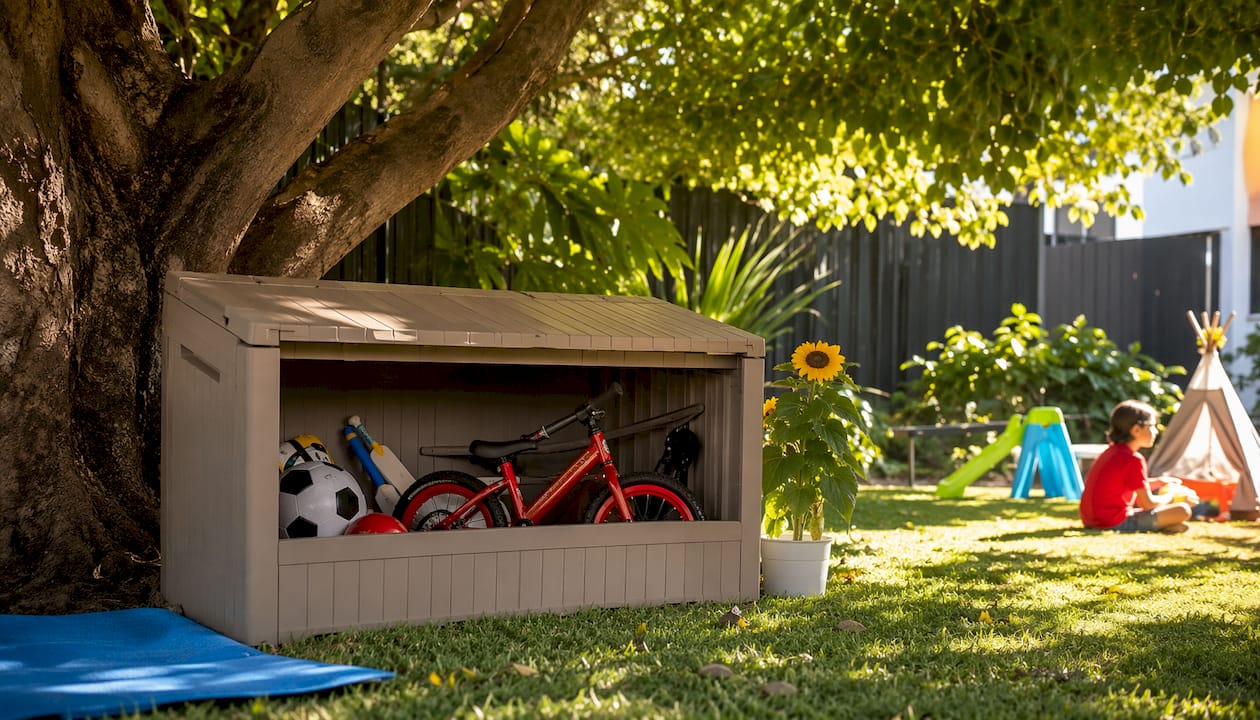
A storage bench gives you seating and a toy chest in one unit. Deck boxes with flat lids work well here — position one near the back door or patio edge so it doubles as a step-up seat. Kids can sit on it while putting shoes on, and toys go underneath.
Pros: Multi-purpose, tidy-looking. Cons: Slightly higher cost than a basic bin.
3. Shed or large storage unit
For families with bikes, scooters, ride-ons, and seasonal gear, a shed is the only option that fits everything. A larger resin shed handles backyard toy organisation for the whole family and doubles as off-season storage when summer wraps up.
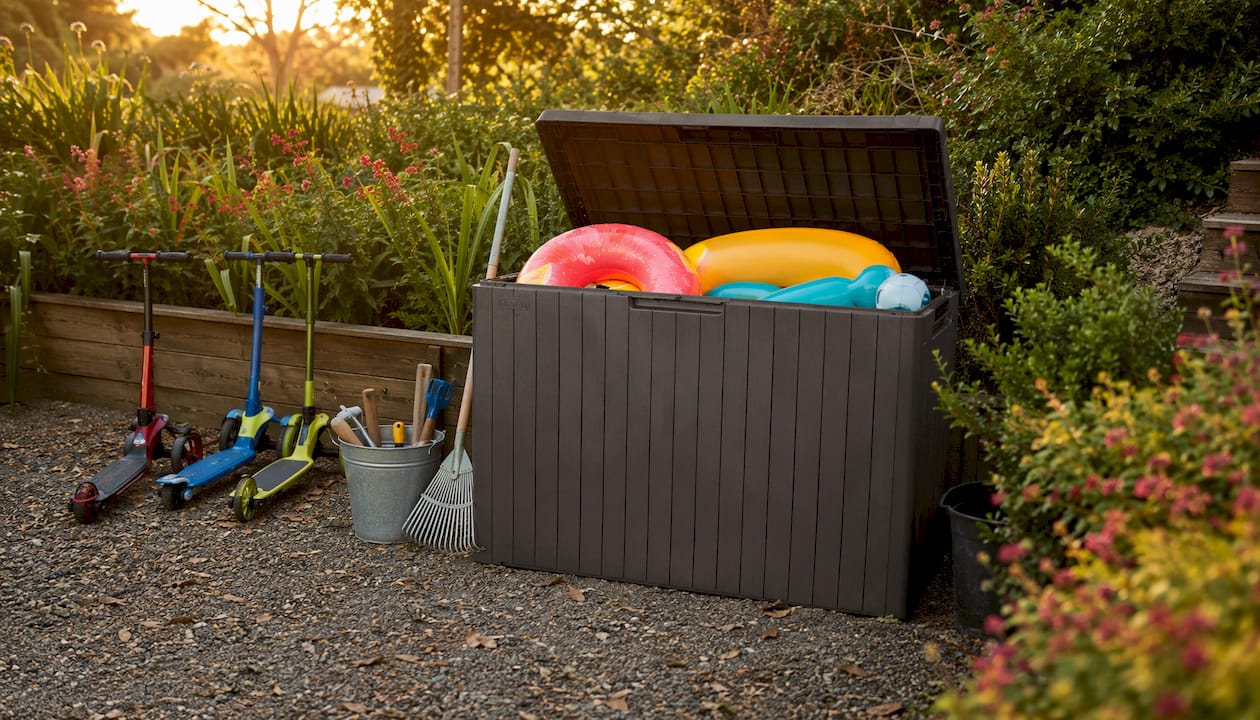
Pros: Maximum capacity, protects bulky items. Cons: Requires a flat base and a bit more assembly time.
4. Large lidded stacking bins
Plastic bins with clip-on lids are a budget-friendly way to sort toys by category — one for sand toys, one for sports gear, one for craft supplies. Stack them in a sheltered corner or under the eaves.
Pros: Cheap, flexible, easy to label. Cons: Cheaper bins may crack in direct sun after a season or two.
5. Fence-mounted crates or cubbies
Plastic milk crates or open cubbies screwed to a fence rail keep toys visible and off the ground. Mount them at kid height — roughly 60–90 cm from the ground — so children can reach in and return items without help.
Pros: Uses vertical space, great for small yards. Cons: No weather protection; best for items that can get wet.
6. Mesh or ventilated bags for water toys
Mesh bags and slatted crates are the right solution for water toys because they allow drainage and airflow, stopping mould before it starts. Hang a mesh bag from a fence hook or clothesline hook after pool time.
Pros: Prevents mould, dries fast, cheap. Cons: No UV protection; not suitable for electronics or battery toys.
7. Rolling cart or ball rack
A rolling cart with a locking caster is ideal for toys that move between the yard and the garage. Lock the caster when parked outside. A ball rack or open net bin makes returning balls a one-toss job — and kids will actually do it.
Pros: Portable, encourages tidy habits. Cons: Needs a flat surface; casters can jam on grass.
How to choose materials, clean toys, and rotate seasonally
Pick weather-resistant resin for most outdoor needs. Use ventilated storage for wet toys, and sheltered or closed storage for sun-sensitive items like battery-powered toys and foam gear.
Material trade-offs at a glance:
- Resin/recycled plastic: Resists UV and damp, low maintenance, lightweight. The practical choice for most Aussie yards.
- Treated timber: Looks attractive but needs annual sealing or oiling to stay weather resistant. Untreated wood will warp and rot.
- Powder-coated metal: Durable when the coating is intact, but chips lead to rust. Best kept under cover.
Cleaning checklist before storing toys:
- Hose off dirt and debris.
- Soap-wash sticky or grimy toys with mild detergent.
- Rinse thoroughly.
- Air-dry fully — at least a few hours in a breezy spot — before placing in closed storage.
- Inspect for cracks or damage; discard broken items rather than storing them.
For water toys, follow a two-stage routine: drain and rinse immediately after use, then hang in mesh for 24 hours in a breezy spot before any closed storage.
Seasonal rotation: At the start of cooler months, move off-season toys to a garage or shed. Keep only active-use items outside through winter. Reverse the process at the start of summer. A quick edit twice a year keeps the yard manageable.
Pro Tip: Sort toys into three groups before choosing storage: Sun (fade-prone, battery-powered), Shade (general toys that need cover), and Splash (water toys needing ventilation). Match each group to the right storage type and you’ll avoid most mould and UV damage.
Simple DIY weekend hacks for outdoor toy storage
Small builds make a big difference fast. These four projects need basic tools and cost very little.
Fence-mounted crate rack
- Choose two or three plastic crates with open sides.
- Hold each crate against the fence at kid height (60–90 cm from ground).
- Drill two holes through the back of each crate and into the fence paling.
- Secure with weather-resistant screws or outdoor-rated cable ties.
- Safety note: Check the fence is structurally sound before loading crates with heavy toys.
Ball net or open bin
- Buy a large mesh laundry bag or a purpose-made ball net.
- Attach a heavy-duty hook to the fence or wall at adult shoulder height.
- Hang the net and drop balls in after play. Kids can toss from a distance.
Mesh drying bag station
- Attach two or three S-hooks to a fence rail or clothesline.
- Hang a mesh bag from each hook — one per child or one per toy category.
- After pool time, rinse water toys and drop them straight into the bag to drain and dry.
Rolling cart with caster lock
- Buy a plastic utility trolley with at least two shelves.
- Fit locking casters if not already included (available at most hardware stores).
- Load with sports gear or craft supplies and wheel it to the play zone.
- Lock the caster when parked; unlock to move indoors before rain.
Place all of these near the back door or patio edge for the easiest possible tidy-up.
Why a resin storage box is often the smartest choice for Aussie yards
For most Australian families, a weather-resistant resin storage box balances durability, ease of assembly, and low maintenance better than any other option. Resin handles UV exposure and humidity without needing annual treatment, and the better units are made from recyclable materials that hold up season after season.
Key advantages over untreated wood or basic plastic bins:
- UV-resistant construction that won’t fade or warp in harsh sun
- Lid seals keep pests and rain out without trapping moisture when ventilated correctly
- Easy DIY assembly, usually under an hour
- Recyclable resin construction supports a longer product life
Ketergroup offers three sizes worth considering for different needs. The Keter City Box 113L suits a patio or balcony with a moderate toy load. The Keter Springwood 305L handles a larger family’s worth of gear in one go. For families who need serious capacity for bikes, scooters, and seasonal items, the Store It Out Prime Shed 880L is the deep-storage answer.
Pro Tip: Position your resin box on timber battens, paving, or a few bricks so the base sits slightly elevated. This stops water pooling underneath and extends the life of both the box and what’s stored inside.
Key takeaways
The most effective outdoor toy storage system uses a weather-resistant resin box as the anchor, pairs it with ventilated mesh for water toys, and places everything within easy reach of where kids actually play.
| Point | Details |
|---|---|
| Top material choice | Weather-resistant resin resists UV and damp with minimal upkeep, outperforming untreated wood outdoors. |
| Placement matters | Position storage within easy reach of the play zone so kids can return items in one step. |
| Ventilate water toys | Use mesh bags or slatted crates for water toys; never seal wet items in an airtight container. |
| Rotate seasonally | Move off-season toys to a garage or shed at the start of cooler months; bring them back at summer. |
| Ketergroup sizing guide | The City Box 113L suits small loads; the Springwood 305L handles bulk; the Store It Out Prime Shed 880L covers deep seasonal storage. |
The case for keeping it simple
The most common mistake parents make with outdoor toy storage is overcomplicating it. A system with too many bins, too many categories, and too many steps to put things away will be abandoned within a fortnight. Kids need one obvious place per toy type, at their height, with a single action to return it.
What I find genuinely useful is the idea of rotating toys rather than storing everything outside year-round. Keeping a smaller, curated set of toys accessible outdoors and cycling the rest through a shed or garage means the yard stays manageable and kids actually engage with what’s out there. Less clutter, more play.
The outdoor toy graveyard is almost always a sign that the storage system asks too much of the people using it. Fix the system, not the habits.
Ready-made storage that works from day one
If you’d rather skip the weekend build and start with something that’s already designed for Australian conditions, Ketergroup’s resin storage range is a practical place to begin.
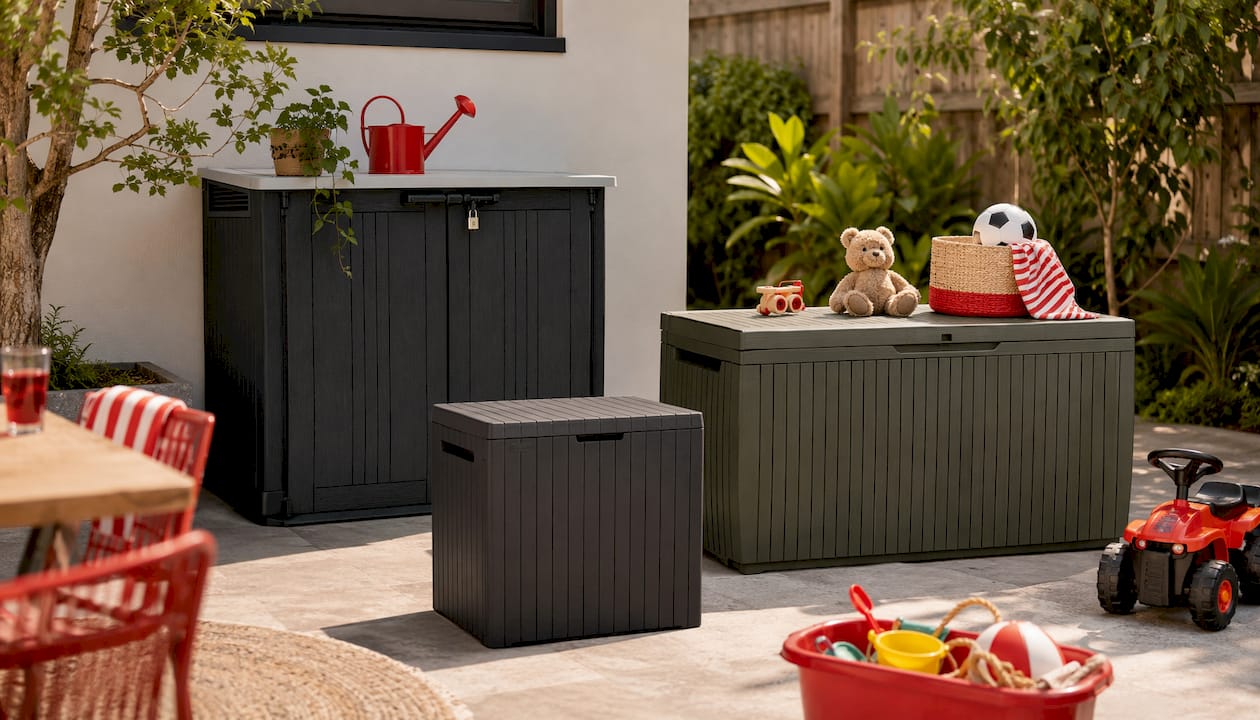
The Keter City Box 113L is a compact, weather-resistant option for patios, balconies, or smaller yards — it holds a solid load of outdoor toys and assembles without tools. For larger households, the Keter Springwood 305L gives you bulk capacity in a tidy, garden-friendly design. Families with bikes, scooters, and a full season’s worth of gear will find the Store It Out Prime Shed 880L handles everything in one place. All three are made from recyclable resin, require minimal maintenance, and are built to handle the Australian climate. Browse the full range at ketergroup.com.au and find the size that fits your yard.
Useful sources and further reading
These sources informed the practical steps, cleaning checklists, and storage ideas throughout this article. They’re worth bookmarking if you want to go deeper on any one topic.
- The outdoor toy graveyard: what your backyard clutter is really telling you — Just Organised by Taya. Useful for understanding why storage systems fail and how to design ones kids will actually use.
- Smart storage tips for kids’ outdoor toys — Oakleigh Storage (Australia). Covers pre-storage cleaning, drying, and seasonal rotation in practical detail.
- Outdoor toy storage ideas: 10 backyard fixes that last — Home Organise Hacks. Good overview of material choices and the Sun, Shade, Splash sorting method.
- Organising outdoor toys, gear and games without losing your mind — Mello Spaces. Practical guidance on ventilating water toys and designing single-step put-away systems.
- The best outdoor toy box solutions — Bounty Parents (Australia). Covers deck boxes, storage benches, and placement advice for Australian family yards.
- For product-matched setup inspiration, the Ketergroup blog has articles on sizing, placement, and getting the most from resin storage outdoors.
FAQ
What is the best material for outdoor toy storage in Australia?
Weather-resistant resin is the most practical choice for Australian conditions. It handles UV exposure, humidity, and rain without rusting, warping, or needing annual treatment the way untreated wood does.
How do I stop water toys going mouldy in storage?
Rinse water toys immediately after use, then hang them in a mesh bag for at least 24 hours in a breezy spot before placing them in any closed storage. Never seal wet toys in an airtight container.
Where should I put outdoor toy storage in the yard?
Place storage within easy reach of where kids play, ideally within a few metres of the play zone. The closer and more obvious the storage, the more likely children are to use it independently.
Which Ketergroup storage box suits a family with lots of outdoor toys?
The Keter Springwood 305L suits larger households with a full load of outdoor toys. For bikes, scooters, and seasonal gear, the Store It Out Prime Shed 880L offers the capacity needed for deep storage.
How often should I rotate outdoor toys seasonally?
A quick edit twice a year works well: move off-season toys to a garage or shed at the start of cooler months, and bring active items back outside at the start of summer.


