
Outdoor Furniture Trends 2026: What Aussie Homes Are Choosing

The big outdoor furniture trends for 2026 all point the same way: treat the backyard, patio or balcony like another room of the house, fill it with softer shapes and earthy colours, and choose pieces that cope with Australian sun, rain and salt without constant fuss. That last part is where we come in. Keter makes weather resistant outdoor furniture and storage from recycled and recyclable resin, so the look you pick this year is still looking good in the next few.
Below, we walk through the trends worth your attention, what each one means for a real backyard or balcony, and how to bring it home without regretting it by autumn.
TL;DR
- Outdoor rooms: 2026 is about dividing the yard into zones, with the alfresco lounge or dining area as the hardest-working space.
- Soft shapes, earthy colours: curved forms and clay, olive, warm neutral and muted blue tones are leading the palette.
- Mixed, not matched: the matching five-piece set is giving way to pieces with personality.
- Flexible and compact: modular, foldable and stackable pieces suit small patios and balconies.
- Durability and sustainability: recycled, weather resistant materials that do not rot, rust or warp fit both trends and the Australian climate.
Table of Contents
- Trend 1: the backyard becomes a set of outdoor rooms
- Trend 2: the alfresco lounge and dining room does the heavy lifting
- Trend 3: curves, softness and an organic feel
- Trend 4: earthy colours and nature-inspired palettes
- Trend 5: mixed pieces instead of matching sets
- Trend 6: modular, foldable and flexible layouts
- Trend 7: durability and sustainability move from bonus to baseline
- Trend 8: gardens that work as hard as the furniture
- How to bring the trends home without overdoing it
- Our view: why the trend that lasts is the material
- Ready to build your outdoor room?
- FAQ
- Sources
Trend 1: the backyard becomes a set of outdoor rooms
Home Beautiful’s 2026 style forecast calls this the year of the outdoor room, or rather many rooms. It points to Domain’s end-of-year report, where the top three search terms of 2025 were pool, waterfront and view, and describes yards being divided into distinct zones: a sunken fire pit, a pool cabana, even a spot for pickleball.
You do not need a pool or a sunken fire pit to use the idea. Most of us have one patio, one deck or one balcony, and the trick is giving each corner a job:
- A lounge corner with low, comfy seating for reading or after-dinner drinks.
- A dining zone with a table that seats the family and stretches for guests.
- A potting or garden zone with planters or raised beds, and storage close at hand.
- A quiet spot with a sun lounger or a single chair, positioned for the morning or afternoon light.
Thinking in zones also changes how you shop. Instead of buying one big set and hoping it fits, you choose a piece for each purpose, which is easier on the budget and easier to rearrange later.
Why storage belongs in the plan
Every zone generates stuff: cushions, kids’ toys, gardening gloves, pool accessories, the barbecue tools. If it has nowhere to go, the room turns back into a clutter corner. Weather resistant outdoor storage boxes, a garden shed or a tool storage system keep each zone tidy and mean the cushions are not left out in the rain. Keter’s range covers sheds, outdoor storage boxes, cabinets and modular tool storage, designed for easy DIY assembly, so the storage can be planned alongside the furniture rather than added as an afterthought.
Trend 2: the alfresco lounge and dining room does the heavy lifting
Home Beautiful describes the alfresco living and dining space as the most-used outdoor room, with plush but durable lounge chairs, outdoor rugs and considered lighting setting the mood. That mix of soft and tough is the heart of 2026 outdoor styling: it should feel like your living room, and survive like your garden.
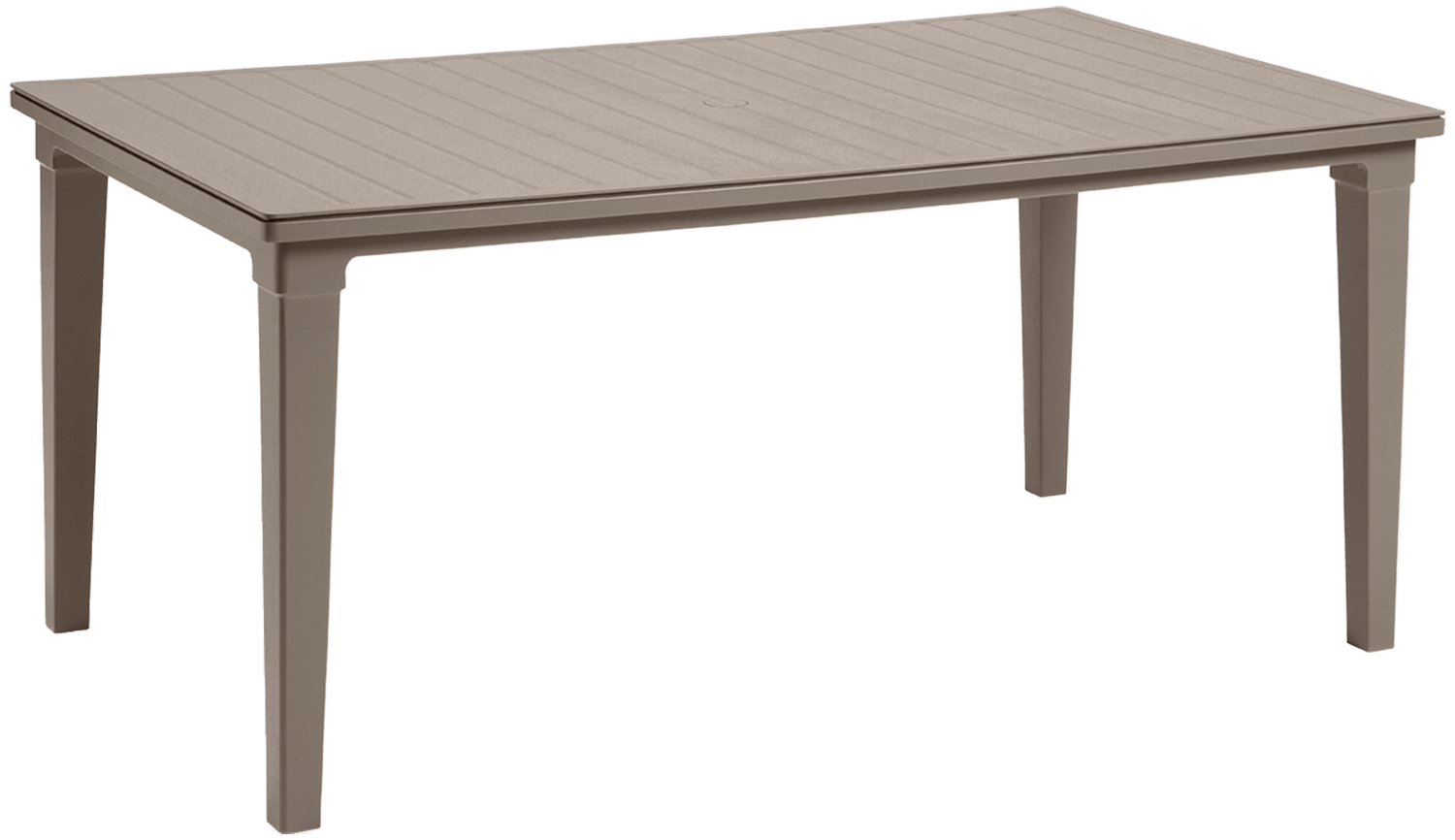
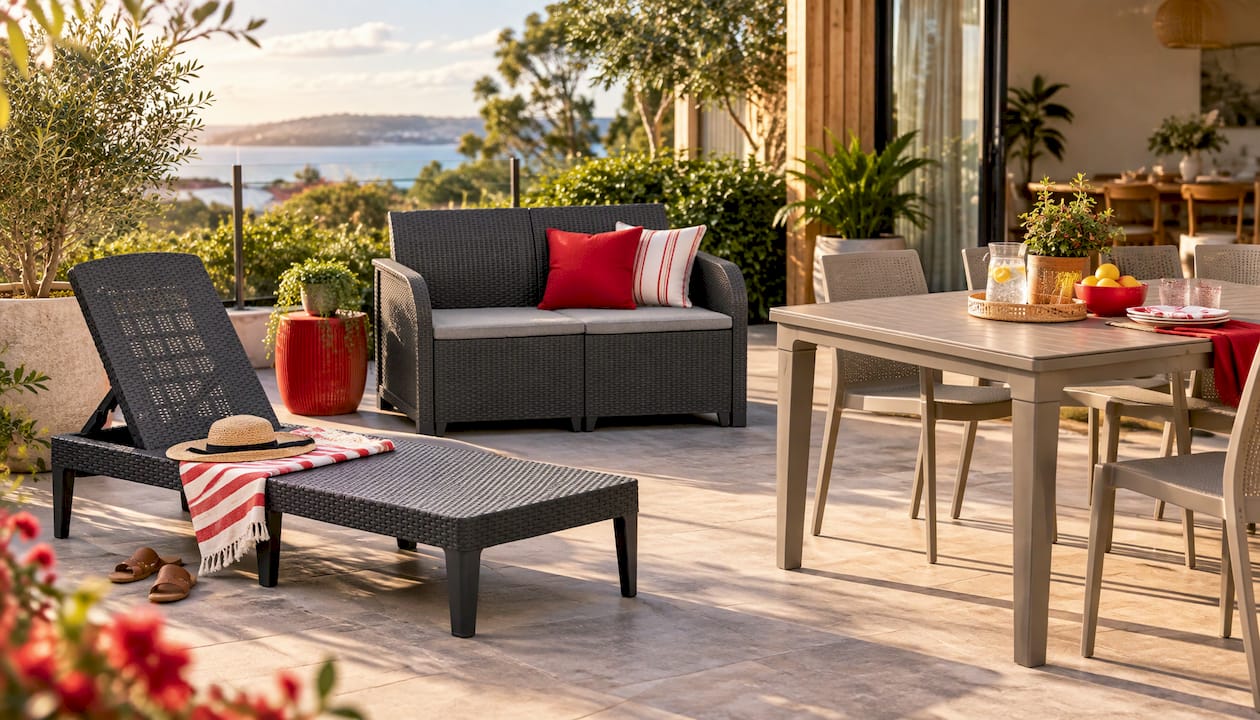
For a lounge, look for seating with generous proportions and a finish that handles the weather. For dining, look for a table with a surface that wipes clean after a barbecue. Our Rosalie 2 seater sofa suits a lounge corner, and the Futura dining table in Cappuccino is a good fit for a dining zone. If you would like a spot to stretch out in the sun, the Jaipur outdoor sun lounger is there for exactly that.
Trend 3: curves, softness and an organic feel
Better Homes & Gardens Australia’s 2026 outdoor furniture roundup quotes a furniture designer expecting shapes to stay curved, giving softness and an organic feeling. In practice that means rounded armchairs, pebble-shaped side tables, curved sofa backs and circular dining tables.
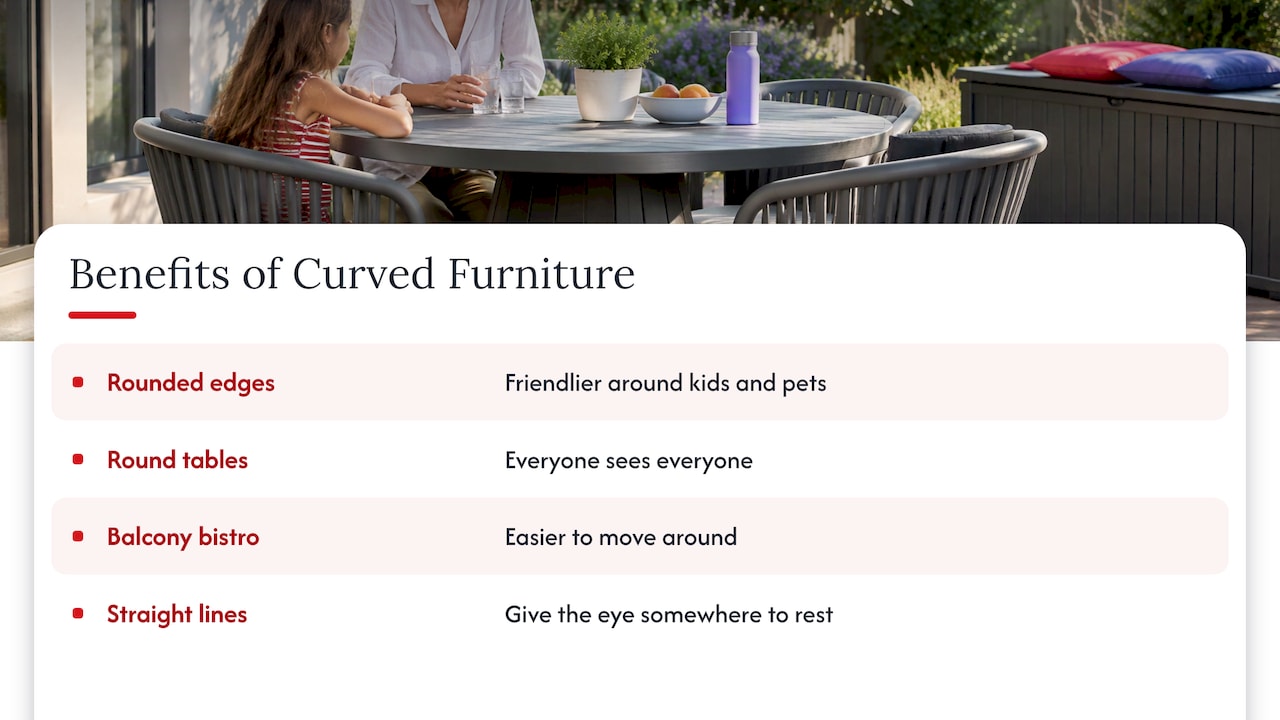
Curves are not only a look. Rounded edges are friendlier around kids and pets, and round tables make conversation easier because everyone sees everyone. They also suit tight spaces: a round bistro table on a balcony is easier to move around than a rectangular one.
If you are mixing in a few curved pieces, balance them with something straight, such as a rectangular planter or a cabinet. A whole yard of curves can feel soft to the point of shapeless, and a straight line gives the eye somewhere to rest.
Trend 4: earthy colours and nature-inspired palettes
The same BHG article describes nature-inspired colours, such as clay, olive greens, warm neutrals and muted blues, as front and centre for 2026. Other Australian style coverage lands in the same place: terracotta, sage and sandy tones that sit comfortably alongside timber decking, native planting and render.
Here is a simple way to use the palette without repainting anything:
- Start with a neutral base. Warm greys, taupes and cappuccino tones for the big pieces (sofa, table, storage) blend into most paving and decking.
- Add one earthy accent. A clay-coloured cushion, an olive planter or a terracotta pot gives the palette its character.
- Let the greenery do the rest. Plants are the original earthy colour, and they look best against calm backgrounds.
If you are worried about colour, remember that fading is the usual enemy of a good palette. Our guide to preventing outdoor furniture fading in Australia explains how sun exposure affects different materials, and our page on UV resistant outdoor furniture covers what to look for before you buy.
Trend 5: mixed pieces instead of matching sets
Home Beautiful says the matchy-matchy outdoor set is on its way out, replaced by eclectic, playful and colourful pieces. For most households this is welcome news. You can buy a lounge setting now, add an Adirondack chair next season, then a sun lounger when the budget allows, and it will all look intentional.
A few rules keep a mixed look from turning messy:
- Pick one common thread. It might be colour family, material or finish, so the pieces feel related.
- Vary the height and shape. A low lounge, a taller dining table and a chunky side table create rhythm.
- Repeat something. Two planters in the same tone on opposite sides of the patio tie the room together.
If you like the relaxed, holiday feel, our piece on Adirondack chairs and storage tables shows how a classic chair and a multi-purpose table can anchor a garden corner.
Trend 6: modular, foldable and flexible layouts
Better Homes & Gardens’ furniture advice includes a point that matters before any trend does: plan the whole space with all its components rather than only measuring for the furniture, and check access through lifts, stairs and tight turns before delivery. It is the sort of tip that saves a Saturday.
Flexible furniture is the practical answer to small, awkward or multi-purpose spaces. That means:
- Modular seating you can push together for a crowd or pull apart for two.
- Stackable and foldable chairs that tuck away when you want the space for the kids or a yoga mat.
- Storage that doubles as seating or a table, so one piece does two jobs.
- Compact balcony sets sized for the space you actually have.
Apartment dwellers will find more ideas in our guides to space saving outdoor furniture for small balconies and small patio furniture ideas. Our range includes balcony sets, lounge sets, dining sets and sun loungers, so you can build up a compact layout one piece at a time.
A quick measuring routine
Before you buy anything, do this with a tape and a roll of masking tape:
- Measure the usable area, not the whole deck. Leave about a metre for walkways and door swings.
- Mark the footprint of each piece on the floor with masking tape.
- Stand in the space. Can you open the door, reach the barbecue and carry a tray through?
- Check the path the boxes will take from the front gate to the spot where you will assemble.
Keter furniture and storage are designed for DIY assembly, so once the boxes are in the yard you can usually set things up yourself rather than arranging installation.
Trend 7: durability and sustainability move from bonus to baseline
The trends above get the attention, but the thing that decides whether you are happy in two years is the material. Australian conditions are hard on outdoor furniture: strong UV, summer storms, humidity in the north, salt near the coast and, in some areas, wind that sends light chairs sailing across the yard.
That is why durability and sustainability are travelling together this year. People want pieces that last, and they want to know what the piece is made from and what happens to it later. Recycled and recyclable resin answers both. Keter’s products are designed to resist weathering and not to rot, rust or warp, and they are made from durable recycled materials that support a circular economy.
What this looks like in a backyard
| Your situation | What to prioritise | Where to read more |
|---|---|---|
| Full sun deck or patio | UV resistant, colour-stable materials | UV resistant outdoor furniture |
| Coastal home | Materials that will not rust | Coastal outdoor furniture guide |
| Windy balcony or hillside | Sturdy construction and sensible weight | Windproof outdoor furniture |
| Sustainability matters to you | Recycled, recyclable materials | Recycled plastic outdoor furniture |
| Comparing materials | How each one ages outdoors | Outdoor furniture materials guide |
Trend 8: gardens that work as hard as the furniture
Outdoor living in 2026 is not only about seating. Planters, elevated garden beds and herb corners are part of the outdoor room, bringing the green and earthy tones that the colour trend is built on. Raised beds also suit smaller yards and anyone who would rather not bend down to weed.
Our garden collection includes planters and elevated garden beds. Pair them with tool storage and a small shed or storage box nearby and you have a tidy potting zone, with the soil, pots and gloves exactly where you use them.
How to bring the trends home without overdoing it
You do not have to adopt every trend. A sensible plan for most homes looks like this:
- Choose your main zone. Is it lounging, dining or gardening? Spend the most thought here.
- Pick a calm base palette in warm neutrals, then add one or two earthy accents.
- Choose one curved or statement piece and keep the rest simple.
- Plan storage at the same time. Decide where cushions, tools and toys will live.
- Check the material for sun, rain and, if relevant, salt.
- Measure twice, including the delivery path.
Our view: why the trend that lasts is the material
We love a good colour forecast, but we think the best outdoor trend is the one you only notice when it is missing: furniture that is still comfortable, still the colour you chose and still tidy after a few Australian summers.
That is why we make outdoor furniture and storage from recycled and recyclable resin. Our designs are weather resistant, built not to rot, rust or warp, and made for DIY assembly so you can set up a new corner on a weekend. For us, sustainability is an everyday thing: a piece that lasts longer, and a material that can be recycled, keeps more out of the bin.
If you are planning an outdoor room this year, start with how you want to use the space, choose the zones, and let the furniture and storage work together. The trends will keep changing. A well-made, well-planned backyard keeps working.
Liza
Ready to build your outdoor room?
Keter Australia offers outdoor furniture, sun loungers, dining and lounge sets, balcony sets, outdoor storage, sheds, cabinets, tool storage and garden planters, all from recycled and recyclable resin and designed for easy DIY assembly. Browse the full range at Keter Australia and start with the zone you will use most.
If the garden is your focus, head straight to the planters and elevated garden beds.
FAQ
What are the main outdoor furniture trends in Australia for 2026?
The main themes are outdoor rooms with distinct zones, curved and organic shapes, earthy colours such as clay, olive and warm neutrals, and mixed rather than matching pieces. Durable, sustainable materials sit under all of them. Together they describe a backyard that feels like an extension of the living room.
Are patio furniture trends different from garden furniture trends?
Mostly the ideas overlap. On a patio or balcony the emphasis falls on compact, foldable and modular pieces, while a larger garden gives room for several zones. Either way, the colour palette and shapes are the same.
What colours are popular for outdoor furniture in 2026?
Nature-inspired tones lead: clay, olive green, warm neutrals and muted blues, along with timber-look finishes. Use a neutral base for the large pieces and bring colour in with cushions, planters and accessories.
How do I make a small outdoor space feel bigger?
Choose scaled-down pieces, such as a balcony set or a round table, and use storage that doubles as seating. Keep walkways clear and measure the footprint with tape before buying. Our guide to small patio furniture ideas goes through layouts in more detail.
Which material suits Australian conditions best?
Look for materials that handle UV, rain and, near the coast, salt. Keter’s recycled resin furniture is designed to resist weathering and not to rot, rust or warp. Our outdoor furniture materials guide compares the options.
Sources
- What are the interior design trends in Australia for 2026? (Home Beautiful)
- Best Outdoor Furniture Settings in Australia (Better Homes & Gardens)


