
Balcony storage ideas for small apartments in Australia

The most effective balcony storage ideas for small spaces combine vertical shelving, multi-functional seating, rail-mounted accessories, and modular weather resistant boxes. Get these four elements working together and even a compact apartment balcony can feel organised, comfortable, and genuinely usable. Here is a quick summary of what works best:
- Vertical shelves and wall-mounted units keep the floor clear and double as display space
- Storage benches and coffee tables with internal compartments hide cushions and accessories
- Rail hooks and hanging planters use the balcony edge without eating into floor area
- Modular storage boxes like the Keter City Box sit anywhere and move easily if strata rules change
- Weather resistant materials are non-negotiable in Australia’s sun, humidity, and coastal conditions
- Always check your balcony’s weight rating before adding heavy planters or furniture
Table of Contents
- How vertical shelves and wall-mounted storage transform your balcony
- Multi-functional seating that hides your storage
- Rails, hooks, and hanging storage that clear the floor
- Built-in and modular storage options worth considering
- How to measure and plan your balcony for safe storage
- Space optimisation tips for awkward balcony shapes
- Budget-friendly DIY storage projects for your balcony
- Integrating greenery with storage for a better-looking balcony
- Ketergroup outdoor storage for your balcony
- Key takeaways
- FAQ
How vertical shelves and wall-mounted storage transform your balcony
Going vertical is the single biggest win on a small balcony. Wall-mounted shelves and rail planters add storage without sacrificing a centimetre of floor space, which matters enormously when you are working with four or five square metres.
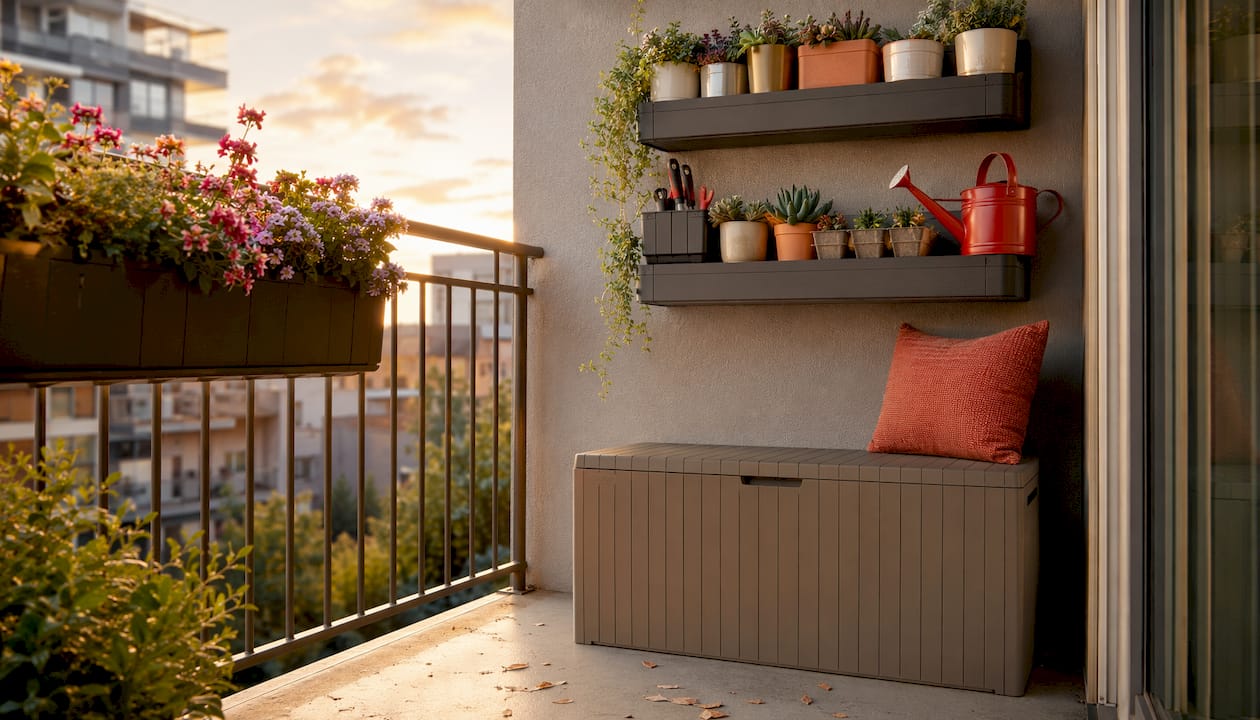
Slim freestanding shelving units in powder-coated steel or weather resistant resin suit Australian outdoor conditions well. For renters, freestanding units are the safer choice since most strata by-laws restrict drilling into shared walls. Vertical gardens mounted on a freestanding frame serve double duty: they provide greenery and privacy while keeping pots off the ground.
Key benefits of vertical storage:
- Frees floor space for seating and movement
- Creates visual height, making the balcony feel larger
- Keeps tools, plants, and accessories within easy reach
- Reduces clutter at eye level, improving the overall look
Pro Tip: Choose shelving with adjustable heights so you can reconfigure it as your storage needs change across seasons.
Multi-functional seating that hides your storage
Dual-purpose furniture is the most effective way to maximise a limited balcony. A storage bench gives you seating, a footrest, and a hidden compartment for cushions, candles, and outdoor accessories, all in one footprint.
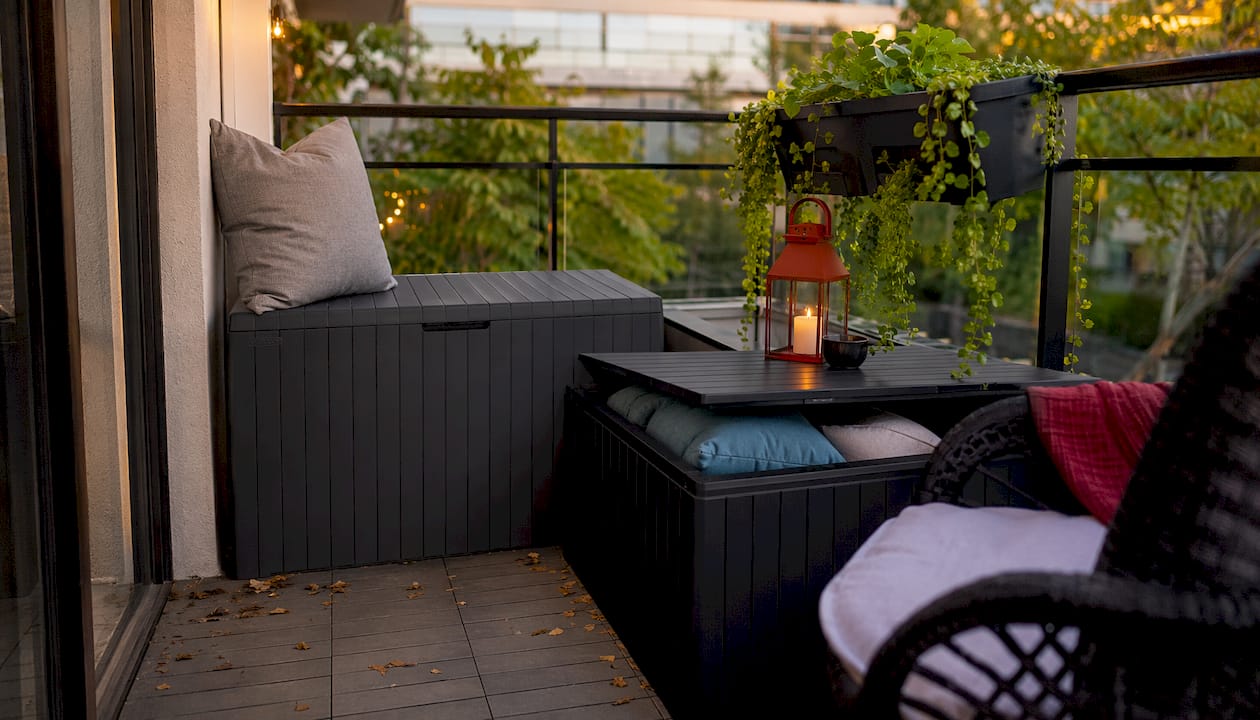
Coffee tables with lift-top storage work on the same principle. You get a surface for drinks and snacks, and a cavity below for items you want protected from sun and rain. The Keter Mia balcony set and the Keter Salemo balcony set are both designed with compact apartment balconies in mind, offering seating without overwhelming a tight space.
When choosing pieces, keep proportions in mind. Two well-chosen furniture pieces improve balcony usability more than several cramped ones. Pick items scaled to your actual dimensions, not the showroom floor.
Rails, hooks, and hanging storage that clear the floor
Balcony railings are underused storage real estate. Railing-mounted planters, tool hooks, and hanging baskets attach directly to the balcony edge and keep items accessible without touching the floor at all.
Hanging storage works well for:
- Herb planters and small flowering pots
- Garden tools and watering cans
- Folded outdoor cushions in breathable bags
- Laundry accessories like pegs and small baskets
Always distribute weight evenly along the rail rather than loading one section. Check your body corporate guidelines before attaching anything permanent, and opt for clip-on or hook-style fittings that leave no marks. For wind safety, secure all loose items and avoid hanging lightweight objects on exposed upper-floor balconies where gusts are strongest.
Built-in and modular storage options worth considering
Built-in benches and custom cabinetry look polished, but they come with real trade-offs for apartment dwellers. Fixed structures often require body corporate approval, and they stay behind when you move. Modular options sidestep both problems.
Pros and cons at a glance:
- Built-ins: clean look, maximises awkward corners, but requires approval and is not portable
- Modular units: flexible, moveable, no approval needed, suits renters and owners alike
- Freestanding storage boxes: the most versatile option, reposition them as your layout evolves
The Keter City Box 113L is a practical modular element here. It is weather resistant, made from recyclable resin, and sized to fit neatly against a wall or under a bench. For expanded capacity, the City Box 2-pack lets you stack your storage needs without committing to a fixed structure.
How to measure and plan your balcony for safe storage
Start with a tape measure. Record the full width and depth of your balcony, then note fixed obstructions like drainage outlets, hose connections, and structural columns. These define your usable zone.
Leave at least 70cm of clearance from any sliding or bi-fold door so you can move in and out comfortably. That clearance also matters for emergency access. Once you have your usable area mapped, plan furniture and storage placement on paper before buying anything.
Practical planning steps:
- Confirm your balcony’s load rating with your body corporate, especially for cantilever balconies
- Choose lightweight resin or aluminium furniture over heavy timber or concrete
- Use perlite in potting mixes to reduce planter weight without sacrificing plant health
- Position heavier items close to the building wall, not at the outer edge
Pro Tip: If you plan a significant setup with multiple large planters and furniture, consult a structural engineer or your building manager before proceeding.
Space optimisation tips for awkward balcony shapes
Narrow balconies suit a single row of furniture along one wall, with vertical storage on the opposite side. L-shaped balconies offer a natural corner for a storage box or a compact shelving unit, freeing the longer run for seating. Whatever the shape, an outdoor rug visually defines the space and makes it feel intentional rather than improvised.
Folding and stackable chairs are worth keeping in the mix. They store flat against a wall or inside a storage box when not in use, instantly reclaiming floor space. Stools that double as side tables or plant stands add function without a permanent footprint.
Budget-friendly DIY storage projects for your balcony
Timber pallets are a genuinely useful starting point for DIY balcony storage. Sanded, sealed with an exterior timber oil, and stood upright, a single pallet becomes a vertical planter wall or a tool organiser. Reinforce the base and add a pond liner if you plan to use it for plants.
Repurposed wooden crates make compact shelving when stacked and secured. Sealed with exterior paint, they handle Australian weather reasonably well. For a cleaner finish, add a sheet of exterior-grade plywood as a back panel. These projects cost a fraction of retail shelving and can be customised to fit odd-shaped spaces.
Integrating greenery with storage for a better-looking balcony
Plants and storage do not have to compete for space. Rail-mounted planter boxes along the balcony edge double as a soft privacy screen and a visual frame for your view. Vertical garden frames combine greenery with structure, hiding the storage behind a living wall.
Choose large pots over many small ones. A single 50cm pot with layered planting looks lush and takes up less collective floor space than six small pots scattered around. Native climbers like hardenbergia or kangaroo vine grow upward on a trellis, adding height and screening without spreading across the floor. Keep outdoor cushions stored in a weather resistant box during wet periods to protect them and keep the balcony looking tidy between uses.
Ketergroup outdoor storage for your balcony
Ketergroup makes weather resistant outdoor storage boxes and balcony furniture built from durable, recyclable resin, designed to handle Australian sun, rain, and coastal air without fading or cracking.
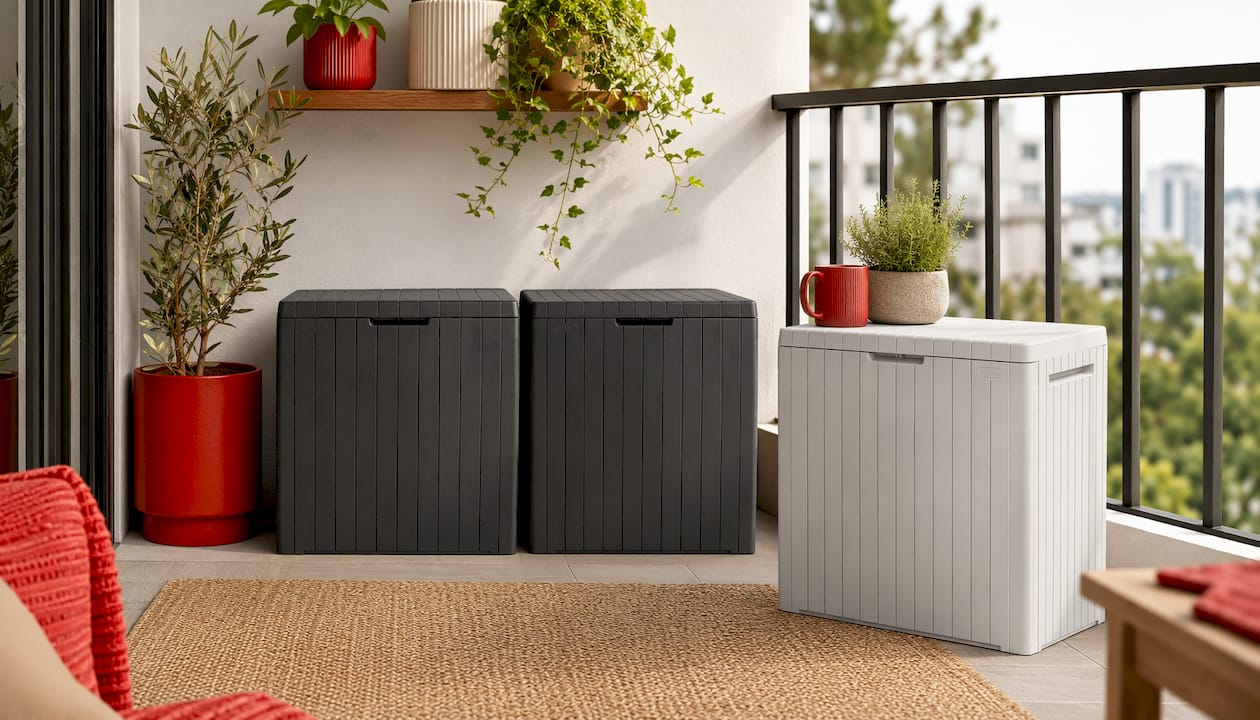
The Keter City Box 113L fits neatly on most apartment balconies and holds cushions, tools, and accessories securely. A white variant is also available for pre-order if you prefer a lighter colour palette. For a complete balcony setup, browse the full range of outdoor furniture and storage at Ketergroup.com.au and find pieces sized for real apartment living.
Key takeaways
The most practical balcony storage ideas combine vertical shelving, multi-functional furniture, and modular weather resistant boxes to maximise limited outdoor space safely.
| Point | Details |
|---|---|
| Go vertical first | Wall-mounted shelves and rail planters free floor space without requiring structural changes. |
| Dual-purpose furniture wins | Storage benches and lift-top tables hide accessories while providing seating in one footprint. |
| Check weight limits | Confirm your balcony’s load rating with body corporate before adding heavy planters or furniture. |
| Keep 70cm door clearance | Leave at least 70cm from sliding or bi-fold doors for safe, comfortable movement. |
| Ketergroup for modular storage | The Keter City Box 113L offers weather resistant, portable storage sized for apartment balconies. |
FAQ
What is the best storage solution for a small balcony?
A weather resistant storage bench or box is the most practical choice. It provides seating or a surface while keeping cushions and accessories protected and out of sight.
How much clearance do I need around balcony doors?
Leave at least 70cm of clearance around sliding or bi-fold doors so you can move freely and maintain safe emergency access.
Can I add heavy storage or large planters to my balcony?
Check your balcony’s load rating with your body corporate first, especially on cantilever balconies, which typically have lower weight limits. Use lightweight resin furniture and perlite-based potting mixes to reduce load.
Do I need body corporate approval for balcony storage?
Fixed or built-in structures usually require approval under strata by-laws. Freestanding and modular storage boxes generally do not, making them the safer choice for renters and apartment owners.


